
 English
 usheenthermal

Solving Pump-Out Issues with Self-Adhesive Phase Change Thermal Conductive Material
Date:2026-05-28
Solving Pump-Out Issues with Self-Adhesive Phase Change Thermal Conductive Material
Heat failures creep in when grease slips and hardware sweats; Self-adhesive phase change thermal conductive material steps in, sticking tight, flowing just enough, keeping chips cool and wallets calmer under pressure.
Pump-out wrecks performance over time, nudging temps up and uptime down, but adhesion and stable thickness keep lines smooth and rework off your back.
Snapshot Guide: Self-adhesive phase change thermal conductive material
➔ Why it Matters: Prevents pump-out by combining strong adhesion and stable bond line thickness under repeated thermal cycling.
➔ Core Composition: Formulated with waxes, silicones, polymers and ceramic fillers to maximize thermal conductivity and electrical insulation.
➔ Application Tips: Clean and prepare surfaces, use precise die-cutting or pre-cut pads, apply uniform lamination and control bond line thickness.
➔ Performance Check: Validate with thermal cycling tests, then measure thermal resistance and shock reliability for lasting uptime.
Why Pump-Out Happens In Thermal Interfaces
Heat gets messy when materials keep moving. Pump-out shows up quietly, then temps spike. This cluster breaks down why Self-adhesive phase change thermal conductive material slips, flows, or thins out over time, using plain talk and shop-floor logic. Expect real causes tied to material behavior, not lab myths. Yes, even CPUs feel the pain.
Inadequate Adhesion Strength and Thermal Cycling
When adhesion lacks real strength, repeated thermal cycling nudges interface material sideways. Pump-out follows.
quick signs engineers spot:
· rising temps, dry edges, poor spread
· cold start pulls the interface tight
· hot load softens the material
· cooldown breaks bond integrity
That loop never stops.
· Short bursts of movement add up.
· Pump-out creeps in, and reliability drops.
Nested reality inside devices:
silicon side
· expansion stress
· shear at the joint
sink side
· surface mismatch
· pressure loss
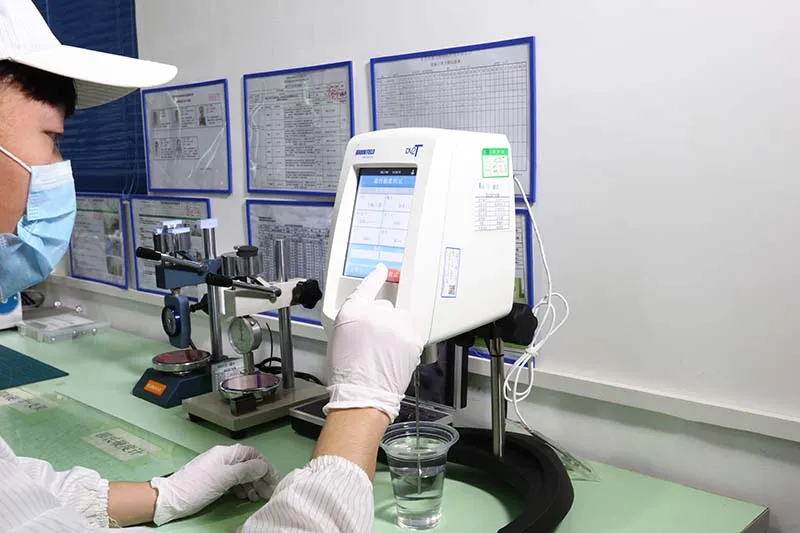
This is why Self-adhesive phase change thermal conductive material must grip before it melts. Sheen Technology pushes adhesion tuning here, not filler hype.
Excessive Bond Line Thickness Effects
A thick bond line looks safe but behaves loud. Extra thickness traps heat, hikes thermal resistance, and invites pump-out under clamp force.
| Bond Line (µm) | Temp Rise (°C) | Thermal Resistance (°C/W) | Pump-out Risk |
| 30 | 6 | 0.18 | Low |
| 60 | 11 | 0.27 | Medium |
| 90 | 17 | 0.39 | High |
| 120 | 24 | 0.55 | Critical |
What plays out in the gap:
· pressure pushes
· material flows
· interface thins unevenly
Short version: slimmer spreads transfer heat better. The right Self-adhesive phase change thermal conductive material self-levels instead of fleeing.
Phase Change Temperature Shifts and Viscosity Drop
Phase rules everything. Miss the phase change temperature, and viscosity falls too far. The material hits a near liquid state, then flow starts.
How it unfolds:
· load heat crosses melt point
· viscosity drops fast
· edges bleed
· pump-out accelerates
Grouped causes in the field:
formulation
· low melt target
· weak thickeners
system
· uneven pressure
· tall thermal interface stacks
High racks hate sloppy PCMs. A stable Self-adhesive phase change thermal conductive material holds shape, even when servers run hot.
Self-Adhesive Phase Change Thermal Conductive Material Explained
Self-adhesive phase change thermal conductive material sounds fancy, but it’s basically a tidy way to move heat off hot chips without risking shorts. Below is how self-adhesive phase change thermal conductive material gets built, what it’s good at, which shapes show up on the line, and what to watch over time—yes, even in storage.
Composition: Waxes, Silicones, Polymers and Ceramic Fillers
Self-adhesive phase change thermal conductive material lives or dies by material composition, and most formulation choices are small tradeoffs you can actually feel in assembly.
ingredients
waxes
· paraffin-style phase change helps the pad “wet out” once warm, so the self-adhesive phase change thermal conductive material fills tiny gaps without a mess
· tune melt range to your real operating temps, not lab dreams
silicones and polymers
· silicones keep flexibility; polymers can boost toughness and cut pump-out
· pick based on clamp force and rework needs
constituent materials for heat paths
· ceramic fillers push heat while staying electrically safe
· graphite can raise heat flow fast, but it changes the electrical story, so it’s not a free lunch
practical sourcing note
· Sheen Technology typically pairs filler loading with adhesive tack so self-adhesive phase change thermal conductive material stays easy to place, even at speed
Key Properties: Thermal Conductivity vs Electrical Insulation
With self-adhesive phase change thermal conductive material, you’re always balancing thermal conductivity and electrical insulation so heat transfer is strong while the board stays protected.
Start with target thermal resistance at real thickness, not brochure thickness.
Check dielectric strength and core electrical properties; good insulation properties keep adjacent components from turning into surprises.
Quick sanity cues:
· higher filler usually boosts thermal conductivity, but can squeeze electrical insulation margins
· softer matrices often lower contact loss, improving apparent material characteristics
A short-tail way to say it on the floor: “thermal interface sheet that won’t short stuff out.” That’s the goal of self-adhesive phase change thermal conductive material.
Material Forms: Sheets, Films, Tapes and Dispensable Rolls
Picking product forms is about assembly rhythm, not just specs; self-adhesive phase change thermal conductive material can be packaged to match how your line actually moves.
material formats
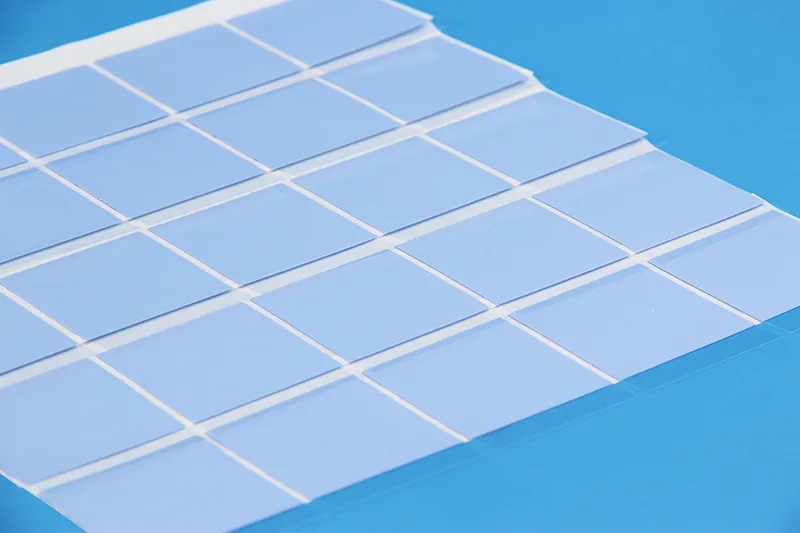
sheets
· best for die-cut programs and consistent thickness control
· common when you need larger coverage like shields
films
· thin, clean, and nice for tight stacks where z-height is brutal
tapes
· built-in stick helps positioning; adhesive layers reduce fiddling
· handy when the self-adhesive phase change thermal conductive material must stay put before final clamp
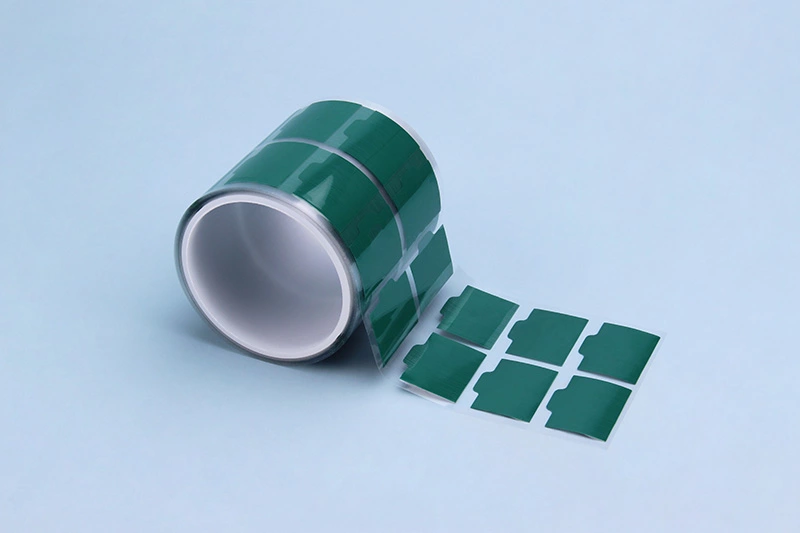
dispensable rolls
· fast placement and less liner waste for higher volume builds
where it lands
· thermal pads are the familiar choice, but film and tape versions often win on speed
Sheen Technology usually supports custom die-cuts so self-adhesive phase change thermal conductive material fits odd shapes without trimming at the bench
Performance Metrics: Volume Resistivity, Reliability and Shelf Life
If you’re qualifying self-adhesive phase change thermal conductive material, don’t get hypnotized by one headline number; the boring metrics prevent late-night failures.
List of must-check material metrics: volume resistivity, contact stability, and peel/hold behavior after aging
1) performance evaluation in cycling
· step through hot/cold swings to confirm reliability and steady electrical performance
2) Storage reality check
· confirm shelf life and storage stability at your warehouse temps, not ideal temps
3) Line-fit proof
· verify adhesion after rework heat, then re-measure volume resistivity
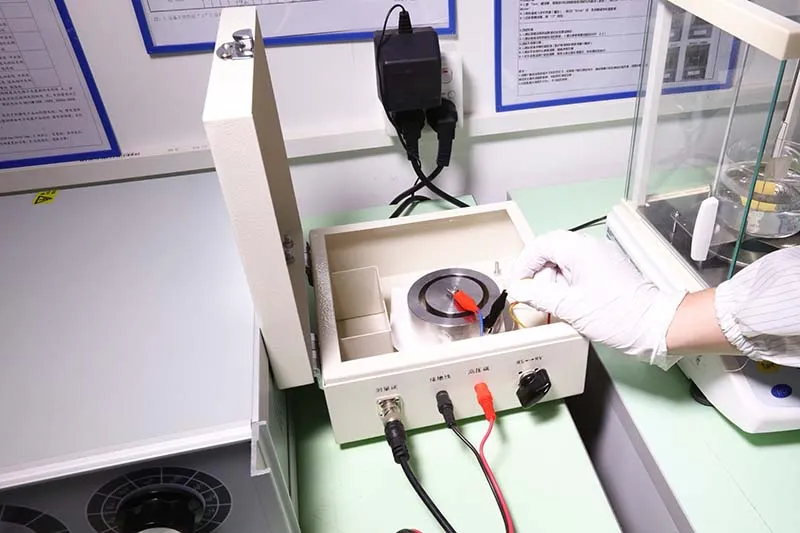
Sheen Technology often highlights long-run consistency here, which is exactly what self-adhesive phase change thermal conductive material needs when a device ships worldwide.
5 Steps To Apply Self-Adhesive PCM Correctly
Applying self-adhesive PCM isn’t tricky, but small habits matter. This walkthrough keeps it real, mixing shop-floor tips with clean logic, so the thermal interface works hard without drama.
Step 1: Surface Preparation and Cleaning
Surface readiness starts simple
· Cleaning wipes remove contaminants
· Residue hides on the substrate
· A tidy interface boosts adhesion
Short story: rushed preparation kills heat flow. Slow down, clean twice.
Step 2: Die-Cutting or Selecting Pre-Cut Pads
Match geometry before touch-down
· Die-cutting fits odd shape
· Pre-cut pads save time on application
· Custom work avoids edge lift
Self-adhesive phase change thermal conductive material performs best when the pad fits like it belongs.
Step 3: Lamination and Precise Attachment
Controlled lamination matters
· even pressure
· calm placement
· clean alignment
· steady bonding
· Watch the interface
Tiny slips trap air. That hurts attachment and heat transfer. Sheen Technology teams often coach slow presses for a reason.
Step 4: Controlling Bond Line Thickness
Keep bond line calm
· tuned thickness
· steady control
· no wild gap
Balance check
· lower thermal resistance
· better uniformity
Consistency beats force when using self-adhesive phase change thermal conductive material or phase change thermal material.
Step 5: Thermal Cycling Validation and Curing
Real-world checks
Thermal cycling under load
· full curing
· testing heat swings
· watching temperature
Long-term view
· validation proves reliability
· stability builds trust
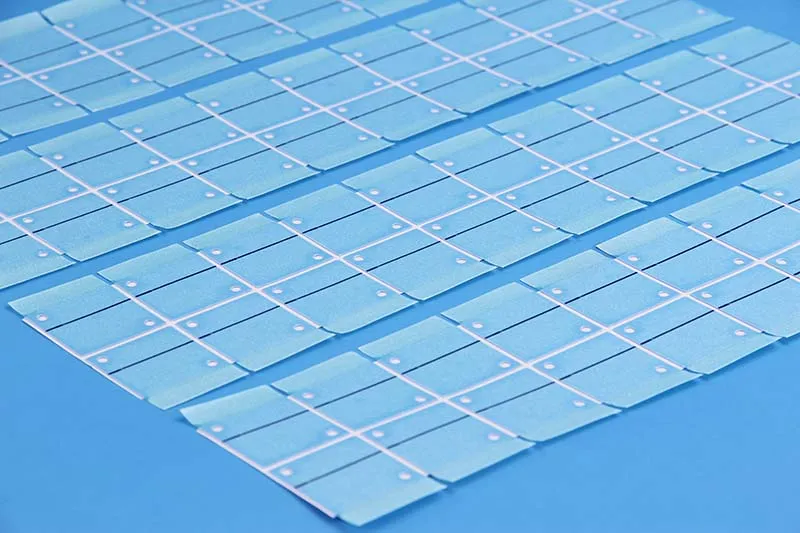
Sheen technology SP205A-60 phase change thermal sheet Reliability Test Report
| Test Items | Test Conditions | Test Equipment |
| High-Temperature Aging | 100℃,1000H | Precision Oven |
| Constant Temperature & Humidity | 85℃、85%RH,1000H | Constant Temperature & Humidity Chamber |
| Thermal Shock | -20℃~80℃,1000H | Constant Temperature & Humidity Chamber |
Criteria for Judging Test Results
| Performance Parameter | Initial Value | Acceptance Criteria |
| Thermal Conductivity(W/m*K) | 6.07 | ±30% |
| Thermal Resistance(℃*in²/W,@10 psi) | 0.082 | ±40% |
| Appearance | Smooth surface, uniform color | No abnormalities (e.g., powdering, discoloration) |
High-Temperature Aging Test Results
| High-Temperature Aging Test Record Sheet | |||||||||
| Aging Time | H | 0 | 200 | 400 | 600 | 800 | 1000 | Change | Assessment |
| Thermal Conductivity | W/m*k | 6.07 | 5.74 | 5.45 | 5.25 | 5.08 | 5.00 | -17.6% | OK |
| Thermal Resistance | ℃*in²/W,@10 psi | 0.082 | 0.084 | 0.089 | 0.095 | 0.102 | 0.107 | +30.5% | OK |
| Appearance | / | No change | No change | No change | No change | Slightly yellow | Slightly yellow | Slightly yellow | OK |
Constant Temperature and Humidity Test Results
| Constant Temperature and Humidity Test Record Sheet | |||||||||
| Aging Time | H | 0 | 200 | 400 | 600 | 800 | 1000 | Change | Assessment |
| Thermal Conductivity | W/m*k | 6.07 | 5.81 | 5.50 | 5.31 | 5.22 | 5.09 | -16.1% | OK |
| Thermal Resistance | ℃*in²/W,@10 psi | 0.082 | 0.090 | 0.094 | 0.098 | 0.101 | 0.105 | +28.0% | OK |
| Appearance | / | No change | No change | No change | No change | Slightly yellow | Slightly yellow | Slightly yellow | OK |
Thermal Shock Test Results
| Thermal Shock Test Record Sheet | |||||||||
| Aging Time | H | 0 | 200 | 400 | 600 | 800 | 1000 | Change | Assessment |
| Thermal Conductivity | W/m*k | 6.07 | 5.72 | 5.50 | 5.33 | 5.18 | 5.07 | -16.5% | OK |
| Thermal Resistance | ℃*in²/W,@10 psi | 0.082 | 0.086 | 0.092 | 0.099 | 0.105 | 0.110 | +34.1% | OK |
| Appearance | / | No change | No change | No change | No change | Slightly yellow | Slightly yellow | Slightly yellow | OK |
Test Conclusion: After aging for 1000 hours under various conditions, the SP205A-60 phase change thermal sheet maintained satisfactory performance with no changes to its appearance. Therefore, the reliability test results are deemed satisfactory.
After cycling, self-adhesive phase change thermal conductive material shows its true performance, which is why Sheen Technology keeps this step non-negotiable.
Need exact thermal conductivity, phase change temperature, thickness range, and reliability data before you choose? Download the product datasheets to compare self-adhesive phase change thermal conductive material options.
Scenario: High-Power LEDs Without Thermal Failures
High-power lighting keeps getting brighter, slimmer, and a bit more demanding. In an LED module, tight packaging pushes heat into tiny spaces, and poor thermal management shows up fast as dimming or early failure.
Heat Dissipation Challenges in LED Modules
When an LED runs hot, the junction temperature rises, and lifespan quietly shrinks. That’s the daily headache.
· Heat piles up at the die level
· Uneven dissipation across the module
· Long-term reliability drops under cycling loads
A practical way to look at it breaks down like this:
· Electrical input spikes → localized heating
· Poor interface contact → trapped thermal energy
· Rising junction stress → color shift and decay
This is why Self-adhesive phase change thermal conductive material keeps showing up. As a self-adhesive, phase change, thermal conductive material, it softens at operating temps, fills gaps, and stays put. Engineers using Sheen Technology often swap grease for this PCM-based approach and stop chasing runaway junction numbers.
Integrating PCM with Heat Sinks and Vapor Chambers
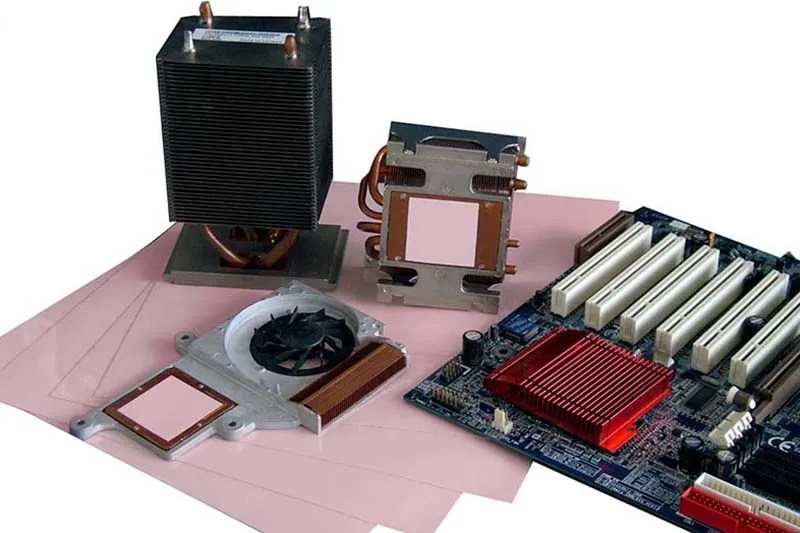
Integration is less about parts and more about contact quality. PCM behaves differently than paste.
✓ Solid during assembly
✓ Flows slightly under heat
✓ Bonds without clips
In practice, pairing PCM with a heat sink and vapor chamber follows a calm sequence:
· Align LED board
· Apply self-adhesive phase change thermal conductive material
· Compress to spec
· Heat once, let it settle
Nested view from the bench:
Integration stack
· PCM sheet:Phase transition layer
· Spreader:Vapor chamber
· Fins:Cooling airflow
Compared with grease, performance stays stable after shocks. That’s why Sheen Technology positions PCM as a cleaner path to predictable performance, using Self-adhesive phase change thermal conductive material again and again in compact luminaires.
Measuring Thermal Resistance and Shock Resistance
Testing turns claims into numbers. Measurement isn’t glamorous, but it tells the truth.
Material characterization snapshot
| Test Item | Value | Unit |
| Thermal resistance | 0.18 | °C/W |
| Through-plane conductivity | 6.5 | W/m·K |
| Shock cycles | 500 | cycles |
| ΔR after shock | +3 | % |
| Adhesion retention | 98 | % |
Engineers often group results like this:
Thermal side
· Steady-state resistance
· Transient response
Mechanical side
· Shock resistance
· Drop
· Vibration
Short takeaways:
· Lower resistance means cooler dies.
· Stable adhesion protects reliability.
· Consistent data beats assumptions.
Across labs, Self-adhesive phase change thermal conductive material keeps scoring well, especially when sourced from Sheen Technology, where testing aligns tightly with real operating abuse.
【Request a Custom Quote】 Not sure which self-adhesive phase change thermal conductive material fits your build? Send us your target operating temperature, thickness target, application type, and performance requirements, and we can help recommend the right thermal solution for your project.
Sheen Thermal
Dongguan Sheen Electronic Technology Co., Ltd · Founded in 2008
Manufacturer of thermal interface materials and silicone foam for automotive electronics, energy storage, power electronics, communications and consumer electronics.
Certified
- ISO 9001:2015
- ISO 14001:2015
- IATF 16949:2016
What we supply
- Thermal conductivity Up to 90 W/m·K
- Thickness 0.3–10.0 mm
- Custom & samples Die-cut to drawing, 3–7 days