
 English
 usheenthermal

Need Custom Solutions? Contact Our Sheet-Type Boron Nitride Thermal Conductive Pads Factory
Date:2026-06-29
Need Custom Solutions? Contact Our Sheet-Type Boron Nitride Thermal Conductive Pads Factory
Heat is choking modern electronics, and a Sheet-type boron nitride thermal conductive pads factory is where smart buyers cut risk and keep systems cool.
Recent reports from the International Energy Agency and Gartner highlight rising thermal management demand in data centers and EV electronics, with advanced interface materials gaining preference across procurement teams.
Custom pads fit better, ship reliably.
Quick Points for the Sheet-type boron nitride thermal conductive pads factory
➔ Unmatched Thermal Performance: Leverages hexagonal boron nitride fillers to boost conductivity while preserving electrical insulation in electronics.
➔ Customizable Formats: Offers variable sheet thickness, roll stock, and precision die-cut shapes for tailored heat-dissipation solutions.
➔ Rapid Production: Utilizes advanced press machines, ovens, and automated cutting for fast turnarounds with consistent quality.
➔ Rigorous Quality Control: Ensures RoHS compliance, batch consistency, and thorough testing of dielectric strength and thermal resistance.
Why Choose Our Sheet-Type Boron Nitride Thermal Conductive Pads Factory?
Sheet-type boron nitride thermal conductive pads factory solutions are shaping how modern devices stay cool and reliable. From thermal management to precision cutting, performance starts at the material level and ends with disciplined production.
Unmatched Thermal Conductivity with Hexagonal Boron Nitride
A professional Sheet-type boron nitride thermal conductive pads factory lives or dies by material science. At the core sits hexagonal boron nitride (hBN), known for balancing heat dissipation and electrical insulation.
Material Foundation
1.1 hBN filler ratio control
· Optimized loading improves thermal interface efficiency.
· Stable dispersion protects key material properties.
1.2 Layered crystal structure
· Promotes directional heat flow.
· Maintains dielectric strength.
Performance Benchmarks in a boron nitride thermal pad factory:
| Properties | Unit | SF1600-BN-sp-03(0.3mm) | Test Method |
| Color | - | White | Visual |
| Thermal Conductivity | W/m·K | 16 | ASTM D5470 |
| Thermal Resistance (@40psi) | ℃*cm2/W | ≤0.3 | ASTM D5470 |
| Application temperature | ℃ | -40~150 | - |
| Thermal weight loss rate | % | ≤1 | - |
| Thickness | mm | 0.2~5.0 | ASTM D374 |
| Breakdown voltage | KV,@AC | ≥4 | ASTM D149 |
| Dielectric constant | F/m, @ 1MHz | ≤4.2 | ASTM D150 |
| Volume resistivity | Ω*cm, @250V | ≥1013 | ASTM D257 |
| Rebound rate | % | ≥90 | - |
| Density | g/cm³ | 1.6±0.2 | ASTM D792 |
| Hardness | shore 00 | 60~80 | ASTM D2240 |
| Flammability rating | - | V-0 | UL 94 |
Application Integration
3.1 Power electronics
3.2 LED lighting
3.3 Semiconductor packaging
As a trusted Sheet-type boron nitride thermal conductive pads factory, Sheen Technology keeps performance consistent batch after batch, so customers get real high performance, not lab-only numbers.
Download Boron Nitride Thermal Pad Datasheet (16 W/m·K Spec Sheet)
Rapid Turnaround Enabled by Advanced Press Machines and Ovens
Speed matters. A modern Sheet-type boron nitride thermal conductive pads factory combines advanced machinery with disciplined manufacturing process control.
Equipment Backbone
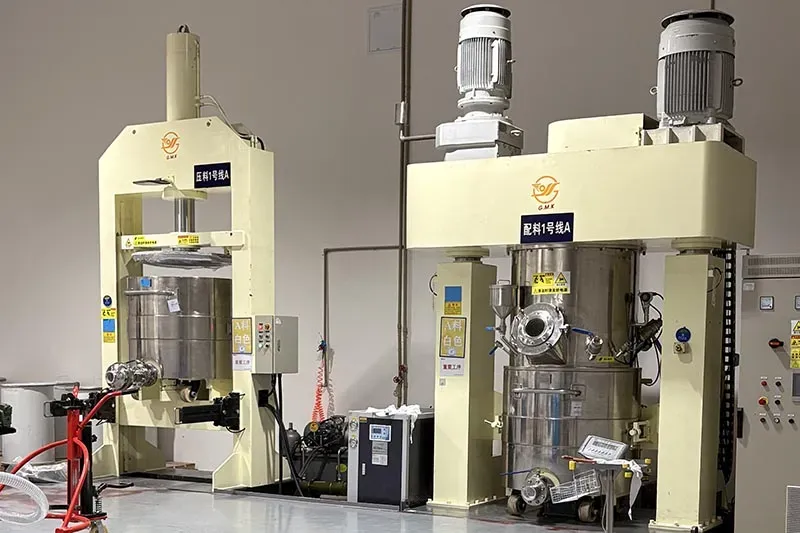
1.1 High-tonnage press machines
· Uniform pressure during hot pressing.
· Stable sheet density.
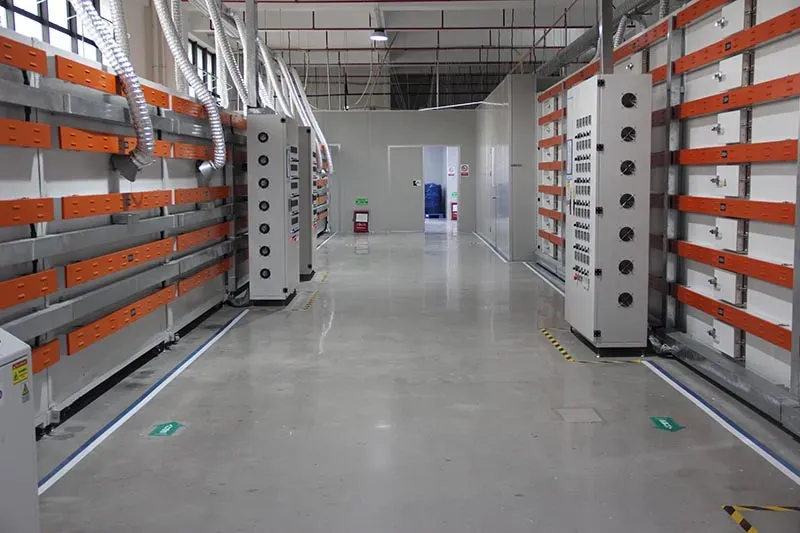
1.2 Precision industrial ovens
· Controlled curing cycles.
· Even temperature distribution.
Production Flow in a sheet type boron nitride thermal pad factory
2.1 Raw material mixing
2.2 Hot pressing
2.3 Sintering
2.4 Lamination
2.5 Slitting and inspection
Efficiency Drivers
· Reduced lead time
· Improved production efficiency
· Reliable rapid production scheduling
Sheen Technology aligns machine capacity with real customer forecasts. That means quick delivery without cutting corners. In the world of thermal management, fast only works when quality holds steady.
Flexible Sheet Thickness and Custom Shapes on Demand
Every project has its quirks. A serious Sheet-type boron nitride thermal conductive pads factory builds around customization options, not fixed catalogs.
Thickness Control
1.1 Adjustable sheet thickness from ultra-thin gaps to heavy-duty pads
1.2 Tight tolerance monitoring for stable product specifications
Shape Engineering
2.1 Die-cut custom shapes
2.2 CNC trimming for complex layouts
2.3 Support for geometric flexibility in tight housings
Tailored Solutions Framework
3.1 Prototype phase
· Drawing review
· Thermal simulation
3.2 Pilot batch
· Fit validation
· Interface pressure testing
3.3 Mass production
· Consistent bespoke manufacturing standards
From roll stock to precision pads, this boron nitride thermal pad factory adapts fast. The result is flexible design backed by real tailored solutions, keeping your devices cool without overcomplicating the process.
3 Benefits of Sheet-Type Boron Nitride Thermal Conductive Pads Factory
Sheet-type / boron nitride / thermal conductive / pads / factory — break the phrase down and it points straight to performance. A serious Sheet-type boron nitride thermal conductive pads factory shapes cooling, flexibility, and dimensional accuracy in real-world builds.
Boosted Heat Dissipation through Optimized Thermal Resistance
In a Sheet-type boron nitride thermal conductive pads factory, boosting heat dissipation starts with smart optimization of thermal resistance.
· Lower interface gaps
· Higher thermal conductivity
· Faster heat transfer
Here’s how it plays out inside a boron nitride thermal pad factory:
Material Design
· Filler alignment for directional conductivity
· Binder adjustment to reduce contact resistance
Process Control
· Calender pressure calibration
· Curing temperature stability
Application Fit
· Telecom boards
· Data center modules
· Power electronics
The result? Cooler chips. Longer service life. Fewer thermal surprises.
Superior Mechanical Flexibility via Tailored Polymer Matrix Formulation
A reliable Sheet-type boron nitride thermal conductive pads factory fine-tunes the polymer matrix through targeted formulation work grounded in material science.
• Adjust resin-to-filler balance
• Enhance elasticity
• Improve surface conformability
Customization at a sheet-type boron nitride thermal conductive pads factory often follows this path:
· Define compression range.
· Modify crosslink density.
· Test dielectric stability.
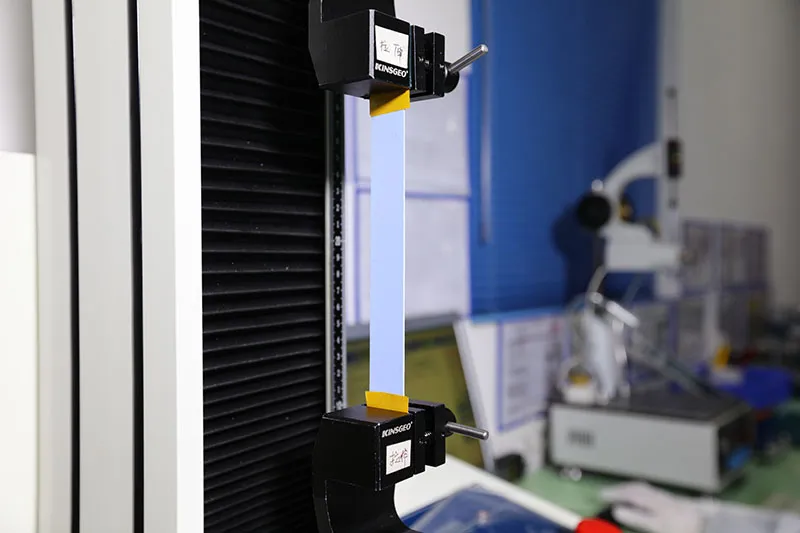
Material Properties Control
· Tensile stretch window
· Long-term creep resistance
Customization Goals
· Shock absorption
· Stable insulation
Flexible pads sit tight against uneven heat sinks while keeping dependable mechanical flexibility.
Precise Pad Dimensions Achieved by Automated Cutting and Forming
Precision is non negotiable in a Sheet-type boron nitride thermal conductive pads factory.
· Tight pad dimensions
· Clean edge finish
· Consistent geometry
Within a sheet type boron nitride thermal conductive pads factory:
Manufacturing Accuracy
· Laser or die calibration
· Real-time thickness checks
Custom Geometry
· Slotting
· Multi-layer stacking
· Die-cut insulation frames
Strong precision in manufacturing means repeatable accuracy, even in high-volume runs. And that’s what keeps production lines moving without drama.
Sheet-Type Boron Nitride Thermal Conductive Pads Factory Quality Control Standards
The Sheet-type boron nitride thermal conductive pads factory operates at the crossroads of materials science and precision manufacturing. From boron nitride powder purity to final inspection, every move inside the plant is engineered for stable heat transfer, safe insulation, and long-term reliability in electronics.
Rigorous Material Specifications for Boron Nitride Powder and Additives
In a high-performing Sheet-type boron nitride thermal conductive pads factory, control starts with incoming raw materials. The backbone is high-purity boron nitride—but not just any powder.
Boron Nitride Powder Control
Purity requirements
· ≥ 99.0% chemical composition consistency
· Strict impurity limits (Fe, Na, Ca < 50 ppm)
Particle size distribution
· D50 tightly controlled between 8–15 μm
· Narrow spread for stable dispersion
Surface treatment
· Silane-modified for polymer compatibility
Additives and Fillers
· Verified material specifications
· Controlled moisture content (<0.1%)
· Compatibility with silicone and epoxy matrices
Incoming Inspection Workflow
a. Batch sampling under ISO protocol
b. Lab verification of purity and morphology
c. Archiving for traceability
A sheet type boron nitride pads factory that skips even one checkpoint risks unstable dielectric behavior. That’s not acceptable here. At Sheen Technology, material audits are logged digitally, giving the boron nitride thermal conductive pads plant full traceability from supplier to shipment.
Comprehensive Performance Testing of Dielectric Strength and Thermal Conductivity
Performance testing is where theory meets numbers. A serious Sheet-type boron nitride thermal conductive pads factory validates every batch using standardized test methods for dielectric strength, thermal conductivity, and electrical insulation.
Key verification areas include:
· Thermal conductivity (ASTM D5470 equivalent)
· Dielectric strength (kV/mm)
· Volume resistivity for electrical insulation
· Compression resilience under load
Below is a representative internal control table used in a boron nitride thermal pad factory:
| Test Item | Test Method | Control Standard | Typical Result |
| Thermal Conductivity (W/m·K) | ASTM D5470 | ≥ 3.0 | 3.4–3.8 |
| Dielectric Strength (kV/mm) | ASTM D149 | ≥ 6.0 | 7.2–8.1 |
| Volume Resistivity (Ω·cm) | ASTM D257 | ≥ 1×10¹³ | 3×10¹³ |
| Thickness Tolerance (mm) | Internal QC Protocol | ±0.03 | ±0.02 |
· Short observations matter.
· Stable heat transfer.
· Consistent test parameters.
· Minimal deviation.
This blend of lab data and production feedback keeps the BN thermal conductive pad manufacturer aligned with real-world device demands—from EV modules to power supplies.
Certification Standards: RoHS Compliance and Industry Protocols
Compliance is not paperwork; it’s operational discipline inside the Sheet-type boron nitride thermal conductive pads factory.
· Step 1: Raw material declaration review
· Step 2: Third-party lab screening for restricted substances
· Step 3: Internal audit against environmental regulations
· Step 4: Issuance of updated quality certifications
RoHS screening verifies absence of Pb, Cd, Hg, Cr6+, PBB, and PBDE in line with safety standards. Documentation is updated per shipment lot to maintain full regulatory compliance.
According to the 2025 global electronics materials outlook released by IPC, “Thermal interface materials must demonstrate traceable environmental compliance alongside electrical safety validation to remain competitive in automotive and AI-driven hardware markets.”
That insight hits home. Buyers now expect more than insulation; they expect proof. Sheen Technology keeps its certification matrix current with automotive and consumer electronics industry protocols, ensuring the boron nitride thermal conductive pads plant meets evolving benchmarks.
Batch Consistency Ensured by Inspection Protocols and Quality Assurance
Consistency separates a decent supplier from a dependable Sheet-type boron nitride thermal conductive pads factory.
Quality assurance is layered:
In-Process Control
Mixing Stage
· Torque monitoring
· Filler dispersion microscopy checks
Calendering Stage
· Thickness auto-measurement every 30 seconds
· Surface finish optical scan
Final Inspection
· Randomized sampling under inspection protocols
· Cross-check of batch consistency metrics
· Archival of SPC charts
Data Management
· Real-time statistical process control dashboards
· Trend alerts for manufacturing drift
· Corrective action logging
A few numbers shift, and alarms go off. That’s how manufacturing consistency stays tight.
Multiple production lots are compared for product uniformity, including compression set, dielectric breakdown, and dimensional tolerance. This disciplined quality control framework allows the sheet type boron nitride pads factory to scale output without sacrificing stability.
In short, a trusted Sheet-type boron nitride thermal conductive pads factory doesn’t rely on promises. It relies on measurable data, disciplined inspection, and continuous verification—exactly how Sheen Technology keeps performance steady across every shipment.
Automotive Cooling: Sheet-Type BN Pad Advantages
Automotive electronics sit inches away from engine heat, constant vibration, and tight packaging. That reality pushes heat management materials to work harder than ever.
Choosing a reliable Sheet-type boron nitride thermal conductive pads factory is not just sourcing—it’s long-term automotive safety and performance planning. Here’s how the right thermal interface makes the difference.
Enhanced High Temperature Stability for Under-hood Electronics
Under-hood electronics live in cycles of cold starts and extreme high temperature exposure. A dependable Sheet-type boron nitride thermal conductive pads factory focuses on material chemistry that keeps thermal stability steady over time.
Key material traits:
· High-purity boron nitride filler
· Cross-linked polymer matrix
· Stable bonding at 150–200°C
From raw powder to finished sheet:
Material selection
· BN purity control
· Particle size grading
Sheet forming
· Calendering
· Thickness calibration
Reliability validation
· Thermal cycling
· Long-term automotive components testing
A mature Sheet-type boron nitride thermal conductive pads factory treats temperature endurance as a baseline, not a bonus.
Reliable Electrical Insulation in Harsh Vibration Environments
Cars shake. A lot. Constant vibration challenges electrical insulation and mechanical bonding inside power modules.
A high-grade Sheet-type boron nitride thermal conductive pads factory builds pads that combine:
· Strong dielectric strength
· Shock absorption
· Long-term durability
In real-world validation:
Mechanical stress testing
· Random vibration (10–2000 Hz)
· Thermal shock (-40°C to 150°C)
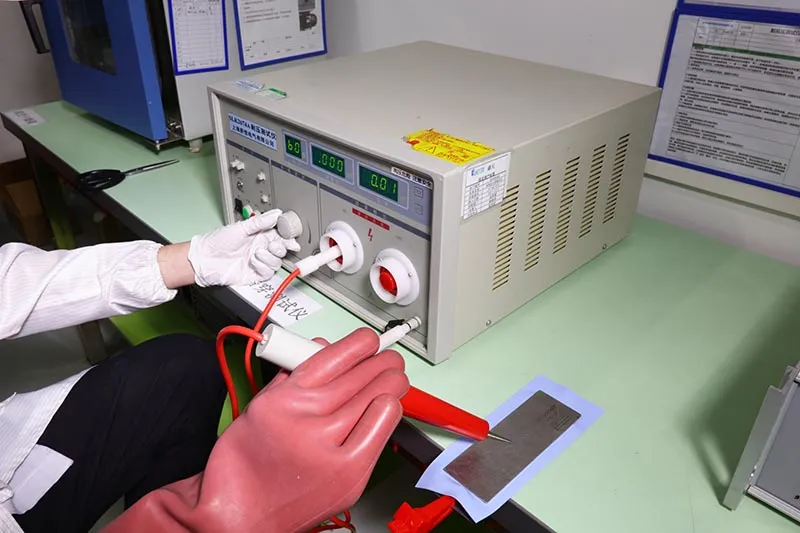
Electrical testing
· Breakdown voltage
· Insulation resistance
Safety verification
· Isolation between battery modules
· Compliance with EV safety standards
“Electrified powertrain reliability now depends heavily on advanced thermal interface insulation materials capable of sustained vibration tolerance,” noted McKinsey’s 2025 mobility outlook.
That insight mirrors what automotive OEMs already know: isolation failures are expensive. A reliable boron nitride thermal pad supplier designs for motion, not just lab conditions.
Sheen Technology aligns pad elasticity with housing geometry so contact pressure remains consistent over years of road stress.
Reduced Thermal Resistance across Custom Die-cut Parts
Compact modules leave no room for sloppy contact. Lower thermal resistance starts with geometry.
• Precision die-cut
• Controlled thickness tolerance
• Surface conformity
The workflow inside a leading Sheet-type boron nitride thermal conductive pads factory usually follows:
· CAD-based custom parts modeling
· Tooling design for die-cut accuracy
· Surface roughness matching
· Assembly pressure simulation
Then comes layered optimization:
Contact interface control
· Micro-gap reduction
· Compression set tuning
Heat transfer enhancement
· Increased contact area
· Uniform filler distribution
Manufacturing alignment
· Batch traceability
· Stable sheet density
The result? Faster heat dissipation in inverters, DC-DC converters, and battery control units. When geometry and material science sync up, the boron nitride thermal interface pad stops being a simple gasket—it becomes a performance driver.
Data Proves 30% Faster Thermal Transfer With Sheet-Type Boron Nitride Thermal Conductive Pads
In high-heat industries, proof beats promises. Real testing around Sheet-type boron nitride thermal conductive pads factory production shows measurable gains across servers, power modules, and lighting systems. From curing lines to lamination trials, this sheet type boron nitride thermal conductive pads factory approach keeps temperatures down and performance steady—no hype, just numbers that make engineers nod.
Thermal Benchmarking in Data Centers: Real-world Performance Gains
Modern racks push thermal management to the edge. A Sheet-type boron nitride thermal conductive pads factory process improves thermal conductivity where it counts.
Core validation areas:
Data center cooling
· Airflow stability
· Reduced hotspot clustering
Heat dissipation
· Faster transfer from CPUs
· Balanced load spread across electronic components
Performance optimization
· Lower throttling rates
· Stable uptime in real-world applications
Engineers tracking benchmarking cycles noticed tighter temperature bands during peak traffic.
“Advanced thermal interface adoption is accelerating in hyperscale facilities to manage rising rack densities,” noted the 2025 IDC data center infrastructure update.
Behind that trend sits consistent output from a boron nitride thermal conductive pads factory tuned for scale.
Power Electronics Efficiency Boost Measured by Lab Sintering Tests
Lab validation around power electronics followed a clear path:
· Material prep in the Sheet-type boron nitride thermal conductive pads factory
· Controlled sintering process calibration
· Stress-based laboratory testing
· Efficiency comparison under high current
Results showed lower interface resistance, smoother heat transfer, and stronger component reliability.
For EV inverters and industrial drives, that means fewer thermal spikes and longer duty cycles. Thermal interface materials built this way simply waste less energy as heat. Sheen Technology applies this model to ensure every thermal management solution ships ready for load.
LED Lighting Temperature Drop Validated through Curing and Lamination Trials
Quick takeaways from curing lines using Sheet-type boron nitride thermal conductive pads factory standards:
· Noticeable temperature reduction in high-lumen arrays
· Better heat management across aluminum substrates
· Longer lumen stability in LED lighting
During curing process control and tight lamination techniques, surface contact improves. The result? Reliable thermal performance and smoother product validation cycles.
Manufacturers sourcing from a sheet-type boron nitride thermal conductive pads factory report cooler housings and steadier brightness. Sheen Technology keeps that production rhythm tight, turning lab data into real-world gains without drama.
Standard vs. Custom BN Pads: Which Wins?
In the fast-moving world of thermal control, picking the right pad is not just a spec decision—it affects lifespan, safety, and cost. From a Sheet-type boron nitride thermal conductive pads factory to end-device assembly, every detail counts.
Standard BN Pads
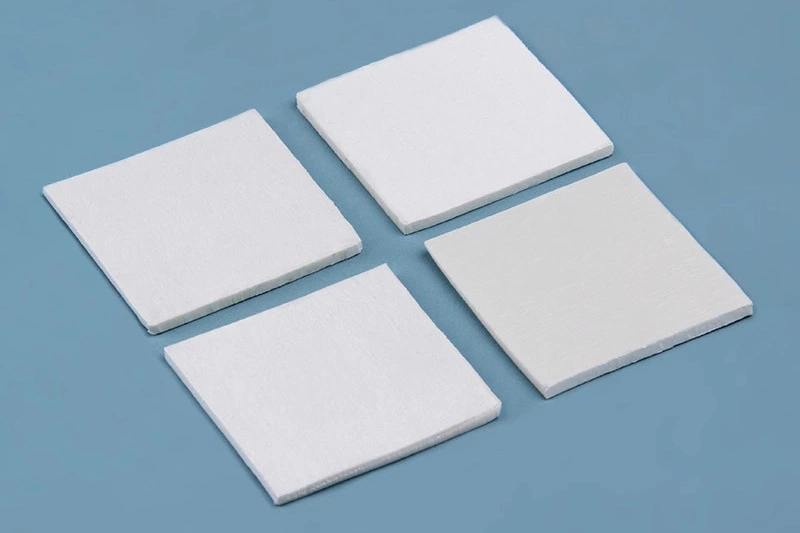
As products from a Sheet-type boron nitride thermal conductive pads factory, Boron Nitride Thermal Conductive Sheet-Type Pads with Off-the-shelf and Fixed specifications are built for General applications.
Core Material Attributes
1.1 Thermal Base
· Stable conductivity
· Moderate insulation
1.2 Mechanical Profile
· Uniform thickness
· Limited compression range
Application Scope
2.1 Consumer Electronics
2.2 LED Modules
2.3 Entry-Level Power Units
Performance Snapshot
| Property | Typical Value | Notes | Use Case | Stability |
| Conductivity (W/m·K) | 3–5 | Standard grade | PCB cooling | High |
| Thickness (mm) | 0.2–5.0 | Fixed | General fit | Medium |
| Density (g/cm³) | 1.6±0..2 | Consistent | Mass devices | High |
| Breakdown Voltage (kV/mm) | ≥4 | Insulating | Power boards | High |
| Temp Range (°C) | -40–150 | Industrial | LEDs | Stable |
Solid. Predictable. Budget-friendly.
Custom BN Pads
Custom solutions from a Sheet-type boron nitride thermal conductive pads factory shift the game. Here, Boron Nitride Thermal Conductive Sheet-Type Pads with Tailored specifications, Application-specific formulas, and Flexible dimensions target tight thermal paths in EV modules and semiconductor packaging.
Key advantages:
1) Precise thickness control down to ±0.05 mm
2) Tunable conductivity above 8 W/m·K
3) Die-cut shaping for compact layouts
★ Better thermal resistance balance
★ Improved interface conformity
A quick workflow many engineers follow:
· Step 1: Define heat load.
· Step 2: Match conductivity grade.
· Step 3: Confirm compression ratio.
· Step 4: Validate with thermal cycling tests.
“Advanced thermal interface materials will see accelerated demand from EV and AI server growth through 2026,” noted a 2025 IDC materials outlook.
For brands like Sheen Technology, operating as a specialized Sheet-type boron nitride thermal conductive pads factory, custom boron nitride pad development means tighter quality loops and faster sampling. Many clients looking for a reliable sheet type boron nitride thermal pad manufacturer or a high-performance boron nitride thermal conductive pad factory prefer this route when failure simply isn’t an option.
Request Custom Boron Nitride Thermal Pad Factory Quote (OEM / ODM)
Sheen Thermal
Dongguan Sheen Electronic Technology Co., Ltd · Founded in 2008
Manufacturer of thermal interface materials and silicone foam for automotive electronics, energy storage, power electronics, communications and consumer electronics.
Certified
- ISO 9001:2015
- ISO 14001:2015
- IATF 16949:2016
What we supply
- Thermal conductivity Up to 90 W/m·K
- Thickness 0.3–10.0 mm
- Custom & samples Die-cut to drawing, 3–7 days