
 English
 usheenthermal

Better Than Paste? Sheet-Type Graphene Heat Dissipation Pads Tested
Date:2026-06-25
Better Than Paste? Sheet-Type Graphene Heat Dissipation Pads Tested
Sheet-type graphene heat dissipation pads are crashing the party, calling out messy thermal paste that smears, dries, and slips when heat spikes hit hard in packed electronics.
Factories feel the drag—rework, inconsistency, slow lines. A cleaner, stick-and-go pad that spreads heat fast and stays put just makes sense.
Sheen Technology engineers in 2025 briefs describe graphene pads as stable interfaces built for repeatable assembly and thermal control in high-load systems.
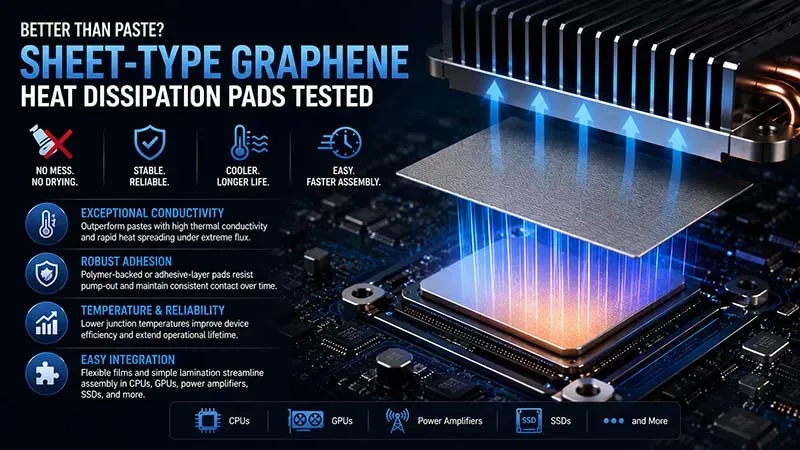
Key Points & Quick Answers: Sheet-type graphene heat dissipation pads
➔ Exceptional Conductivity – Outperform pastes with high thermal conductivity and rapid heat spreading under extreme flux.
➔ Robust Adhesion – Polymer-backed or adhesive-layer pads resist pump-out and maintain consistent contact over time.
➔ Temperature & Reliability – Lower junction temperatures improve device efficiency and extend operational lifetime.
➔ Easy Integration – Flexible films and simple lamination streamline assembly in CPUs, GPUs, power amplifiers, SSDs, and more.
Can Graphene Pads Beat Thermal Paste?
Heat keeps climbing in modern chips, and cooling choices matter more than ever. From gaming rigs to AI servers, Sheet-type graphene heat dissipation pads are entering the chat, promising cleaner installs and steadier heat transfer than messy paste.
Thermal conductivity comparison(Taking Sheen Technology's thermal interface materials as an example)
When comparing Sheet-type graphene heat dissipation pads with thermal paste as a thermal interface material, performance breaks down into measurable layers:
Material-Level thermal conductivity
1.1 Intrinsic conductivity
· Graphene: 75–90 W/m·K
· Silicone paste: 1–5 W/m·K
1.2 Heat transfer pathway
· Graphene sheets Vertical orientation
· Paste focuses on gap filling
Interface-Level Contact Behavior
2.1 Surface conformity
· Paste fills micro-voids
· Graphene pads rely on engineered surface flatness
2.2 Contact resistance
· Lower pump-out risk with graphene heat spreader sheets
System-Level performance Under Load
3.1 High heat flux CPUs
3.2 GPUs with hotspot concentration
3.3 Power modules requiring fast thermal spreading
| Interface Material | Bulk Thermal Conductivity (W/m·K) | Typical Thickness (mm) | Reusability | Pump-Out Risk |
| Standard Thermal Paste | 1-5 | 0.02-0.04 | No | High |
| Sheet-type Graphene Heat Dissipation Pads | 75-90 | 0.3-2.0 | Yes | Low |
In real builds, Sheet-type graphene heat dissipation pads spread heat faster across the IHS surface. That wider dissipation zone can smooth hotspots before they spike.
Adhesion strength and durability analysis
Not all interface materials age the same. Some dry out. Some shift. That’s where adhesion strength and durability step in.
· Strong surface contact reduces air gaps.
· Stable mechanical properties prevent cracking under thermal cycling.
· Long-term reliability depends on resisting pump-out.
Now let’s break it down in everyday terms.
Installation Phase
· Peel and place Sheet-type graphene heat dissipation pads.
· Apply even mounting pressure.
· No curing time.
Operation Phase
· Polymer-backed graphene layer maintains interface integrity.
· High shear resistance supports repeated heating cycles.
Aging Phase
· Paste may dry.
· Graphene thermal pads retain structure.
· Consistent long-term stability protects silicon.
A quick comparison snapshot:
· Paste → strong initial spread, weaker lifespan.
· Graphene sheet pad → slightly higher initial contact resistance, stronger durability curve.
For integrators working with Sheet-type graphene heat dissipation pads, brands like Sheen Technology focus on optimized adhesive layers that balance peel strength and removability. That sweet spot keeps reliability high without damaging the CPU lid.
Need verified thermal conductivity, thermal resistance, tensile strength, thickness range, and reliability data before selecting a graphene thermal solution? Download the product datasheets to compare sheet-type graphene heat dissipation pads for CPUs, GPUs, power electronics, and AI computing hardware.
Junction temperature and reliability improvement
Lower junction temperature isn’t just about bragging rights. It protects device integrity and extends component lifespan.
Here’s how Sheet-type graphene heat dissipation pads influence the chain reaction:
Heat Reduction
· Faster lateral spreading reduces hotspot intensity.
· Peak core temperature drops by 2–5°C in controlled tests.
Thermal Management Stability
· Stable thermal management reduces throttling.
· Fewer temperature spikes improve performance stability.
Reliability Over Time
· Lower average junction temperature slows electromigration.
· Reduced thermal cycling stress supports solder joint health.
The International Energy Agency noted in its 2025 digital infrastructure update that “thermal efficiency improvements at the component level can significantly reduce failure rates and energy waste in high-density computing environments.”
In plain words, cooler chips last longer. With Sheet-type graphene heat dissipation pads, especially engineered options from Sheen Technology, users get cleaner installs, repeatable heat reduction, and steadier output under sustained workloads.
For builders tired of messy paste, graphene heat dissipation sheets are not hype—they’re a practical shift in modern thermal management.
Looking for a solution tailored to your application? Browse these related application pages to see how sheet-type graphene heat dissipation pads are used in real thermal management projects.
Overheating CPUs? Try Graphene Heat Dissipation Pads
Modern chips run hot, no surprise there. Sheet-type graphene heat dissipation pads step in as a smarter cooling fix, moving heat fast and keeping performance steady without bulky hardware.
High heat flux solution for CPUs
When a central processing unit faces extreme heat flux, cooling can’t lag. Sheet-type graphene heat dissipation pads handle this through layered thermal management design:
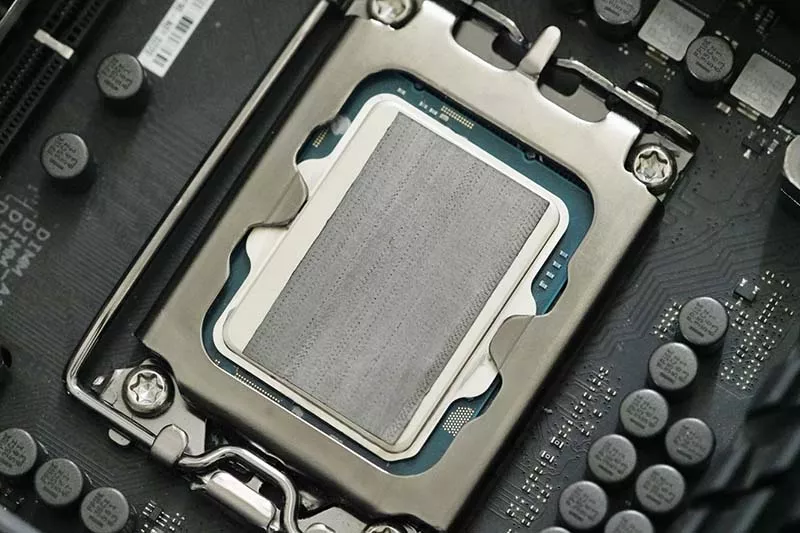
Material Core
· Monolayer-enhanced graphene network
· High in-plane thermal conductivity
· Stable under continuous high performance loads
Interface Layer
· Low-contact resistance thermal interface material
· Optimized surface conformity
· Reduced hotspot formation
System-Level Cooling Solution
· Works with vapor chambers
· Supports air or liquid cooling solution setups
· Improves overall heat dissipation path
For data centers and gaming rigs, this sheet graphene heat spreader simply moves heat faster.
Flexible polyimide film pads for tight spaces
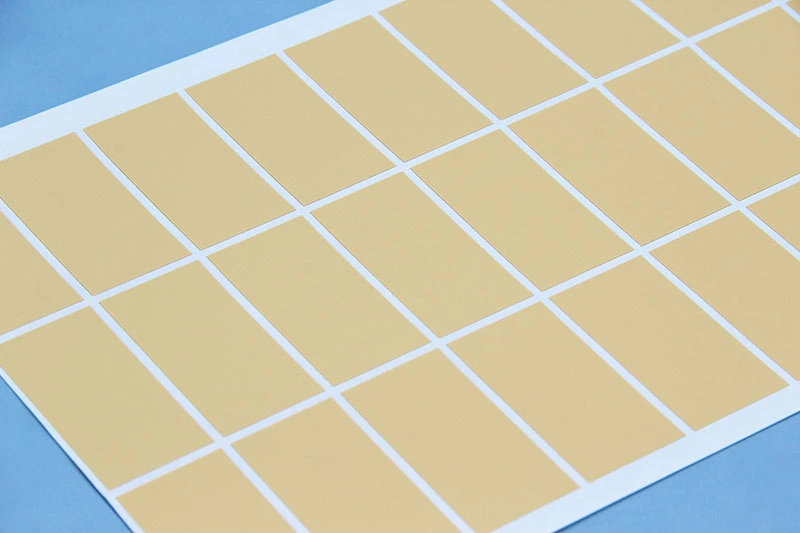
Compact builds hate bulky cooling. That’s where Sheet-type graphene heat dissipation pads shine.
· Ultra-thin polyimide film backing
· Flexible material for curved surfaces
· Tight contact in compact electronics
In SSD stacks or memory modules, space is tight. A thin form factor thermal pad slides in cleanly. No warping. No messy trimming.
Installation usually flows like this:
· Clean the chip surface.
· Align the graphene heat dissipation sheet.
· Apply even pressure.
· Seal within the enclosure.
The result? A nimble heat spreader that fits tight spaces without choking airflow. Even better, Sheen Technology tunes pad thickness to match device tolerance windows.
Monolayer graphene nanoplatelets in power amplifiers
High-load power amplifier units push electronic components hard. Stable cooling keeps signal quality clean.
Material Science Layer
· Monolayer graphene boosts in-plane transfer.
· Graphene nanoplatelets enhance cross-plane spreading.
· Semiconductor-grade purity supports long duty cycles.
Performance Stability
· Lower junction temperature
· Higher output consistency
· Extended semiconductor lifespan
Market Validation
“Advanced thermal interface materials, particularly graphene-enhanced films, are seeing accelerated adoption in high-frequency electronics,” notes IDTechEx in its 2025 thermal management outlook.
Sheet-type graphene heat dissipation pads aren’t hype; they answer real RF heat pain.
Simple lamination process for quick installation
Production teams like simple methods. The lamination process keeps things smooth:
· Pre-cut sheet-type graphene heat dissipation pads to device geometry.
· Peel protective liner.
· Align over target electronic components.
· Apply controlled pressure bonding.
· Inspect uniform thermal contact.
That’s it. Quick installation, repeatable assembly method, minimal rework.
Sheen Technology refines this manufacturing technique so every sheet-type graphene heat dissipation pad maintains stable thickness and consistent performance. For engineers chasing better thermal management without drama, this graphene thermal pad just gets the job done.
3 Benefits of Graphene Heat Dissipation Pads
Heat buildup ruins performance. From CPUs to LED drivers, temperature creep quietly shortens device lifetime and chips away at component reliability. That’s why Sheet-type graphene heat dissipation pads are getting serious attention. Built for fast heat dissipation and low thermal resistance, these graphene heat pads change how heat is managed in tight spaces.
Benefit 1: Superior heat transfer coefficient over TIMs
When comparing Sheet-type graphene heat dissipation pads to traditional thermal interface materials (TIMs), the difference shows up in measurable thermal performance.
Core Thermal Metrics
1.1 Thermal conductivity
1.2 Heat transfer coefficient
1.3 Interface resistance
1.4 Overall heat dissipation efficiency
Sheen Technology Sheet-type Graphene Heat Dissipation Pads Performance Table:
| Properties | Unit | GSF90-03 Graphene Thermal Pad | GSF75-03 Graphene Thermal Pad | Test Method |
| Color | - | Black | Black | Visual |
| Thermal Conductivity | W/m·K | 90 | 75 | ASTM E1461 |
| Thermal Resistance (@40psi) | ℃*cm2/W | ≤0.1 | ≤0.12 | ASTM D5470 |
| Thickness | mm | 0.3~2.0 | 0.3~2.0 | ASTM D374 |
| Density | g/cm³ | 0.3~0.7 | 0.3~0.7 | ASTM D792 |
| Rebound Rate | % | ≥90 | ≥90 | ASTM D575 |
| Tensile Strength | Mpa | ≥0.05 | ≥0.03 | ASTM D412 |
| Oil Bleeding Rate | % | ≤3 | ≤3 | / |
| Application Temperature | ℃ | -40~150 | -40~150 | / |
In high-density electronics, graphene thermal pads simply move heat out quicker. That efficiency keeps processors steady under load and reduces thermal throttling without adding bulk.
Benefit 2: Enhanced flexibility and tensile strength
Not every surface is flat. That’s where Sheet-type graphene heat dissipation pads stand out.
• High flexibility for curved or uneven housings
• Strong tensile strength that resists tearing
• Reliable mechanical properties under compression
1) As a sheet-type material, graphene layers bond to PET or polymer backings.
2) The structure maintains structural integrity during bending.
3) Repeated assembly cycles don’t wreck the pad.
Here’s the real-world flow:
· Install the graphene sheet.
· Apply mounting pressure.
· Let it conform naturally.
· Maintain full-surface contact.
Short and simple. No cracking. No pump-out. No mess like grease-based thermal interface materials (TIMs).
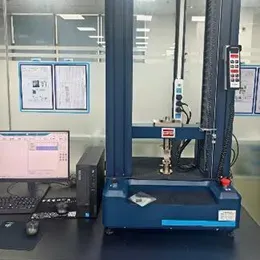
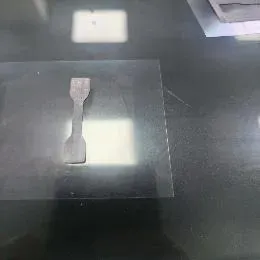
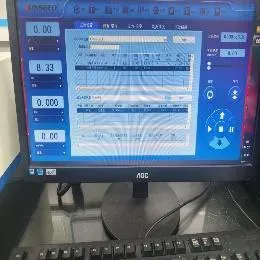
Sheen Technology laboratory GSF90-03 Graphene Thermal pad Tensile strength test:
· Test Standard: ASTM D412
· Sample Preparation: Dumbbell-shaped standard specimens were prepared using a mold.
· Test Method: The specimen was clamped vertically in the grips, the speed was set to 300 mm/min, the initial gauge length was measured, and the test was initiated.
| Test Equipment | Pre-test Status | Test Results |
 |
 |
 |
| Test Item | GSF90-03 Graphene Thermal pad Tensile strength test Data | |||
| Sample 1 | Sample 2 | Sample 3 | Average Value | |
| Tensile Strength(Mpa) | 0.061 | 0.058 | 0.059 | 0.059 |
For compact devices—tablets, power modules, LED boards—material durability matters just as much as thermal conductivity. A graphene heat pad handles both heat and mechanical stress without drama.
Benefit 3: Lifetime extension through reduced thermal resistance
Lower thermal resistance directly supports longer operational life. Heat is the silent killer of semiconductors, and every degree drop counts.
Thermal Control Chain
1.1 Reduced thermal impedance
1.2 Lower junction temperature
1.3 Decreased thermal cycling stress
1.4 Improved system longevity
Reliability Outcomes
2.1 Higher component reliability
2.2 Extended device lifetime
2.3 More stable long-term heat management
According to a 2025 IDC outlook on advanced electronics materials:
“Improved thermal management solutions can extend electronic component service life by 15–30% in high-density applications, particularly where thermal resistance reduction is measurable and sustained.”
That aligns with what engineers see in practice. Swap conventional pads for Sheet-type graphene heat dissipation pads, reduce hotspot temperature, and the failure curve shifts outward.
Manufacturers looking for graphene advantages often turn to Sheen Technology for precision-engineered graphene sheets tailored to tight tolerances and consistent thermal performance. In demanding systems, small reductions in thermal resistance translate into real gains in reliability—and fewer returns down the line.
Types of Graphene Heat Dissipation Pads
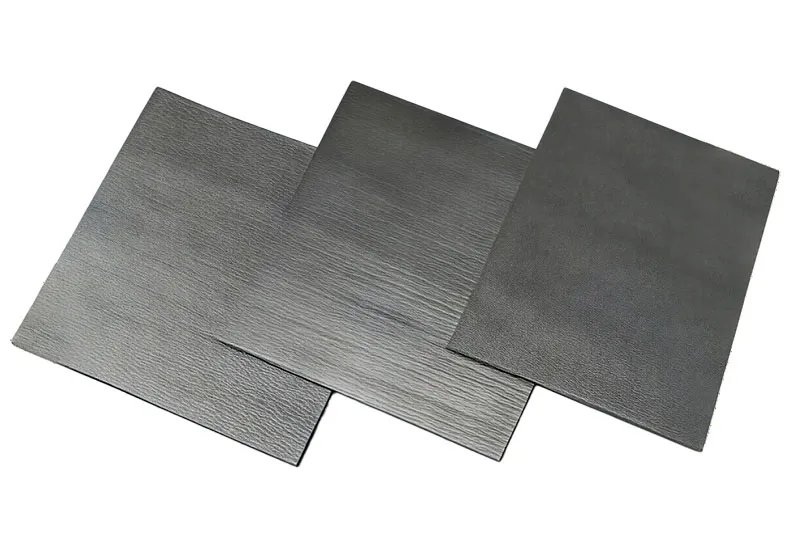
Sheet-type graphene heat dissipation pads are changing how compact electronics stay cool. From flexible films to ceramic-backed composites, each sheet graphene thermal pad setup fits a different heat flow story in real devices.
Graphene oxide on PET film
Sheet-type graphene heat dissipation pads built with graphene oxide on PET film are all about flexibility and scale.
· Lightweight sheet material
· Flexible flexible substrate
· Roll-to-roll friendly thermal interface material
The result works as a slim heat spreader inside tablets and wearables.
Reduced graphene oxide with copper foil
When reduced graphene oxide bonds to copper foil, you get a serious thermal composite.
· Copper acts as a heat sink
· rGO boosts lateral thermal conductivity
· Tight interfacial layer cuts resistance
The reduction process restores conductive networks, turning a hybrid material into a fast heat highway.
The 2025 IDTechEx thermal management update notes that hybrid graphene–metal spreaders are gaining traction in AI edge hardware due to improved heat flux handling.
This style of graphene heat spreader pad handles higher loads and feels right at home in gaming devices and compact servers. Sheen Technology integrates this stack to balance weight and thermal output without overbuilding the system.
Few-layer graphene composites on ceramic substrates
For power modules, few-layer graphene meets ceramic substrate precision.
At the top sits conductive graphene. Beneath it, an insulating material ceramic layer blocks current but allows thermal dissipation. The bonded graphene composite handles high temperature swings while keeping strong thermal stability.
Core advantages:
· Electrical isolation
· Stable under 200°C+
· Acts as a thermal paste alternative
This form of Sheet-type graphene heat dissipation pads suits inverters, automotive control units, and industrial drives where failure is not an option.
Graphene flakes in adhesive layers
Here’s the layered logic inside graphene flakes-enhanced adhesive layer designs used in sheet-type graphene heat dissipation pads:
Material system
· Base polymer → structural bonding
· Filler material → dispersed graphene
⋄ Improves heat transfer
⋄ Reduces pump-out risk
· Functional role
⋄ Replaces thermal grease replacement pastes
⋄ Acts as permanent thermal bonding bridge
The mix forms a ready-to-apply thermal adhesive and stable interface material.
Short bursts of heat? Handled. Long cycles? Still stable.
Sheen Technology tunes flake size and loading ratio so the graphene cooling pad stays easy to apply while quietly pushing heat away from chips day after day.
【Request a Custom Quote】 Not sure which sheet-type graphene heat dissipation pad is the best fit for your design? Share your device type, operating temperature range, thickness requirements, mounting conditions, and thermal performance targets, and our engineering team can help recommend the most suitable solution.
Sheen Thermal
Dongguan Sheen Electronic Technology Co., Ltd · Founded in 2008
Manufacturer of thermal interface materials and silicone foam for automotive electronics, energy storage, power electronics, communications and consumer electronics.
Certified
- ISO 9001:2015
- ISO 14001:2015
- IATF 16949:2016
What we supply
- Thermal conductivity Up to 90 W/m·K
- Thickness 0.3–10.0 mm
- Custom & samples Die-cut to drawing, 3–7 days