
 English
 usheenthermal

Finding a Silicone Foam Manufacturer That Meets Strict Safety Specs
Date:2026-04-28
Finding a Silicone Foam Manufacturer That Meets Strict Safety Specs
Pick the wrong silicone foam manufacturer and your product flunks safety tests, stalls at customs, and burns cash fast.
Grand View Research reports the global silicone elastomers market is projected to grow at a steady CAGR through 2030, driven by EVs and electronics demanding certified, flame retardant materials.
That pressure lands on you, and the right partner keeps audits boring and launches on schedule without drama.
Why Are Safety Specs Vital For Silicone Foam Manufacturers?
Safety specs are not just paperwork. For any silicone foam manufacturer, they define product reliability, compliance, and long-term trust. From fire risk to sealing fatigue, every silicone foam supplier must prove material performance in real-world stress.
Understanding UL 94 V-0 and Flame Retardancy Standards
For a silicone foam manufacturer, meeting UL 94 V-0 is about controlling flammability and protecting end users.
Fire Performance Control
1.1 Flame retardancy reduces burn time after ignition.
1.2 Self-extinguishing behavior limits flame spread.
1.3 Controlled dripping improves fire safety in battery systems.
Ignition and Risk Management
2.1 Strong ignition resistance lowers spark-triggered hazards.
2.2 Compliance with global safety standards supports export markets.
Application Relevance
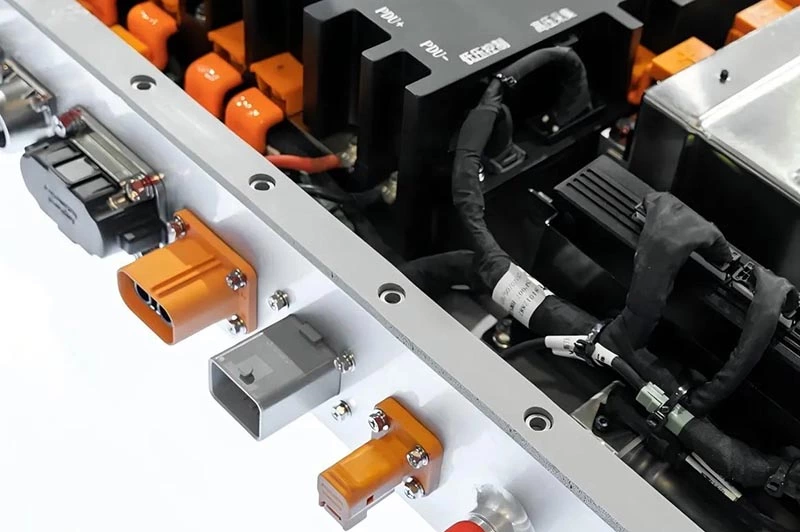
3.1 Battery pack insulation
3.2 EMI shielding layers
3.3 High-density electronic assemblies
A qualified silicone foam manufacturer designs material structure to pass vertical burn tests without sacrificing flexibility.
Ensuring Dielectric Strength for Electrical Insulation
Electrical reliability sits at the core of any serious silicone foam supplier.
Core Electrical Metrics
1.1 High dielectric strength prevents voltage breakdown.
1.2 Stable electrical resistance reduces current leakage.
1.3 Balanced electrical properties support compact designs.
Insulation Applications
2.1 Gaskets as electrical insulation barriers
2.2 Die-cut pads in power modules
2.3 Layered insulating materials in EV systems
Sheen Technology validates breakdown thresholds under simulated overload conditions, giving OEM buyers confidence when selecting a silicone foam manufacturer.
Matching Operating Temperature Range to Thermal Management Needs
Temperature swings can wreck poor-quality foam.
Thermal Capability
1.1 Wide operating temperature span protects against cracking.
1.2 Strong heat resistance at sustained high temperature loads.
1.3 Flexibility retention at low temperature extremes.
Thermal Function
2.1 Controlled thermal conductivity aids thermal management.
2.2 Long-term thermal stability in cycling tests.
Industry Fit
3.1 Automotive electronics
3.2 Energy storage packs
3.3 Outdoor communication units
A dependable silicone foam manufacturer fine-tunes cell structure to maintain performance across the full temperature range.
Evaluating Compression Set and Density for Reliable Sealing
Sealing failure usually traces back to poor material control.
| Properties | SA700-500 | Test Method |
|---|---|---|
| Color | Gray | Visual |
| Density (kg/m3) | 500±50 | ASTM D1056 |
| Thickness (mm) | 1.0~10.0 (±10%) | ASTM D374 |
| Compression Set (@50%, 100℃) | - | ASTM D1056 |
| Compression Force Deflection (kPa) | 148-180 | ASTM D1056 |
| Tensile Strength (kPa) | - | ASTM D3574 |
| Thermal Conductivity (W/m·K) | - | ASTM D5470 |
| Breakdown Voltage(Kv) | ≥4 | ASTM D419 |
| Volume Resistivity (Ω·cm) | >1014 | ASTM D412 |
| Flame Rating | V-0 | UL 94 |
 |
 |
|
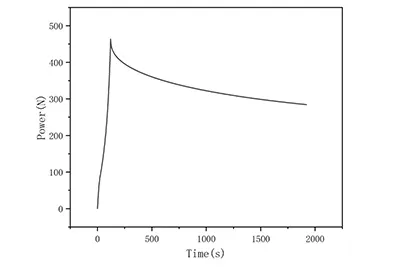
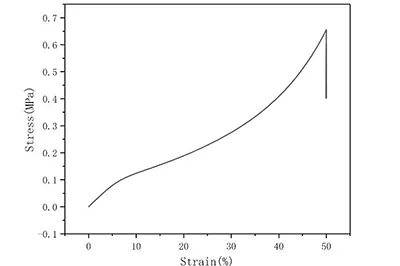
Mechanical Stability
1.1 Low compression set limits permanent material deformation.
1.2 Balanced density strengthens internal material structure.
Sealing Integrity
2.1 Consistent sealing performance under vibration
2.2 Long-term reliable sealing against dust and moisture
Durability Factors
3.1 High resilience after repeated loading
3.2 Stable mechanical properties over time
As a specialized silicone foam manufacturer, Sheen Technology optimizes density-to-recovery ratios so converters and OEMs get dependable results. Choosing the right silicone foam supplier is not hype—it is smart risk control.
5 Lab Certifications Your Foam Maker Needs
Choosing a reliable silicone foam manufacturer isn’t just about price or lead time. It’s about proof. Real certifications show how a silicone foam maker controls risk, quality, and safety. If your silicone foam manufacturer can’t show paperwork, that’s a red flag.
UL 94 V-0: The Benchmark for Flame Retardancy
When evaluating a silicone foam manufacturer, fire behavior sits at the top of the list. UL 94 V-0 defines strict safety specifications for material flammability and overall fire safety.
Why it matters
· In electronics
· Battery insulation
· Power modules
· In transportation
· EV packs
· Rail systems
What V-0 means
· Self-extinguishes within 10 seconds
· No flaming drips
· Controlled combustion behavior
What to check with your silicone foam supplier
· Valid certification reports
· Thickness-specific test data
· Batch traceability
A serious silicone foam manufacturer like Sheen Technology provides thickness-based UL test reports, not just generic claims.
RoHS Compliance for Safe Electronic Applications
For any silicone foam manufacturer serving global markets, RoHS compliance is non-negotiable. It limits hazardous substances in electronic applications and aligns with environmental regulations.
Key checkpoints:
· Lead (Pb) < 0.1%
· Cadmium (Cd) < 0.01%
· Restricted flame retardants within limits
Ask your silicone foam supplier for:
· Material declaration sheets
· Third-party lab test results
· Ongoing manufacturing standards audits
If your silicone foam manufacturer exports to the EU, this paperwork should be ready on request.
REACH Compliance: Regulating Additives and Fillers
REACH compliance focuses on chemical regulation, especially additives and fillers used in silicone foam.
Compliance flow inside a qualified silicone foam maker:
Raw material screening
· Substance registration status
· SVHC checks
· Supplier declaration review
Internal verification
· Random lab sampling
· Updated substance registration tracking
This protects material safety and reduces long-term liability for OEM buyers.
ASTM Standards for Thermal Conductivity and Mechanical Properties
A dependable silicone foam manufacturer validates performance through ASTM standards and structured material testing.
Below is a sample verification matrix used by advanced producers:

| Properties | SA700-200 | SA700-260 | SA700-300 | SA700-350 | SA700-400 | SA700-500 | SA700-900 | Test Method |
|---|---|---|---|---|---|---|---|---|
| Color | White, Gray, Black | Gray, Black | Gray, Black, Red | Gray, Black | Gray, Black | Gray | Gray | Visual |
| Density (kg/m3) | 200±20 | 260±26 | 300±30 | 350±35 | 350±35 | 500±50 | 950±95 | ASTM D1056 |
| Thickness (mm) | 1.6~10.0 | 1.0~10.0 | 1.0~10.0 | 1.0~10.0 | 1.0~10.0 | 1.0~10.0 | 1.0~10.0 | ASTM D374 |
| Compression Set (@50%, 100℃) |
<5% | <5% | <5% | <5% | <5% | - | - | ASTM D1056 |
| Compression Force Deflection (kPa) |
1-17 | 7-48 | 40-97 | 110-140 | 110-140 | 148-180 | 900 | ASTM D1056 |
| Tensile Strength (kPa) |
126 | 180 | 168 | 300 | 260 | - | 1.8M | ASTM D3574 |
| Thermal Conductivity (W/m·K) |
≤0.2 | ≤0.2 | ≤0.2 | ≤0.2 | ≤0.2 | - | <0.3 | ASTM D5470 |
| Breakdown Voltage(Kv) |
≥8 | ≥8 | ≥8 | ≥8 | ≥8 | ≥4 | - | ASTM D419 |
| Volume Resistivity (Ω·cm) |
>1017 | >1016 | >1015 | >1015 | >1015 | >1014 | >1015 | ASTM D412 |
| Flame Rating | V-0 | V-0 | V-0 | V-0 | V-0 | V-0 | V-0 | UL 94 |
These performance specifications guide thermal management and sealing design. A reliable silicone foam supplier shares full lab reports, not summaries.
ISO 9001 Certification in Silicone Polymer Production
ISO 9001 certification confirms a working quality management system across the entire production process of silicone polymer materials.
Inside a certified foam maker:
Incoming inspection
· Raw silicone gum
· Blowing agents
In-process control
· Temperature logs
· Density checks
Final inspection
· Lot coding
· Archived test data
A trusted silicone foam manufacturer doesn’t guess. Quality assurance is documented, repeatable, and traceable. That’s how Sheen Technology builds long-term trust as a professional silicone foam manufacturer serving global OEMs.
Comparative: Extruded Vs Molded Silicone Foam
Choosing the right production route matters. A trusted silicone foam manufacturer can guide material selection, cost balance, and design fit, helping brands avoid overpaying or under engineering critical sealing and cushioning parts.
Extruded Silicone Foam
A skilled silicone foam manufacturer using a continuous process focuses on efficiency and repeatability. Extrusion shines when long runs and steady profiles are required.
Core Manufacturing Logic
Material Preparation
· Precise density control for consistent cell structure
· Stable mixing for thermal and weather resistance
Profile Formation
· Creation of uniform profile shapes
· Production in long lengths without interruption
Typical Product Forms
Industrial Sealing
· Sealing strips for enclosures
· Reliable gasketing for dust and moisture barriers
Functional Components
· Flexible tubing for protective routing
· Lightweight insulation layers for temperature buffering
Operational Advantages
· High-volume output
· Lower scrap rates
· Easy cutting to custom sizes on-site
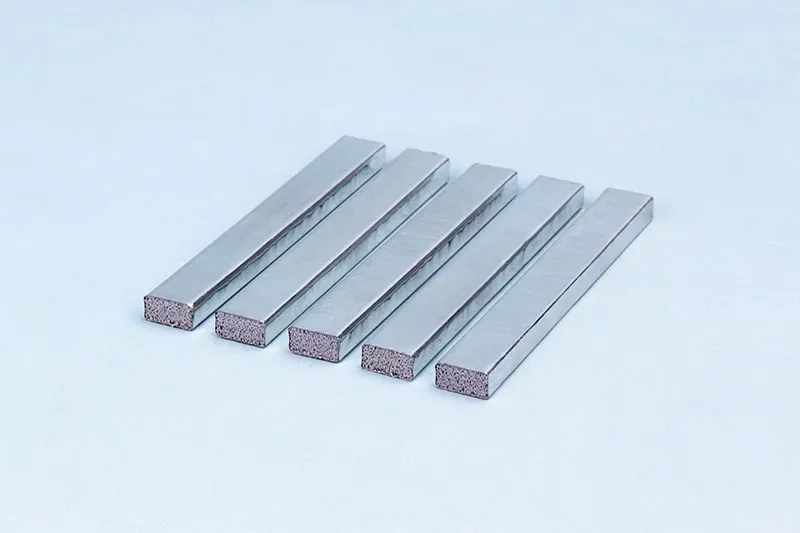
For buyers searching “silicone foam manufacturer” online, extrusion often means quicker turnaround and stable supply. Sheen Technology supports OEM clients that need roll goods shipped fast, especially when production schedules are tight and there’s no room for delays.
Molded Silicone Foam
When geometry gets tricky, a specialized silicone foam manufacturer shifts to molding. This path supports custom shapes and engineered parts that cannot be formed through a simple linear profile.
Forming Technologies
Compression molding
· Ideal for thicker pads
· Excellent for cushioning applications
Injection molding
· Handles complex geometries
· Maintains tight tolerances for specific dimensions
Functional Performance
Mechanical Control
· Enhanced vibration dampening
· Targeted shock absorption
Design Precision
· Dedicated tooling for repeat accuracy
· Integration into multi-part assemblies
“Advanced silicone elastomers are gaining traction in transportation and electronics due to their durability and thermal stability,” notes a 2025 update from MarketsandMarkets, highlighting steady growth in high-performance foam components.
A reliable silicone foam supplier will review drawings, test compression set, and refine tooling before mass output. That’s how a serious silicone foam manufacturer turns design sketches into dependable molded components that last.
FAQs about Silicone Foam Manufacturer
What makes a silicone foam manufacturer suitable for sensitive electronic assemblies?
When electronics sit inches from heat or live current, material failure is not an option. A qualified silicone foam manufacturer proves safety through both composition and certification:
Material foundation
· Silicone polymers combined with controlled crosslinkers and blowing agents
· Balanced fillers and additives for stable density and low compression set
Critical performance
· Strong electrical insulation and high dielectric strength
· Verified flame retardancy with UL 94 V-0
· Stable thermal conductivity for thermal management and battery pack insulation
Proof on paper
· RoHS compliance, REACH compliance
· ASTM standards testing
· ISO 9001 quality system and complete material safety data sheet
From EMI shielding to gap filling in tight housings, safety begins long before the foam is cut.
How do product forms and manufacturing capabilities affect real-world performance?
Form defines function. The same base material behaves differently as sheets, gaskets, rolls, or molded components.
· Extrusion produces continuous rolls and custom profiles for environmental sealing with predictable lead time.
· Die-cutting and slitting turn sheets into precise die-cut parts for shock absorption and vibration damping.
· Molding and lamination create complex shapes for EMI shielding or battery pack insulation where fit controls reliability.
Performance hinges on more than shape:
Density consistency supports vibration damping; low compression set keeps gaskets tight; wide operating temperature range protects against thermal cycling.
A capable silicone foam manufacturer aligns extrusion, molding, and custom fabrication with the actual stress your device will face.
What signals a reliable long-term partnership with a silicone foam manufacturer?
Large projects strain weak supply chains. Stability shows up in details:
· Clear packaging specifications to prevent deformation in transit
· Disciplined inventory management for just-in-time delivery
· Transparent documentation of additives, catalysts, and compliance records
· Global distribution planning that protects supply chain resilience
Behind every gasket or molded component is a rhythm of extrusion schedules, testing reports, and shipment tracking.
When those systems run quietly in the background, engineers can focus on performance—EMI shielding, thermal management, environmental sealing—without fearing the next delivery date.
Sheen Thermal
Dongguan Sheen Electronic Technology Co., Ltd · Founded in 2008
Manufacturer of thermal interface materials and silicone foam for automotive electronics, energy storage, power electronics, communications and consumer electronics.
Certified
- ISO 9001:2015
- ISO 14001:2015
- IATF 16949:2016
What we supply
- Thermal conductivity Up to 90 W/m·K
- Thickness 0.3–10.0 mm
- Custom & samples Die-cut to drawing, 3–7 days