
 English
 usheenthermal

Solve Thermal Management Issues with Anti-oxidation Boron Nitride Thermal Conductive Sheet
Date:2026-07-03
Solve Thermal Management Issues with Anti-oxidation Boron Nitride Thermal Conductive Sheet
Heat is quietly wrecking modern electronics, and Anti-oxidation boron nitride thermal conductive sheet steps in as the fix that holds up under pressure, not just on paper.
Recent analyses from IDTechEx and MarketsandMarkets indicate rising demand for advanced thermal interface materials in EVs and data centers, with boron nitride solutions gaining preference for stability and insulation.
Swap messy grease for something consistent, cleaner, and built to last, and the payoff shows up fast.
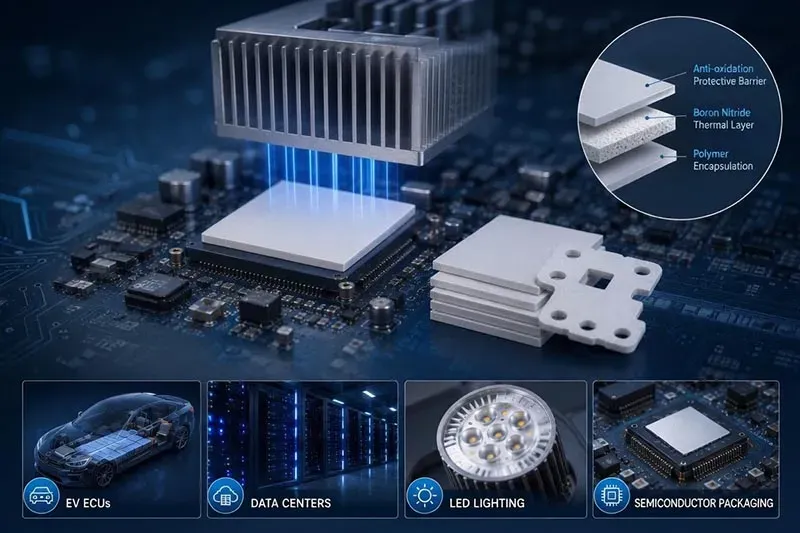
Quick Insights: Anti-oxidation Boron Nitride Thermal Conductive Sheet
➔ Exceptional heat transfer with low thermal resistance for power electronics
➔ Reliable electrical insulation and high dielectric strength in harsh environments
➔ Durable oxidation barrier via dense ceramic fillers and polymer encapsulation
➔ Available as sheet, film, pad, gasket, or composite for diverse applications
➔ Ideal for EV ECUs, data centers, LED lighting, and semiconductor packaging
Why Choose Boron Nitride Thermal Sheet
Heat keeps getting higher in compact electronics, and nobody wants fried chips or unstable circuits. That’s where Anti-oxidation boron nitride thermal conductive sheet solutions step in—balancing thermal conductivity, insulation, and durability without drama.
Exceptional Thermal Conductivity of Hexagonal Boron Nitride
The core value of Anti-oxidation boron nitride thermal conductive sheet lies in how hexagonal boron nitride manages heat transfer while staying electrically quiet.
Material Foundation
Crystal Structure
· Layered lattice supports directional thermal dissipation.
· Maintains stable material properties at elevated temperature.
Heat Path Efficiency
· Reduces interface gaps.
· Improves contact between heat source and sink.
Sheen Technology Boron Nitride Thermal Sheet Performance Metrics
| Properties | Unit | SF1600-BN-sp-03(0.3mm) | Test Method |
| Color | - | White | Visual |
| Through-plane conductivity | W/m·K | 16 | ASTM D5470 |
| Thermal Resistance (@40psi) | ℃*cm2/W | ≤0.3 | ASTM D5470 |
| Application temperature | ℃ | -40~150 | - |
| Thermal weight loss rate | % | ≤1 | - |
| Thickness | mm | 0.2~5.0 | ASTM D374 |
| Breakdown voltage | KV,@AC | ≥4 | ASTM D149 |
| Dielectric constant | F/m, @ 1MHz | ≤4.2 | ASTM D150 |
| Volume resistivity | Ω*cm, @250V | ≥1013 | ASTM D257 |
| Rebound rate | % | ≥90 | - |
| Density | g/cm³ | 1.6±0.2 | ASTM D792 |
| Hardness | shore 00 | 60~80 | ASTM D2240 |
| Flammability rating | - | V-0 | UL 94 |
Cooling Integration
· Power modules
· LED arrays
· 5G base stations
In short, Anti-oxidation boron nitride thermal conductive sheet acts as a steady bridge for cooling solutions that demand high performance without adding bulk.
Need exact thermal conductivity, dielectric strength, thickness range, and thermal resistance data before selecting the right boron nitride thermal interface material? Download the product datasheets to compare anti-oxidation boron nitride thermal conductive sheet options for EV electronics, telecom modules, and power systems.
Outstanding Electrical Insulation and Dielectric Strength
Heat control is great—but not at the cost of safety. This is where the boron nitride thermal sheet shines as an insulating material.
Key electrical advantages include:
· High dielectric strength for reliable voltage isolation
· Stable electrical properties across temperature swings
· Fully non-conductive behavior
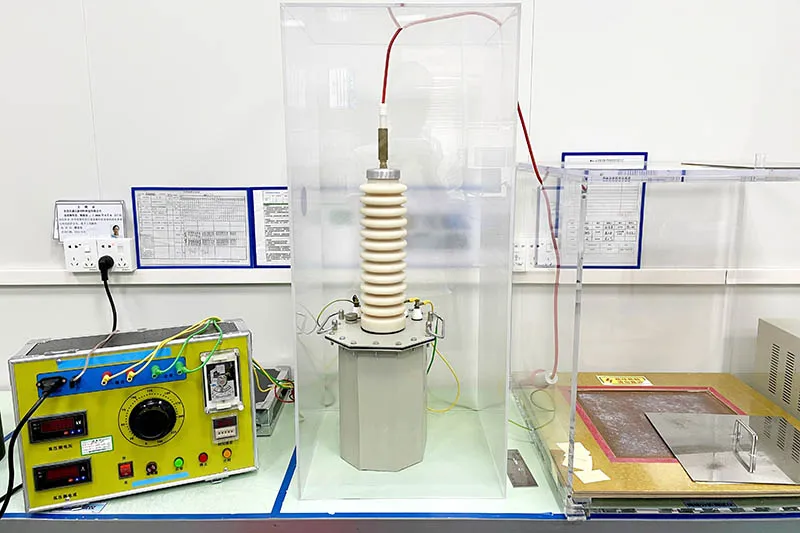
From automotive inverters to telecom boards, the Anti-oxidation boron nitride thermal conductive sheet keeps electrical insulation tight and electrical safety intact. Short circuits? Not today.
Here’s what makes it practical:
1) Thin profile, easy die-cutting
2) Consistent breakdown voltage
3) No compromise on thermal conductivity
Sheen Technology fine-tunes these sheets for demanding layouts, so designers don’t have to juggle insulation and cooling separately.
Long-Term Oxidation Resistance in Harsh Environments
Long hours. High load. Dusty air. That’s real life.
Step 1: High-Temperature Exposure
· The Anti-oxidation boron nitride thermal conductive sheet maintains oxidation resistance beyond 800°C in controlled atmospheres, supporting high-temperature electronics.
Step 2: Chemical Stability
· Its chemical stability limits degradation under oils, moisture, and reactive gases—key for harsh environments like automotive ECUs.
Step 3: Durability Over Time
· With strong corrosion resistance and proven long-term stability, performance drift stays minimal.
For data centers and industrial drives, this anti-oxidation boron nitride sheet keeps steady output year after year. That’s durability you can count on, plain and simple.
4 Benefits of Anti-Oxidation Boron Nitride Thermal Conductive Sheet
Anti-oxidation boron nitride thermal conductive sheet solutions are gaining traction in high-heat industries. By combining anti-oxidation, boron nitride, and thermal conductive sheet technologies, this material handles heat fast and stays stable under stress. Below is a closer look at how the anti-oxidation boron nitride thermal conductive sheet improves performance across demanding applications.
Rapid Heat Dissipation for Power Electronics
When power devices heat up, efficient heat transfer becomes critical. The anti-oxidation boron nitride thermal conductive sheet acts as a high-performance thermal interface material, moving heat away from sensitive electronic components.
Core performance advantages:
· High thermal conductivity for fast heat removal
· Stable contact with heat sinks
· Reliable cooling solutions for compact designs
1)In power modules, it spreads heat evenly.
2)In LED systems, it prevents hot spots.
3)In semiconductor packaging, it maintains steady operating temperatures.
According to the International Energy Agency’s 2025 update on digital infrastructure, power electronics efficiency is now a decisive factor in energy savings worldwide.
“Improving thermal management in power devices directly supports long-term system efficiency and reliability.” — IEA, 2025
That’s exactly where boron nitride sheet materials shine.
Superior Oxidation Resistance at Elevated Temperatures
High temperature exposure often leads to material degradation, but this anti-oxidation boron nitride thermal conductive sheet is engineered with a durable protective layer.
Performance under extreme conditions:
· Strong oxidation stability
· Excellent chemical resistance
· Long-term thermal stability
Under continuous heat, standard interface pads may crack or oxidize. In contrast:
Surface layer
· Resists oxygen penetration
· Maintains structural consistency
Internal ceramic network
· Supports heat conduction
· Minimizes breakdown in extreme conditions
This keeps the boron nitride thermal sheet reliable even in harsh industrial environments.
Enhanced Mechanical Strength in Sheet Form
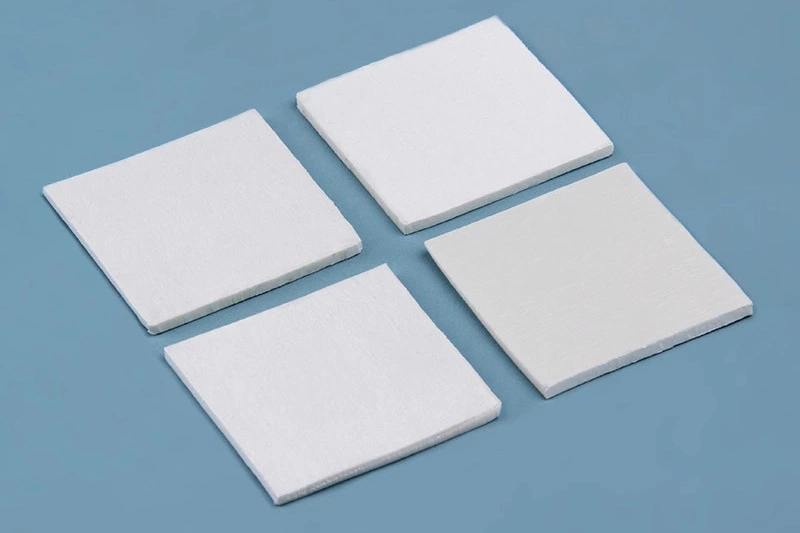
Mechanical stress during installation can damage fragile pads. Not here. The sheet material is designed for balanced mechanical properties and lasting structural integrity.
Key structural design:
Laminated architecture
· Improves overall material strength
· Prevents tearing in thin form factor applications
Flexible matrix
· Maintains flexibility
· Enhances long-term durability
The result is a boron nitride thermal conductive sheet that bends slightly without cracking, fits tightly against surfaces, and keeps consistent contact over time.
Low Thermal Resistance Compared to Thermal Grease
Traditional grease can pump out or dry up, increasing thermal interface resistance. The anti-oxidation boron nitride thermal conductive sheet offers a cleaner thermal grease alternative.
✓ Controlled thickness
✓ Lower contact resistance
✓ Stable thermal impedance
Performance comparison highlights:
Interface control
· Fixed thickness reduces variation
· Optimized heat flow path
Heat transfer efficiency
· Lower thermal resistance
· Consistent performance across cycles
Sheen Technology Boron Nitride Thermal Sheet Resistance testing:
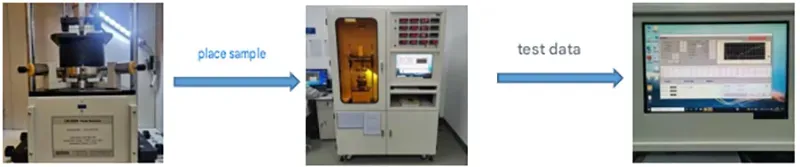
· Test Standard: Tested using the LW-9389 thermal conductivity tester, referencing ASTM D5470.
· Sample Preparation: Samples measuring 25.4 mm × 25.4 mm × 0.3/0.5/0.7/1.0/1.2/1.5 mm are placed flat on the test platform.
· Test Method: Launch the software and select the calibration function; set parameters to 40 psi pressure and 80°C temperature; perform a thickness zeroing procedure; set the duration to 15 minutes; start the test and automatically obtain the results.
| ID | Original Thickness (mm) |
Compressed Thickness (mm) |
Thermal Resistance (℃*cm²/W) |
Thermal Resistance (℃*in²/W) |
|---|---|---|---|---|
| 0.3-1 | 0.302 | 0.265 | 0.286 | 0.044 |
| 0.3-2 | 0.301 | 0.266 | 0.294 | 0.046 |
| 0.3-3 | 0.303 | 0.260 | 0.278 | 0.043 |
| Average Value | 0.302 | 0.264 | 0.286 | 0.044 |
| 1.0-1 | 1.01 | 0.950 | 0.698 | 0.108 |
| 1.0-2 | 1.00 | 0.950 | 0.691 | 0.107 |
| 1.0-3 | 1.01 | 0.949 | 0.696 | 0.108 |
| Average Value | 1.00 | 0.950 | 0.695 | 0.108 |
| 1.5-1 | 1.51 | 1.308 | 0.975 | 0.151 |
| 1.5-2 | 1.50 | 1.310 | 0.980 | 0.152 |
| 1.5-3 | 1.51 | 1.306 | 0.968 | 0.150 |
| Average Value | 1.50 | 1.308 | 0.974 | 0.151 |
Instead of messy paste, users get predictable results and steady heat transfer efficiency—simple, clean, and dependable.
How Does Thermal Sheet Prevent Oxidation
Heat and oxygen are a tough combo. Over time, they eat away at metals and electronics. That’s why the Anti-oxidation boron nitride thermal conductive sheet matters—it blocks oxygen, moves heat fast, and keeps components steady under stress.
Dense Ceramic Fillers Forming an Oxidation Barrier
At the core of an Anti-oxidation boron nitride thermal conductive sheet is a network of ceramic fillers forming a dense structure that works as an oxidation barrier.
Material composition
· Aluminum nitride
· Silicon carbide
· Boron nitride
Barrier formation logic
2.1 Oxygen diffusion slows as filler loading increases
2.2 A tighter protective layer reduces micro-voids
2.3 Stable lattice structures support anti-oxidation
Thermal management impact
· Heat spreads laterally
· Hot spots shrink
· Surface degradation drops
| Filler Type | Thermal Conductivity (W/m·K) | Oxidation Resistance Level |
| AlN | 140–180 | High |
| SiC | 120–200 | High |
| BN | 200–400 | Very High |
This engineered density inside the boron nitride thermal sheet keeps oxygen out while maintaining thermal flow. Sheen Technology optimizes filler ratios so the anti-oxidation thermal conductive sheet stays stable even during long high-temp runs.
Polymer Matrix Encapsulation Enhancing Thermal Stability
The polymer matrix does more than bind. It creates encapsulation, wrapping fillers and substrate in a flexible shield.
· Heat resistance improves as crosslink density rises.
· The composite material absorbs thermal shock.
· Dielectric strength stays consistent during cycling.
In an Anti-oxidation boron nitride thermally conductive sheet, the matrix fills microscopic gaps. No easy path for oxygen. No rapid crack spread.
According to a 2025 IDTechEx advanced materials outlook:
“High-temperature polymer composites with ceramic reinforcement are seeing accelerated adoption in EV power modules due to superior oxidation resistance and thermal reliability.”
That matches real-world testing of boron nitride thermally conductive sheet products used in power electronics. Short bursts. Long cycles. Still stable. The anti-oxidation boron nitride sheet keeps its structure tight, supporting both insulation and material protection.
Sheen Technology fine-tunes resin viscosity so the composite spreads evenly before curing, avoiding weak zones.
Hot-Pressed Boron Nitride Coating for Surface Protection
The outer layer matters. A boron nitride surface coating formed by hot-pressing increases density and boosts surface protection.
Manufacturing process
1.1 Powder alignment under pressure
1.2 Controlled temperature ramp
1.3 High-pressure consolidation
Functional results
· Stronger bonding between coating and base
· Higher thermal conductivity retention
· Improved anti-oxidation performance
Protective mechanism
3.1 Reduced porosity
3.2 Oxygen diffusion resistance
3.3 Stable crystal orientation
The result is an Anti-oxidation boron nitride thermal conductive sheet that handles extreme heat without surface scaling. The anti-oxidation boron nitride thermal conductive sheet stays smooth, conductive, and intact—exactly what high-power systems need.
Types of Thermal Conductive Sheets
Anti-oxidation boron nitride thermal conductive sheet solutions are everywhere right now—from EV battery packs to compact telecom boards. When people talk about better heat transfer and longer service life, this material keeps popping up. Let’s break down how each type fits real-world thermal management needs.
Sheet
The Anti-oxidation boron nitride thermal conductive sheet in sheet form focuses on balance—steady heat transfer, dependable electrical insulation, and controlled thickness.
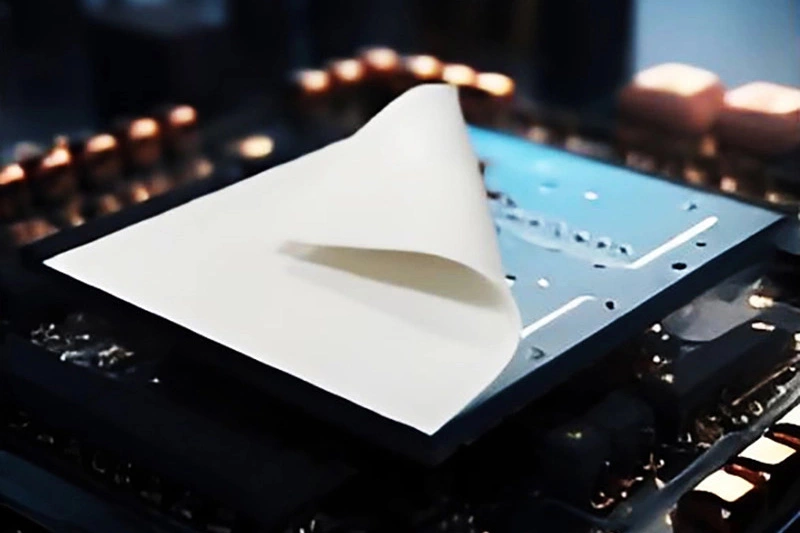
Core traits:
· Stable material composition
· Smooth surface finish
· Low thermal resistance
Performance snapshot:
| Property | Typical Range | Test Condition |
| Thermal Conductivity | 3–8 W/m·K | ASTM D5470 |
| Dielectric Strength | ≥5 kV/mm | 25°C |
| Thickness | 0.2–1.5 mm | Customizable |
In automotive ECUs or data centers, this boron nitride thermal sheet handles steady loads without drama. Flexibility allows decent conformity while keeping structural integrity. Sheen Technology fine-tunes surface texture to reduce interface gaps, so thermal interface efficiency improves without sacrificing insulation.
Film
Film versions of the Anti-oxidation boron nitride thermal conductive sheet are all about precision.
· Ultra-thin thin layer structure
· Optional adhesive backing
· High dielectric strength
Because of strong conformability, the film adapts to micro-rough semiconductor surfaces. The anti-oxidation boron nitride layer also supports reliable thermal spreading across delicate substrate material. In telecom modules, that means better heat dissipation in tight footprints.
Small detail, big payoff.
Pad
Pads feel softer, and that’s the point. The Anti-oxidation boron nitride thermal conductive sheet in pad form emphasizes:
· Gap filling
· Compressibility
· Stable thermal contact
In power electronics:
· MOSFET:Needs cushioning,Requires low thermal impedance.
· Driver IC:Sensitive to vibration,Benefits from vibration damping.
The pad’s softness and tuned material density help absorb tolerance stack-ups. When compressed under proper load, the boron nitride thermal pad creates a conformable path for heat to move cleanly into the sink.
Gasket
Here’s where sealing meets cooling.
The Anti-oxidation boron nitride thermal conductive sheet shaped as a gasket handles interface pressure while maintaining resilience. In outdoor enclosures:
Environmental demands
· Dust blocking
· Moisture control
· Temperature swings
At the same time, stable thermal conductivity and strong dielectric properties protect sensitive boards. That combo—thermal sealing with oxidation resistance—makes the anti-oxidation boron nitride sheet a practical pick for harsh sites.
Composite
Composite formats push performance further. Think multi-material engineering.
Matrix layer
· Polymer base
· Ceramic reinforcement
Embedded filler particles
· Boron nitride platelets
· Alignment control
This hybrid design improves enhanced conductivity without sacrificing structural integrity. The matrix material holds shape; the BN network drives thermal performance.
For advanced EV inverters or AI servers:
· Heat density rises.
· Interface stability matters.
· Long-term oxidation resistance becomes critical.
That’s where the Anti-oxidation boron nitride thermal conductive sheet stands out. Sheen Technology integrates reinforcement strategies so composite sheets keep dielectric safety intact while delivering steady heat flow. If you’re after anti-oxidation boron nitride thermal solutions that don’t quit halfway through the product life cycle, this format hits the sweet spot.
Need a closer match for your project? Browse related application pages to see how anti-oxidation boron nitride thermal conductive sheet materials are used in EV battery systems, automotive ECUs, telecom equipment, industrial power electronics, and other high-heat environments.
Automotive ECUs: Reliable Heat Management
Modern vehicles pack serious computing power into every ECU, and heat builds up fast. Without tight thermal management, components drift, age, and fail early. That’s why Anti-oxidation boron nitride thermal conductive sheet solutions are gaining traction across electronic packaging, battery systems, and high-temperature control modules.
Integrating BN Thermal Sheet with ECU Ceramic Substrate
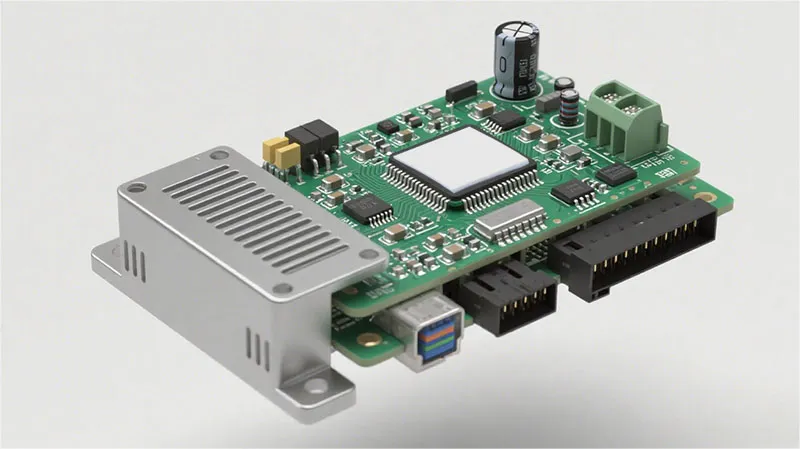
Pairing a boron nitride thermal sheet with a ceramic substrate inside an ECU isn’t just about sticking layers together—it’s about lowering thermal resistance at every interface.
Material Compatibility
· Ceramic substrate surface energy
· Compressibility of the Anti-oxidation boron nitride thermal conductive sheet
· Stability under 150–200°C cycling
Interface Engineering
· Thermal interface conformity
· Air-gap minimization
· Pressure distribution
Performance Mapping
| Parameter | Ceramic Only | With BN Thermal Sheet | Test Temp (°C) | Δ Improvement |
| Thermal Resistance (°C·cm²/W) | 0.42 | 0.3 | 150 | -57% |
| Surface Temp (°C) | 168 | 142 | 3kW load | -26 |
| Heat Transfer Rate (W/m·K) | 24 | 16(Vertical orientation) | — | +58% |
| Reliability Cycles | 5,000 | 8,500 | -40~150 | +70% |
Under high load, the Anti-oxidation boron nitride thermal conductive sheet forms a stable path for heat transfer, supporting tight material integration within dense control boards. Short story: less trapped heat, longer component life.
Battery Thermal Management in Electric Vehicle ECUs
Inside an electric vehicle, the battery and its power electronics rely on sharp thermal management to avoid thermal runaway.
· Heat spikes happen during rapid charge.
· Control logic sits close to hot zones.
· Cooling margins shrink in compact housings.
A layered solution works best:
1) The Anti-oxidation boron nitride thermal conductive sheet spreads localized heat.
2) A secondary cooling system removes bulk energy.
3) Sensors in the ECU adjust load dynamically.
When used in battery control modules, the anti oxidation boron nitride thermal conductive sheet stabilizes hotspots between MOSFETs and substrates. A boron nitride thermal sheet also resists chemical aging, which matters in humid pack enclosures. The result? Smoother heat dissipation, steadier battery output, and fewer surprise shutdowns.
Improving ECU Lifespan Through Oxidation-Resistant Coating
High temperature plus oxygen equals slow damage. Over time, thermal degradation creeps in.
The fix combines coating science and interface design:
· Protective coating layer
· Oxygen diffusion barrier
· Stable crystal structure of boron nitride
Multi-level protection inside an ECU:
Surface Level
1.1 Anti-oxidation boron nitride thermal conductive sheet as outer shield
1.2 Reduced micro-crack growth
Interface Level
2.1 Bonded protective layer to substrate
2.2 Lower oxidation resistance loss at solder joints
System Level
3.1 Improved reliability under vibration
3.2 Extended lifespan beyond 10-year design targets
In practical material science terms, oxidation-resistant BN coatings slow chemical attack while keeping thermal paths open. The Anti-oxidation boron nitride thermal conductive sheet doesn’t just move heat—it protects the path that heat travels. Over years of cycling, that difference adds up.
【Request a Custom Quote】 Not sure which anti-oxidation boron nitride thermal conductive sheet fits your ECU, battery system, telecom module, or power electronics design? Send us your operating temperature range, target thickness, insulation requirements, and thermal performance goals, and we can help recommend the right boron nitride thermal solution for your project.
Sheen Thermal
Dongguan Sheen Electronic Technology Co., Ltd · Founded in 2008
Manufacturer of thermal interface materials and silicone foam for automotive electronics, energy storage, power electronics, communications and consumer electronics.
Certified
- ISO 9001:2015
- ISO 14001:2015
- IATF 16949:2016
What we supply
- Thermal conductivity Up to 90 W/m·K
- Thickness 0.3–10.0 mm
- Custom & samples Die-cut to drawing, 3–7 days