
 English
 usheenthermal

How to Test Graphene TIMs Under ASTM D5470
Date:2026-08-19
“Test Graphene TIMs before volume buying; dazzling conductivity claims can crumble when pressure, thickness, and contact resistance enter the room.
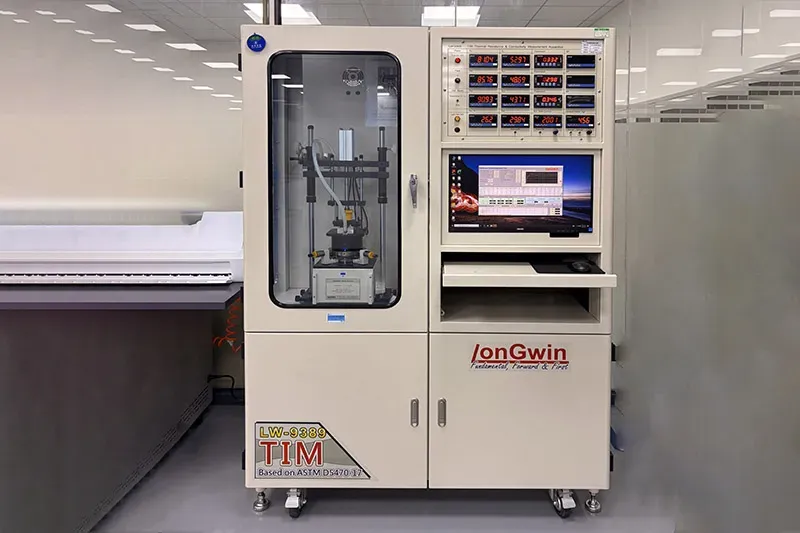
ASTM D5470 sets a steady-state method for measuring thermal transmission properties, giving procurement teams controlled, comparable evidence instead of marketing confetti.
This guide shows how to test, document, and qualify graphene TIM performance before purchase orders get serious.”
Quick Answers for Testing Graphene TIMs
- Confirm Thermal Claims: Use ASTM D5470 steady-state testing and complementary laser-flash or hot-disk analysis to validate through-thickness conductivity under application pressure.
- Control Specimen Prep: Cut and inspect multilayer graphene sheets, apply uniform adhesive or phase-change layers, and calibrate bond-line thickness to minimize contact resistance.
- Record Key Parameters: Document test temperature, pressure, thickness tolerance, density, heat‐flow readings, and four‐probe resistivity for electrical performance.
- Ensure Compliance Traceability: Link every result to batch traceability, material safety data sheets, ISO 14001/RoHS records, and certificate of analysis for quality assurance.
Why Test Graphene TIMs Under ASTM D5470?
When engineers Test Graphene TIMs, a single conductivity number doesn’t tell the whole story. Reliable qualification combines thermal, electrical, and environmental checks so materials work as expected in real assemblies. Sheen Technology supports this practical approach, tying ASTM D5470 results to additional material checks. In short, test data needs to match the job, not just look good on paper.
Ensuring Thermal Conductivity Claims with Laser Flash Analysis
To Test Graphene TIMs with confidence, compare complementary methods:
Thermal response
- Laser Flash Analysis measures Thermal Diffusivity, showing how rapidly heat spreads through a sample.
- With density and heat capacity, diffusivity supports calculated Thermal Conductivity.
Interface performance
- ASTM D5470 evaluates through-thickness thermal resistance under controlled pressure.
- This Material Characterization better reflects interface contact and practical Heat Transfer.
Test method comparison:
| Method | What It Measures | Standard | Relevance to TIM |
| ASTM D5470 (steady-state) | Through-plane thermal resistance/conductivity under controlled pressure | ASTM D5470 | PRIMARY — captures bulk + interface contact resistance |
| Laser Flash | Thermal diffusivity (transient) → calculate conductivity | ASTM E1461 | Complementary — does NOT capture contact resistance |
| Hot Disk (transient plane source) | Thermal conductivity + diffusivity | ISO 22007-2 | Complementary — different heat-flow geometry |
| Four-Point Probe | Surface/volume electrical resistivity | ASTM D257 | Required — product is ELECTRICALLY CONDUCTIVE |
Using both methods gives Graphene TIMs claims a useful cross-check rather than relying on one neat-looking figure.
Verifying Electrical Resistivity for Power Electronics Safety
When teams Test Graphene TIMs near Power Electronics, thermal performance is only half the deal.
Check Electrical Resistivity to establish basic Electrical Performance.
- Conductive grades may suit grounded applications.
- Insulating designs need suitable Insulation Resistance.
Confirm Dielectric Strength where voltage isolation matters.
- This is especially important around EV battery systems and sensitive circuits.
- Results should align with applicable Safety Standards because graphene-based Conductive Materials can behave quite differently by formulation.
Meeting ISO 14001 and RoHS Compliance Requirements
Test Graphene TIMs alongside material documentation so qualification doesn’t hit a paperwork snag later.
- RoHS Compliance: verify restricted Hazardous Substances against current limits.
Regulatory Requirements:
- retain REACH declarations;
- document halogen-free status where required.
ISO 14001:
- connect test records with environmental-management processes;
- support Environmental Standards and Sustainability goals.
Quality Assurance: keep supplier declarations, test reports, and material traceability linked for audits and graphene TIM qualification.
Layered Approach: From Sample Prep to Report
Reliable ways to Test Graphene TIMs start with careful handling and finish with records that someone else can check. Small changes in contact, pressure, or thickness can throw results off, so the details matter. Sheen Technology connects graphene sheet preparation, controlled interfaces, ASTM testing, and traceable reporting into one practical workflow.
Step 1: Preparing a Multilayer Graphene Sheet Specimen
Good specimen preparation keeps Test Graphene TIMs comparisons on solid ground.
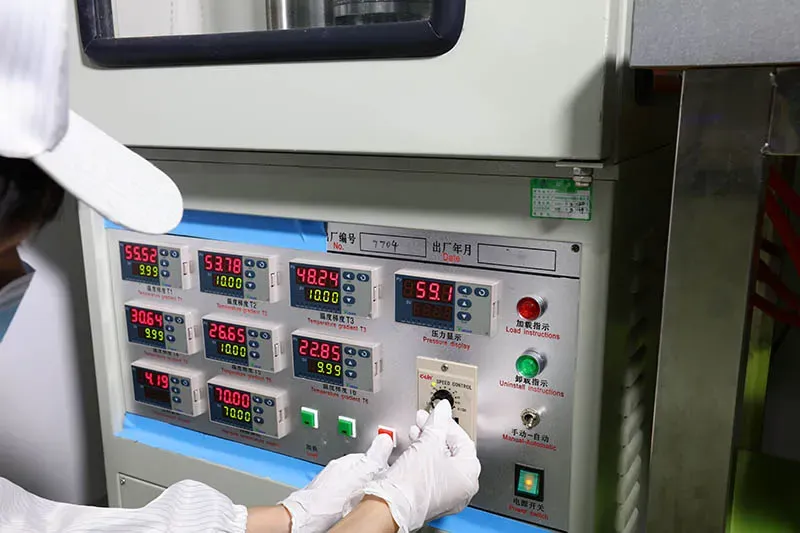
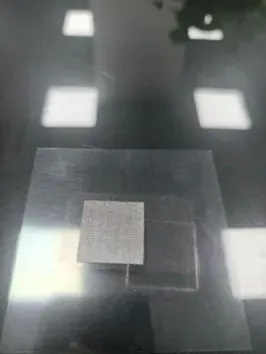
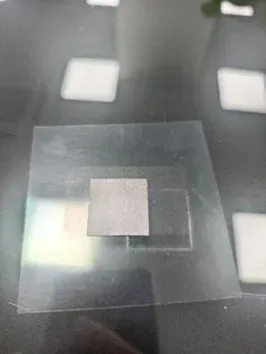
| Test Instrument: LW-938 9 Thermal Conductivity Tester | State Before Test | State After Test |
 |  |  |
Prepare each sample:
- Trim the dimension with a clean cutting tool, avoiding crushed edges (The test sample size of Sheen Technology's GSF90 graphene thermal pad is 25.4mm × 25.4mm × 0.3mm).
- Record thickness measurement and density at defined locations.
Check contact faces:
- Note surface roughness or visible defects.
- Keep the supporting substrate clean and flat. Tiny flaws can really mess with contact results.
Step 2: Applying Electrically Conductive Adhesive and Phase Change Material
For Test Graphene TIMs with an added interface, TIM application needs tight control. Spread conductive adhesive or phase change material evenly, matching the planned bond line thickness.
- Set dispensing volume and placement.
- Check material viscosity before use.
- Inspect the interface for gaps, excess material, or trapped air.
Sheen Technology uses controlled application records so repeat tests stay comparable.
Step 3: Executing Thermal Impedance Testing Protocols
Taking Sheen Technology's GSF90 graphene thermal conductive pad thermal resistance testing solution as an example:
- Launch the software and select the c alib ration mode. Set parameters as pressure 40 psi, temperature 80°C, a n d p e rf o r m thickness zeroing for 15 minutes.
- Select the thermal resistance test for thermal pads, set the tempe ratu re to 80°C, starting pressure t o 10 Psi , pressure increment t o 10 Psi, and final pressure to 40 Psi.
- Start the test; the system will automatically output test results after completion.
That consistency matters when labs Test Graphene TIMs across lots or configurations.
Step 4: Drafting the Certificate of Analysis and Quality Assurance Protocol
A certificate of analysis should make results easy to trace, not bury them in paperwork. Sheen Technology links each test report to batch identity, safety records, test parameter settings, acceptance limits, and standard compliance.
- Complete data verification before release.
- Apply quality assurance review to calculations and traceability.
- Retain controlled documentation so graphene thermal interface material results can be checked later.
Need ASTM D5470 thermal resistance data, thermal conductivity, thickness tolerance, density control, and electrical resistivity specs for graphene TIMs? Download the product datasheets to compare graphene TIMs, phase change materials, and conventional thermal interface solutions for power electronics and telecommunications infrastructure.
3 Key ASTM D5470 Test Parameters
To Test Graphene TIMs well, lab teams need more than one number. ASTM D5470 captures through-thickness thermal resistance under controlled pressure, while supporting measurements help explain material behavior. Together, these checks make graphene TIM testing easier to repeat and, just as importantly, easier to interpret.
Thermal Conductivity Measurement via Hot Disk Method
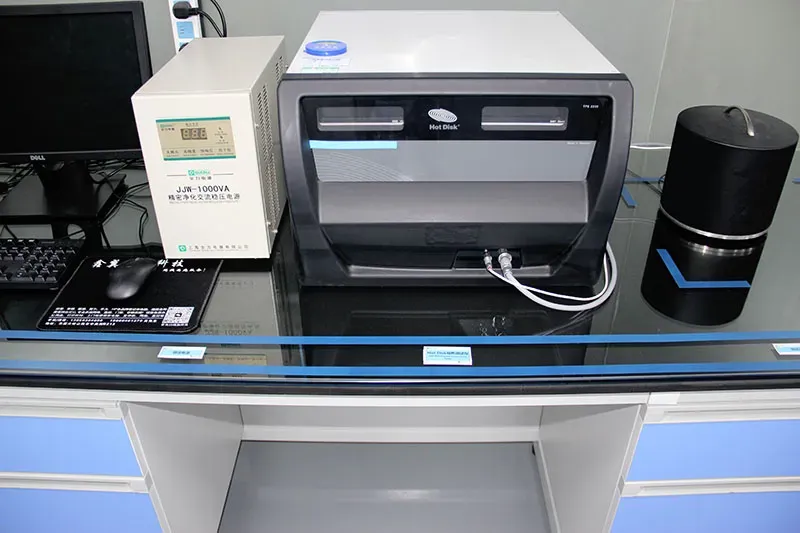
Hot disk testing provides complementary insight into thermal conductivity and thermal diffusivity, but its results should not be treated as interchangeable with ASTM D5470.
Thermal response
- A transient plane source sensor supplies heat while tracking temperature change.
- The resulting temperature gradient helps characterize heat transport.
Material properties
- Heat capacity affects the transient response used in the calculation.
- When teams Test Graphene TIMs, sample geometry and graphene distribution can shift measured behavior.
Comparison
- ASTM D5470 includes interface effects relevant to installed TIMs.
- Hot disk results can differ because heat-flow direction, geometry, and contact resistance are different. That’s the catch when comparing thermal conductivity values.
Thickness Tolerance and Density Control
Small dimensional changes can matter a lot in graphene TIM testing. Measure sample thickness at consistent locations with a calibrated micrometer, then record the applied compressive force.
- Check dimensional tolerance before testing; uneven material can create an inconsistent bond line.
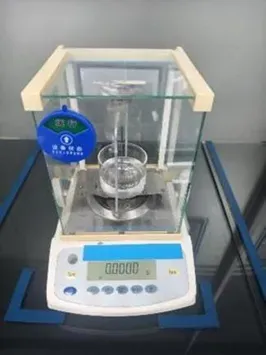
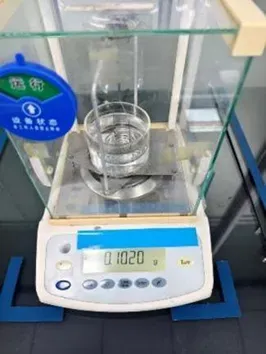
- Record mass and dimensions to calculate mass density, using the same preparation method between batches.
- Keep the loaded cross-sectional area and compression conditions documented. ASTM D5470 resistance depends on bond-line thickness, so uncontrolled compression can skew calculated apparent thermal conductivity.
Reference for graphene thermal pad density testing at Sheen Technology laboratory:
| Test Instrument: SY-QC-010 Density Tester | State Before Test | State After Test |
 |  | 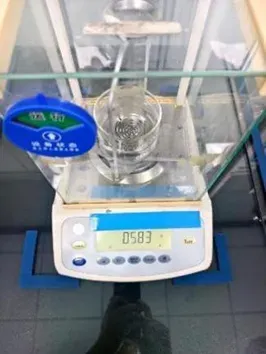 |
These controls make it much easier to Test Graphene TIMs on a fair, repeatable basis.
Four-Probe Resistivity Measurement for Electrical Performance
Thermal performance tells only part of the story, especially where electrical isolation matters.
Electrical characterization
- Use a four-point probe with a controlled current source.
- Measure voltage through separate leads with a voltmeter.
Useful outputs
- Determine sheet resistance where the sample geometry supports it.
- Convert suitable measurements into electrical resistivity or electrical conductivity.
Why separate probes help
- Current and voltage paths use separate electrical contact points, cutting the influence of lead and contact resistance.
- This electrical test sits outside ASTM D5470, yet it adds practical safety context when teams Test Graphene TIMs for electrically sensitive hardware.
How to Mount Samples for Accurate Testing
Good mounting keeps small handling errors from turning into misleading thermal results. When teams Test Graphene TIMs, clean handling, careful storage, steady alignment, and verified measurement settings matter. A few practical checks help graphene samples stay representative of the material that will actually sit inside telecom equipment.
Anti-Static Packaging Prep Before Mounting
- Prepare an ESD-controlled bench before opening the package.
- Connect a grounding strap and use ESD-safe tweezers.
- Check humidity control; an ionizing blower can reduce stray charge.
- Open conductive shielding gently. Avoid fingerprints, folds, and sliding contact that may cause electrostatic discharge.
- If required, confirm bench surface resistivity.
This clean start matters when you Test Graphene TIMs; tiny wrinkles can throw thickness readings off.
Aligning Graphene TIMs on Telecommunication Infrastructure Fixtures
Place each thermal interface material in the alignment fixture, centered on the ASTM D5470 meter bars. Keep parallelism tight and use a micrometer guide where available. Apply even contact pressure across the substrate interface.
For telecom hardware, that setup helps Test Graphene TIMs under contact conditions that better match practical thermal paths.
Applying Vacuum Seal and Moisture Barrier Bag Techniques
Protect unused samples from atmospheric moisture.
Put specimens in a foil laminate bag with a suitable desiccant packet.
- Use a vacuum sealer without crushing soft TIMs.
- Confirm the hermetic seal through basic leak detection.
Where sample chemistry calls for it, a degassing chamber can remove trapped gas.
Good storage keeps graphene TIM testing from becoming a guessing game after environmental exposure.
Calibration Check: Ensuring Repeatable Thickness Tolerance
- Verify zero-point calibration against a traceable metrology standard and gauge block.
- Check the digital micrometer, force setting, temperature sensors, and heat-flow reading.
- Measure bondline thickness consistently and review tolerance stack-up.
- Repeat a reference measurement to confirm repeatability.
Run these checks before you Test Graphene TIMs across batches. It’s a simple habit, but it helps separate genuine material differences from fixture or thickness error.
Comparative: Graphene TIMs vs. Conventional TIMs
Test Graphene TIMs against familiar products under the same pressure, temperature, and bond-line conditions. This practical comparison shows where newer carbon-based interfaces can cut heat resistance and where standard choices still make good sense.
Graphene TIMs
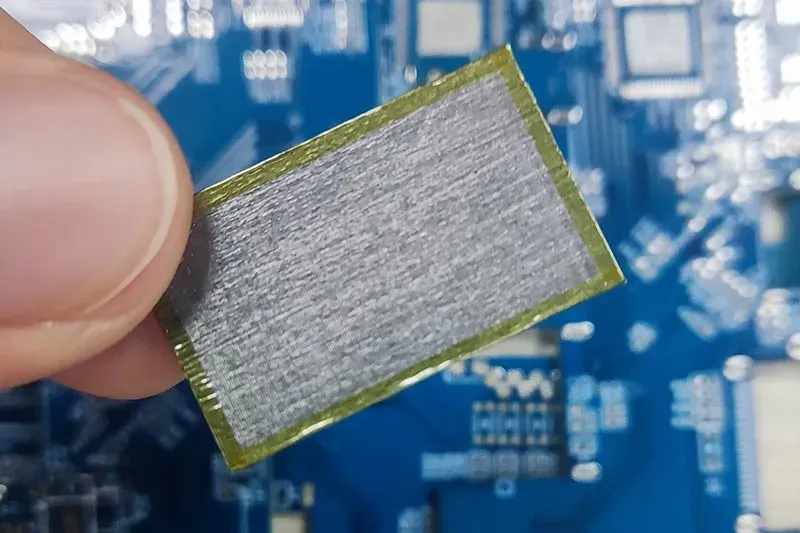
Test Graphene TIMs with ASTM D5470 measurements rather than relying only on advertised thermal conductivity. High conductivity can look great on paper, but heat still has to cross two surfaces, so real assembly conditions matter.
Material factors
- Graphene nanoplatelets can create effective heat paths inside a nanocomposite.
As a carbon allotrope, graphene conducts heat strongly along its plane.
Through-thickness performance may be lower because orientation creates anisotropy.
Interface factors
- Interfacial resistance can limit overall heat dissipation.
- Compression changes thickness, contact area, and measured resistance.
Application checks
Test Graphene TIMs at realistic mounting pressure and temperature.
- Record bond-line thickness after compression.
- Check electrical isolation when the thermal interface material sits near live conductors.
- Repeat thermal cycling where long service life matters. That keeps the comparison grounded in actual use, not just a best-case number.
Conventional TIMs
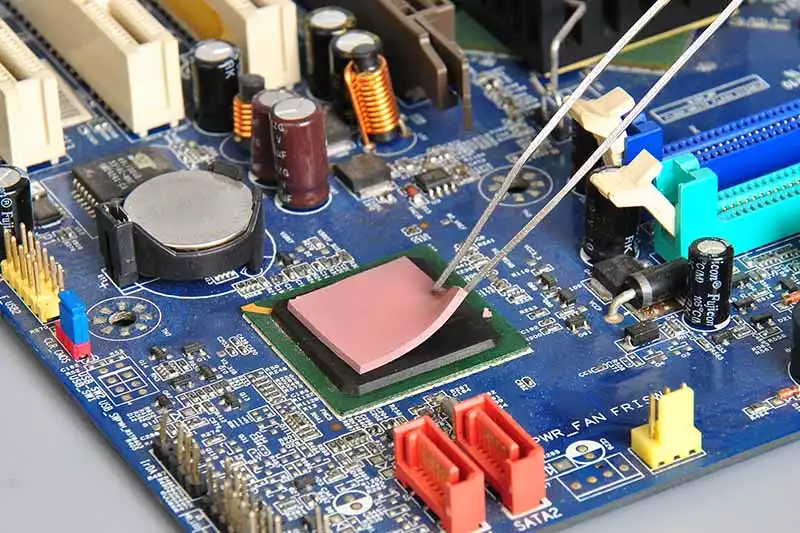
A silicone grease, thermal pad, or phase change material gives engineers a well-known baseline. Test Graphene TIMs beside these materials with matching hardware; otherwise, the comparison can get wonky fast.
Establish the reference.
- Measure thermal impedance at several pressures.
- Track thickness and contact resistance.
Compare material behavior.
- Greases often use metal oxide fillers in a polymer matrix.
- Pads simplify handling but may need greater compression.
- Phase change products soften when heated, improving surface contact.
Test Graphene TIMs under identical conditions.
- Compare thermal resistance, pump-out, cycling stability, electrical properties, and installation effort.
- Select the TIM that fits the assembly rather than chasing conductivity alone.
Precision Matters: Achieving Repeatable Results
Reliable thermal measurements depend on more than the test rig. When labs Test Graphene TIMs, careful records, material checks, and controlled handling help separate genuine graphene thermal interface performance from variation caused by preparation, aging, or storage.
Implementing Batch Traceability and Compliance Documentation
ASTM D5470 comparisons work best when every specimen can be traced back without guesswork. A clear audit trail connects results to the material itself.
Record identity and origin:
- Capture the batch number, supplier certificate of analysis, and receiving date.
- Maintain traceability from sample preparation through final measurement.
Document test control:
- Store compliance files and supporting documentation beside raw data.
- Follow a written standard operating procedure, including thickness, pressure, temperature, and equipment calibration.
- Apply quality assurance checks before comparing batches.
This discipline matters when teams Test Graphene TIMs because small process differences can look like material gains.
Monitoring Viscosity and Density with Microscopy Inspection
For pastes, composites, and adhesives, flow behavior can expose inconsistencies before testing gets rolling.
Check material properties:
- Measure viscosity and density under defined conditions.
- Use rheology data to track changes in flow or curing behavior.
Examine structure:
- Apply microscopy inspection to assess particle size and morphology.
- Flag agglomeration, voids, or uneven coatings during quality control.
These checks help Test Graphene TIMs consistently and reveal defects that could distort graphene TIM measurements.
Temperature-Controlled Transport for Shelf Life Preservation
Material history follows a sample right to the test bench, so shipping deserves tight controls.
Protect material condition:
- Set suitable temperature control limits for transport and storage.
- Use cold chain handling or thermal insulation where product specifications require it.
Verify stability:
- Maintain environmental monitoring records for temperature and, when relevant, humidity.
- Compare exposure history against stated shelf life and stability limits.
Good preservation reduces premature phase changes, adhesive damage, and moisture-driven variation before ASTM D5470 testing.
→ Contact Sheen Technology for Graphene TIM Test Data & Samples
Sheen Thermal
Dongguan Sheen Electronic Technology Co., Ltd · Founded in 2008
Manufacturer of thermal interface materials and silicone foam for automotive electronics, energy storage, power electronics, communications and consumer electronics.
Certified
- ISO 9001:2015
- ISO 14001:2015
- IATF 16949:2016
What we supply
- Thermal conductivity Up to 90 W/m·K
- Thickness 0.3–10.0 mm
- Custom & samples Die-cut to drawing, 3–7 days