
 English
 usheenthermal

Boron Nitride Thermal Pads vs. Paste for Power Inverter Cooling
Date:2026-08-19
A boron nitride thermal pad for power inverters can trade grease-related mess and bond-line variability for controlled thickness, electrical insulation, and repeatable assembly. Paste still shines at thin interfaces, so picking a winner isn’t a slam dunk.
For volume production, thermal impedance, compression, dielectric strength, tolerances, and die-cut geometry deserve a closer look.
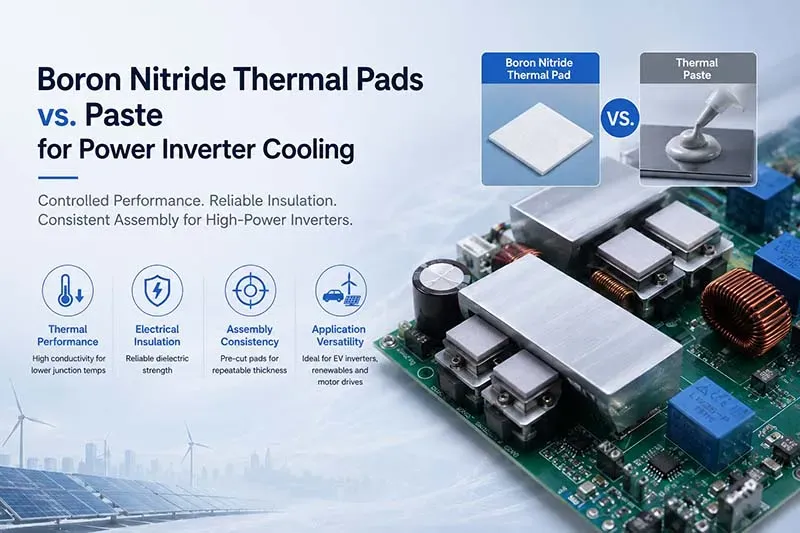
Image Caption: This image was created with AI assistance and is based on a comparison of real-world engineering application scenarios.
Quick Insights on Boron Nitride Thermal Pad for Power Inverters
➔ Thermal Performance: Offers controlled thickness and high thermal conductivity, reducing junction temperature and boosting system efficiency.
➔ Electrical Insulation: Provides reliable dielectric strength without the mess or variability of thermal greases.
➔ Assembly Consistency: Pre-cut pads simplify placement, ensure repeatable bond-line thickness, and eliminate pump-out concerns.
➔ Application Versatility: Ideal for EV inverters, renewable energy systems, and motor drives under continuous or high-power-density loads.
Boron Nitride Thermal Pad For Power Inverters Vs. Paste
Choosing a boron nitride thermal pad for power inverters comes down to more than raw conductivity. A good Interface material must move heat, maintain electrical safety, and stay consistent after repeated heating cycles. In day-to-day production, installation speed and clean handling matter quite a bit, too.
Boron Nitride Thermal Pad
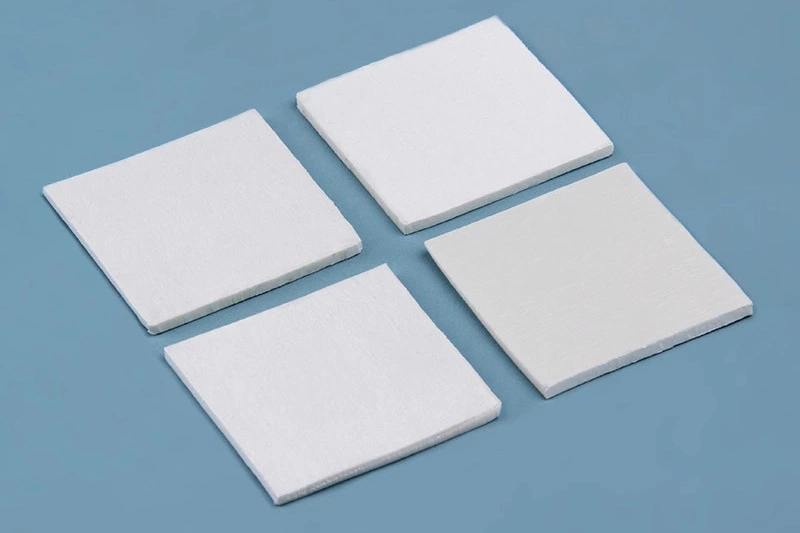
A boron nitride thermal pad for power inverters provides a solid, repeatable path between hot components and cooling hardware. Boron nitride combines useful conductivity with strong insulation, making the material well suited to Power electronics where heat and voltage sit close together.
Thermal control
- A Thermal pad bridges small gaps and supports steady Heat dissipation across uneven contact areas.
- Its Conformable structure helps maintain contact without the squeeze-out associated with liquid compounds.
Electrical protection
- Built-in Electrical isolation can simplify designs requiring a dielectric barrier between a power module and heat sink.
- Controlled thickness also makes assembly less of a guessing game while helping engineers predict Cooling performance.
Production fit
- Pre-cut BN thermal pad parts support cleaner, quicker placement.
- Sheen Technology offers boron nitride thermal pad solutions aimed at inverter thermal management and repeatable assembly.
Thermal Paste
Thermal paste takes another route: it flows into tiny surface scratches and air gaps, creating close contact for efficient Heat transfer. Applied correctly, a thin Thermal grease layer can deliver low Thermal resistance between a device and a heat sink.
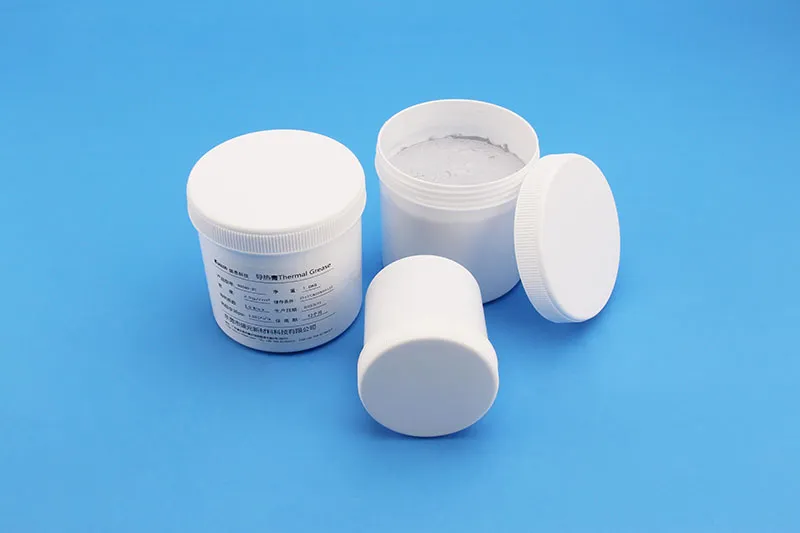
Application has trade-offs.
- The Application technique controls bond-line thickness, coverage, and final thermal results.
- Too much Interface compound may create mess and inconsistent assembly.
Long-term behavior deserves attention.
- Thermal cycling can cause Pump-out, gradually pushing grease away from the contact zone.
- Unlike an insulating boron nitride thermal pad for power inverters, some pastes need a separate electrical barrier, adding another design consideration.
How 30% Cooler Inverters Run With BN Pads
A boron nitride thermal pad for power inverters helps hot switching devices send heat into the cooling plate without giving up electrical insulation. For designers, that means steadier temperatures, less wasted energy, and a practical path toward compact hardware. Sheen Technology focuses its pad technology on this tough thermal job.
Maximizing Thermal Conductivity with Boron Nitride
A boron nitride thermal pad for power inverters uses ceramic BN particles to build heat transfer paths through the soft interface.
Pad performance depends on:
- Thermal conductivity:Higher values can improve heat dissipation when contact is good.
- Boron nitride loading:Well-distributed particles reduce bottlenecks inside interface materials.
- Contact quality:Proper compression can cut overall thermal resistance.
That is where BN pad technology really earns its keep.
| Properties | Unit | SF1600- BN-03 | SF1600-BN-05 | SF1600-BN-07 | SF1600-BN-10 | SF1600-BN-15 | SF1600-BN-20 | SF1600-BN-30 | Test Method |
| Color | - | White | White | White | White | White | White | White | Visual |
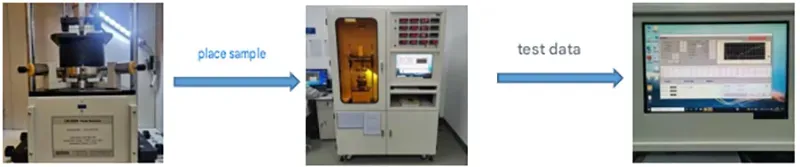
| Thermal Conductivity | W/m·K | 16 | 16 | 16 | 16 | 16 | 16 | 16 | ASTM D5470 |
Thermal Resistance (@40psi) | ℃*cm²/W | ≤0.3 | ≤0.5 | ≤0.7 | ≤0.8 | ≤1.1 | ≤1.4 | ≤1.7 | ASTM D5470 |
Application temperature | ℃ | -40~150 | -40~150 | -40~150 | -40~150 | -40~150 | -40~150 | -40~150 | - |
Thermal weight loss rate | % | ≤1 | ≤1 | ≤1 | ≤1 | ≤1 | ≤1 | ≤1 | - |
| Thickness | mm | 0.2~5.0 | 0.2~5.0 | 0.2~5.0 | 0.2~5.0 | 0.2~5.0 | 0.2~5.0 | 0.2~5.0 | ASTM D374 |
| Breakdown voltage | KV,@AC | ≥4 | ≥5 | ≥6 | ≥10 | ≥12 | ≥12 | ≥12 | ASTM D149 |
| Dielectric constant | F/m, @ 1MHz | ≤4.2 | ≤4.2 | ≤4.2 | ≤4.2 | ≤4.2 | ≤4.2 | ≤4.2 | ASTM D150 |
| Volume resistivity | Ω*cm, @250V | ≥10¹³ | ≥10¹³ | ≥10¹³ | ≥10¹³ | ≥10¹³ | ≥10¹³ | ≥10¹³ | ASTM D257 |
| Rebound rate | % | ≥90 | ≥80 | ≥70 | ≥70 | ≥60 | ≥60 | ≥60 | - |
| Density | g/cm³ | 1.6±0.2 | 1.6±0.2 | 1.6±0.2 | 1.6±0.2 | 1.6±0.2 | 1.6±0.2 | 1.6±0.2 | ASTM D792 |
| Hardness | shore 00 | 60~80 | 60~80 | 60~80 | 60~80 | 60~80 | 60~80 | 60~80 | ASTM D2240 |
| Flammability rating | - | V-0 | V-0 | V-0 | V-0 | V-0 | V-0 | V-0 | UL 94 |
The above data represents actual test results from Sheen Technology's laboratory products.
Need thermal conductivity, thermal impedance, dielectric strength, thickness tolerance, and long-term reliability data for boron nitride thermal pads? Download the product datasheets to compare boron nitride thermal pads, thermal paste, and ceramic-filled insulators for power inverters, IGBT/MOSFET modules, motor drives, and renewable energy systems.
Lowering Junction Temperature for Higher Reliability
The boron nitride thermal pad for power inverters can reduce the thermal path from power semiconductors to a heat sink.
Better temperature control limits peak junction temperature.
- Lower peaks reduce repeated thermal stress.
- Less stress supports device reliability and failure prevention.
- Stable cooling can support a longer operational lifespan.
In short, a good BN thermal pad gives IGBTs and MOSFETs an easier time during hard-running duty cycles.
Boosting System Efficiency in High-Power Density Units
Better thermal management also matters when space gets tight.
Improved heat removal
- supports higher power density
- helps compact systems control hot spots
Cooler semiconductor operation
- can reduce temperature-related losses
- supports energy conversion and system efficiency
Stable operating temperatures
- protect usable power output
- support practical performance improvement
For EV and industrial inverter designs, Sheen Technology BN pads can therefore help connect cooling choices with electrical performance rather than treating heat as an afterthought.
5 Steps To Install BN Thermal Pads
Installing a boron nitride thermal pad for power inverters takes careful prep, fit, and pressure control. Sheen Technology BN thermal pads support electrical insulation while moving heat from power electronics into cooling hardware, making correct installation a big deal for long-term performance.
Step 1: Surface Preparation and Cleaning
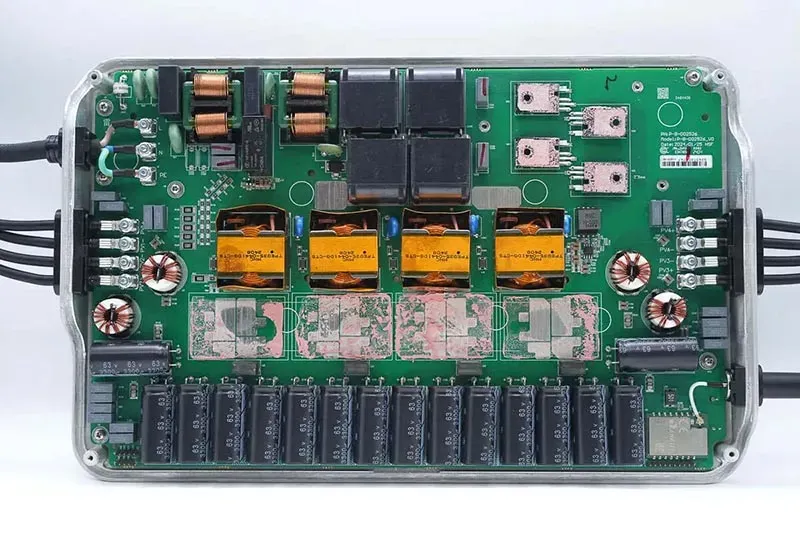
Start with a clean surface on the power module and heat sink. Even tiny contaminants can hurt contact.
Preparation
- Remove dust, grease, and oxidation.
- Use isopropyl alcohol to clear stubborn residue, then allow full drying before fitting the boron nitride thermal pad for power inverters.
Step 2: Precision Die Cutting for Power Modules
Accurate sizing keeps thermal pads where heat and insulation demands are highest.
Fit control
Use precision cutting or die cutting for power modules.
- Match dimensions, mounting holes, and insulation edges.
- CAD files help produce repeatable custom shapes for each boron nitride thermal pad for power inverters.
Step 3: Aligning Pads on IGBT and MOSFET Devices
Correct alignment keeps the BN thermal interface centered on the heat source.
Device fit
Check placement and orientation across IGBT devices and MOSFET devices.
- Keep thermal pads flat, with no folds or uncovered hot areas.
- Confirm electrical clearance before securing the boron nitride thermal pad for power inverters.
Step 4: Applying Uniform Pressure for Compressibility
Proper uniform pressure improves compressibility, helping the pad fill small surface gaps.
Mounting
Seat the heat sink evenly.
- Tighten fasteners through the specified mounting hardware pattern.
- Use a torque wrench so pressure stays controlled rather than, well, cranked down too hard.
Step 5: Verifying Thermal Impedance and System Performance
Testing confirms that installation works beyond the bench.
Validation
Use temperature sensors and data logging during thermal testing.
- Track thermal impedance, heat transfer, and full-load system performance.
- Stable temperatures support reliability and verify the boron nitride thermal pad for power inverters is doing its job.
Thermal Paste Mess? Choose Clean Pads
A boron nitride thermal pad for power inverters can make thermal management cleaner and more predictable than paste-based interfaces. In practical inverter production, application, electrical isolation, and heat transfer all matter. Using a boron nitride thermal pad for power inverters cuts the fuss while keeping critical interface properties controlled.
Messy Residue: The Downside of Thermal Grease
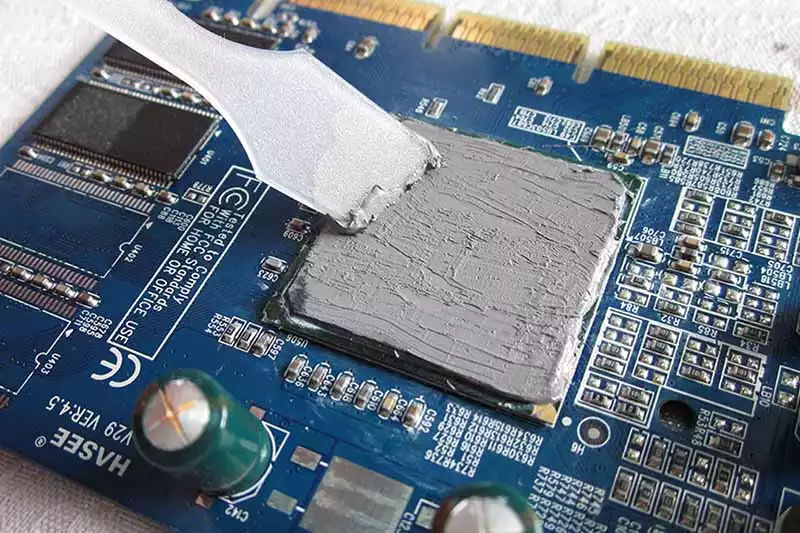
Thermal grease does its job, but assembly can get messy fast.
During production:
- Excess material may cause smearing around the device.
- Poor handling can spread residue onto nearby surfaces.
During service:
- Old paste adds cleanup work and possible contamination.
- A boron nitride thermal pad for power inverters avoids much of this mess during replacement.
Variable Thickness: Inconsistent Thermal Resistance Risks
Paste performance depends heavily on its bond-line thickness.
At the interface:
- Uneven dispensing creates inconsistency.
- Surface variations can leave tiny gaps or voids.
Under clamping pressure:
- Changing contact conditions alter thermal resistance.
- In turn, thermal performance may vary between otherwise similar modules.
A BN thermal pad offers more repeatable thickness.
Electrical Insulation: Avoiding Dielectric Strength Failures
A boron nitride thermal pad for power inverters can combine heat transfer with electrical insulation.
Electrical control:
- Specified dielectric strength helps resist high voltage.
- Low electrical conductivity supports isolation.
Fault prevention:
- Proper pad selection reduces breakdown and short circuit risk.
- That supports safety where electrical failure could damage an inverter.
Tool-Free Application: The Clean Advantage of BN Pads
Pre-cut BN pads keep installation straightforward.
For production:
- Tool-free placement removes grease spreading equipment.
- Fixed pad geometry supports repeatable assembly and simplicity.
For servicing:
- Clean removal improves ease of use.
- A boron nitride thermal pad for power inverters makes fresh application much less of a hassle.
Scenario: Continuous-Load Inverter Cooling
Continuous inverter duty leaves little time for electronics to cool down, so managing heat becomes a day-to-day design concern. A boron nitride thermal pad for power inverters creates an insulated contact path that moves heat toward the heat sink without complicating assembly.
Maintaining Temperature Stability Under Full Load
At full power, sustained losses push junction temperatures toward a stable but elevated level. Good temperature control depends on predictable contact performance.
Heat pathway
- A boron nitride thermal pad for power inverters provides useful thermal conductivity between uneven mating surfaces.
- As a thermal interface material, the pad supports consistent heat transfer during steady-state operation.
Cooling result
- Lower interface resistance improves cooling efficiency, helping prevent hot spots from getting out of hand.
Enhancing Device Reliability in Renewable Energy Systems
Solar and storage equipment commonly experiences long operating hours plus daily temperature swings. Here, boron nitride insulation supports power electronics without sacrificing useful heat flow.
- Reducing thermal stress limits repeated expansion and contraction around semiconductor packages.
- Lower temperatures can slow heat-driven component degradation, supporting device lifespan and operational longevity.
- A boron nitride thermal pad for power inverters can therefore support system reliability, lower failure rate, and smoother renewable energy integration.
Optimizing Power Dissipation in Motor Drives
Motor-drive switches pack substantial heat into small contact areas.
Electrical losses
- Power loss from switching and conduction becomes heat generation and ultimately waste heat.
Cooling path
- The boron nitride thermal pad moves that heat toward the sink.
- Lower thermal resistance strengthens thermal management and practical thermal design.
Operating impact
- Better cooling supports stable motor control, consistent drive performance, and improved energy efficiency during long runs.
Layered Guide: Inverter Cooling Materials
Choosing an inverter interface is a balancing act: moving Thermal energy quickly matters, but Electrical isolation, surface fit, pressure, and long-term stability count too. A boron nitride thermal pad for power inverters can meet several needs at once, while other materials tackle tougher gaps or heat-spreading jobs.
Ceramic and Polymer Matrix Pads: Basic Insulators
Ceramic-filled Polymer Matrix Pads combine soft contact with practical Insulators, so assembly is usually pretty straightforward.
Key design checks:
Heat control:
- Higher filler loading can improve Thermal transfer.
- A boron nitride thermal pad for power inverters also conforms to small surface variations.
Safety:
- Electrical insulation depends on pad thickness, formulation, and breakdown rating.
- Sheen Technology can match pad formats to inverter packaging and isolation needs.
Boron Nitride vs. Aluminum Nitride: Dielectric Insulator Showdown
Boron Nitride and Aluminum Nitride both serve as a dielectric insulator , but their practical performance depends heavily on the finished composite, not filler data alone. Here’s the catch: interface resistance matters.
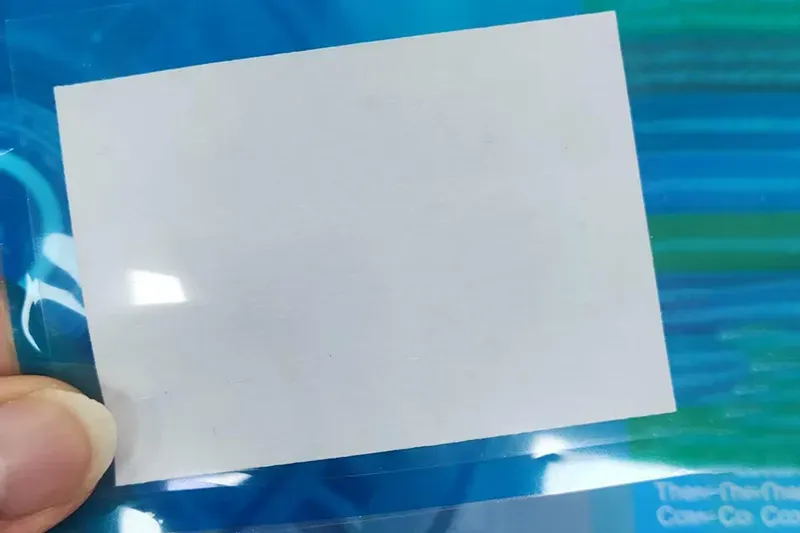
| Material/interface | Typical conductivity (W/m·K) | Typical use thickness (mm) |
| BN-filled Boron pad | 16 | 0.2–5.0 |
| AlN-filled pad | 4–15 | 0.3–3.0 |
| Phase-change interface | 3–8 | 0.13–0.2 |
| Graphene sheet, through-plane | 75-90 | 0.3–2.0 |
Note: The above data comes from actual test data of some products in Sheen Technology's laboratory.
For a Power Inverter, Thermal Conductivity, Electrical Insulation, and Heat Dissipation must be checked using supplier-specific data. A boron nitride thermal pad for power inverters is attractive where flexibility and dielectric performance share priority.
Phase Change Materials and Gap Fillers: Adaptive Solutions
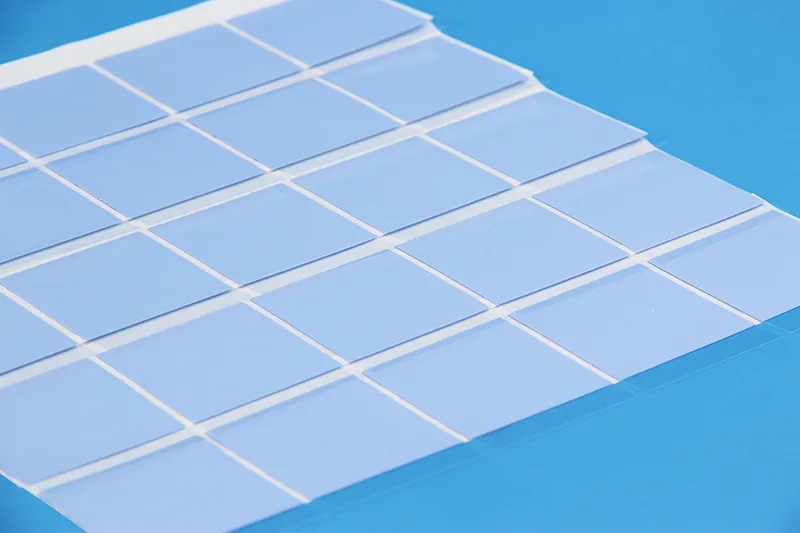
A Phase Change Material softens as temperature rises, improving Thermal Interface contact with very thin bond lines.
For larger tolerances, choose by fit:
Gap Filler
- conforms around uneven components;
- supports Heat Transfer across variable spaces.
Phase-change film
- suits flatter interfaces;
- provides Adaptive contact after warm-up.
Both approaches can aid Cooling, Inverter durability, and Reliability when assembly tolerances make a firm pad awkward.
Graphene Sheets: Ultra-High Conductivity Options
Graphene Sheets stand out for extreme in-plane Thermal Conductivity and fast Heat Spreading. That makes them a high-Performance Interface for localized Cooling. Sheen Technology has developed a vertically oriented graphene pad by optimizing the orientation process, which overcomes the shortcomings of high thermal conductivity in the planar direction but insufficient thermal conductivity in the thickness direction.
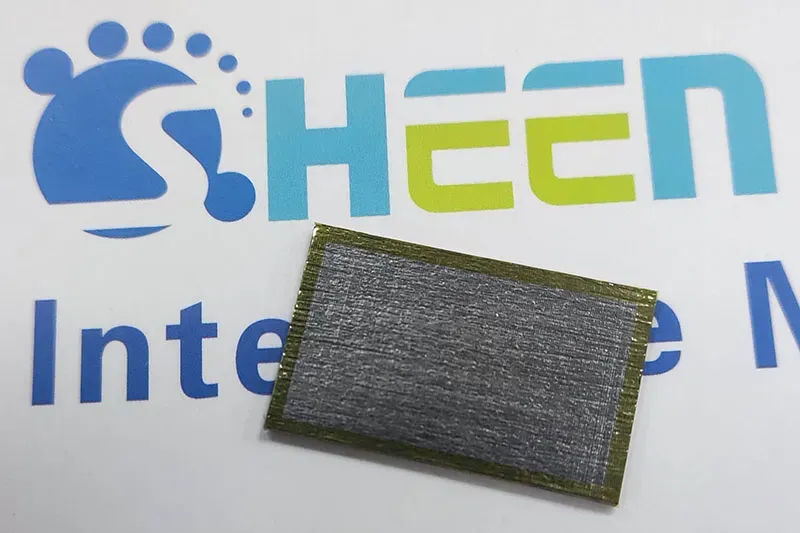
But graphite conducts electricity, so an Inverter design needs added dielectric isolation near live parts. Compared with a boron nitride thermal pad for power inverters, a graphite heat spreader is better viewed as a lateral heat-routing layer, not a drop-in insulated thermal pad.
→ Contact Sheen Technology for BN Pad Selection Support
Sheen Thermal
Dongguan Sheen Electronic Technology Co., Ltd · Founded in 2008
Manufacturer of thermal interface materials and silicone foam for automotive electronics, energy storage, power electronics, communications and consumer electronics.
Certified
- ISO 9001:2015
- ISO 14001:2015
- IATF 16949:2016
What we supply
- Thermal conductivity Up to 90 W/m·K
- Thickness 0.3–10.0 mm
- Custom & samples Die-cut to drawing, 3–7 days