
 English
 usheenthermal

How Ultra-thin Graphene Thermal Conductive Film Dissipates Heat Fast
Date:2026-06-16
How Ultra-thin Graphene Thermal Conductive Film Dissipates Heat Fast
Ultra-thin graphene thermal conductive film is the fix when heat starts acting like a troublemaker, choking performance and cooking components. Chips run hotter, racks get cranky, and every extra degree eats lifespan, so cooling can't keep playing catch-up anymore.
This spreads heat, thin, and slips into builds without drama, cutting hotspots and downtime keeping systems steady. For buyers, it means fewer failures, tighter designs, and scaling without breaking a sweat.
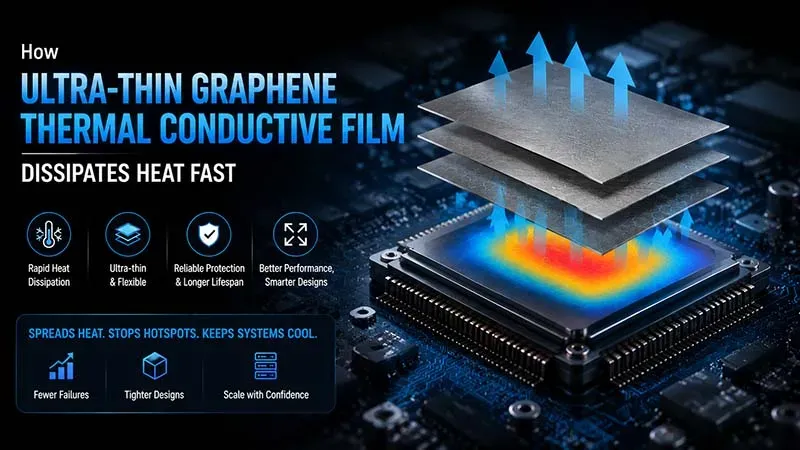
Essential Notes on Ultra-Thin Graphene Thermal Conductive Film
· Exceptional Heat Spread: Leverages graphene’s hexagonal lattice to achieve up to 500 W/m·K in just 5 µm, minimizing thermal resistance and rapidly dissipating hotspots.· Flexible Strength: Maintains mechanical integrity and bendability for wearables, portable devices, and curved surfaces without compromising performance.
· Seamless Integration: Surface treatment, lamination, and CVD processes ensure strong adhesion, uniform thickness, and scalable roll-to-roll production for electronics and data-center racks.
· Uniform Temperature Control: Superior thermal diffusivity and even heat distribution across processors, LEDs, and power modules enhance reliability under high power density.
Why Ultra-Thin Film Dissipates Heat Fast
Ultra-thin graphene thermal conductive film is changing how heat is handled in compact electronics. From chip hotspots to wearable boards, heat has to move—fast. The magic lies in graphene, atomic structure, and smart thickness control that keeps devices cool without adding bulk.
Unraveling Heat Dissipation: Role of Graphene’s Atomic Structure
The speed of heat dissipation begins at the atomic scale.
Atomic structure foundation
· Single-layer carbon atoms arranged in a hexagonal lattice
· Tight covalent bonding that minimizes scattering
· Continuous two-dimensional plane for phonon travel
Phonon-driven thermal conductivity
· Phonons act as primary heat carriers
· Long mean free paths reduce thermal resistance
· High in-plane thermal conductivity enables lateral heat spreading
Impact on graphene thermal film performance
· Rapid heat transfer away from IC hotspots
· Lower junction temperature in high-density packaging
· Stable output under repeated thermal cycling
An Ultra-thin graphene thermal conductive film works because its graphene network behaves like a heat highway. Energy doesn’t stall; it moves cleanly across aligned carbon atoms, making graphene heat dissipation film solutions ideal for processors and power chips.
From Thinness to Performance: How 5µm Films Achieve High Heat Flux
A 5 micrometers thin film sounds fragile. It isn’t.
· Shorter heat transfer path
· Lower interface resistance
· Faster response under rising heat flux
Here’s how thin film design boosts thermal performance:
· Reduced thickness cuts vertical resistance.
· High in-plane conductivity spreads heat sideways.
· Balanced structure supports stable thermal management under load.
Ultra-thin graphene thermal conductive film keeps modules cooler without bulky heat sinks. In LEDs and power drivers, that slim profile translates into real efficiency gains. The thinner the path, the quicker the escape route for heat.
Flexibility Meets Function: Mechanical Strength in Ultra-Thin Layers
Strong yet bendable—that’s the sweet spot.
· Step 1: Align material properties at the micro level to preserve mechanical strength.
· Step 2: Optimize bonding layers to protect ultra-thin layers during bending.
· Step 3: Validate long-term durability through thermal cycling.
· Step 4: Maintain structural integrity while keeping the film lightweight.
Flexible electronics demand more than cooling. The film must bend, twist, and survive daily wear. Ultra-thin graphene thermal conductive film handles both heat and motion, making it a go-to graphene cooling film for compact devices.
Backed by precision processing, Sheen Technology refines graphene thermal interface film solutions that balance conductivity and flexibility. For brands chasing lighter, cooler hardware, Sheen Technology offers practical performance—not just lab numbers.
Thermal Conductivity Boost: 500 W/m·K in 5µm Film
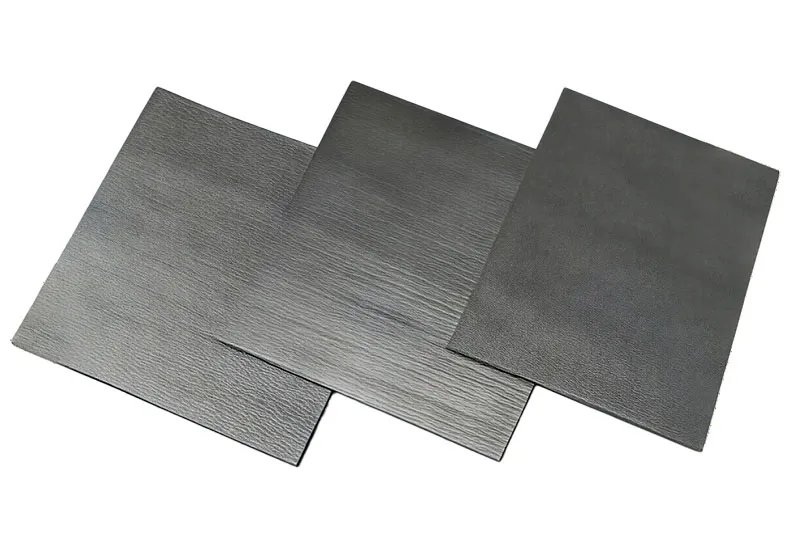
Ultra-thin graphene thermal conductive film sounds technical, yet its job is simple—move heat fast and keep devices cool. When thickness drops to 5 µm and thermal conductivity reaches 500 W/m·K, heat doesn’t linger. From chip cooling to composite pads, this graphene thermal film reshapes heat transfer at the microscale.
Measuring Thermal Conductivity Coefficient in Microscale Films
Accurate measurement techniques define performance claims. For microscale films, even slight contact resistance skews the coefficient reading.
Key focus areas:
· thermal conductivity validation
· heat transfer stability
· thin films interface control
Within labs evaluating Ultra-thin graphene thermal conductive film, data consistency depends on:
▪ Sample flatness
▪ Sensor precision
▪ Ambient temperature control
Typical Test Comparison
| Method | Sample Thickness | Measured Conductivity (W/m·K) |
| Laser Flash | 5 µm | 480–505 |
| Steady-State | 5 µm | 470–498 |
| Guarded Hot Plate | 10 µm | 450–490 |
The Ultra-thin graphene thermal conductive film developed by Sheen Technology maintains tight deviation margins, making repeatability less of a headache for R&D teams.
Enhancing Thermal Diffusivity through Layer Transfer Techniques
Boosting thermal diffusivity isn’t luck—it’s fabrication discipline. Ultra-thin graphene thermal conductive film gains speed in heat propagation when graphene layers align cleanly.
Alignment reduces
· phonon scattering
· void formation
· interfacial drag
Multi-level fabrication logic:
Fabrication methods preparation
1.1 Substrate cleaning
1.2 Surface activation
Controlled layer transfer
2.1 Pressure-assisted lamination
2.2 Vacuum bonding
Interface tuning
3.1 Strengthening interfacial bonding
3.2 Minimizing trapped air
The result? A graphene thermal film that spreads heat laterally in milliseconds. Sheen Technology applies precision transfer control so the Ultra-thin graphene thermal conductive film keeps diffusivity high without sacrificing flexibility.
Ensuring Temperature Uniformity in Composite Graphene-Coated Pads
Hotspots kill performance. Temperature uniformity across composite pads depends on clean interface engineering and smart material design.
Short practical notes:
· Even pressure improves heat distribution
· Uniform coating thickness stabilizes output
· Balanced substrate pairing supports long-term thermal management
Nested performance logic:
Base material selection
1.1 Thermal expansion matching
1.2 Mechanical stability
Graphene coating integration
2.1 Adhesion control
2.2 Surface roughness tuning
System validation
3.1 IR thermal imaging
3.2 Cycling durability tests
The Ultra-thin graphene thermal conductive film works like a fast highway for heat across processors and memory modules.
“Advanced thermal interface materials are now central to next-generation electronics scaling,” notes the 2025 IDTechEx thermal management outlook, highlighting graphene-based films as a key growth driver.
That’s exactly where Sheen Technology positions its Ultra-thin graphene thermal conductive film—steady cooling, tighter temperature spread, and electronics that simply run cooler without drama.
4 Steps to Integrate Graphene Conductive Film
Ultra-thin graphene thermal conductive film sounds high-tech, yet its integration is very hands-on. From cleaning the base material to testing heat endurance, each move shapes how graphene thermal film performs inside power electronics. When handled right, Ultra-thin graphene thermal conductive film delivers tight thermal contact, stable insulation, and long device life without drama.
Step 1: Surface Treatment of Substrate Materials
Proper surface preparation sets the tone for Ultra-thin graphene thermal conductive film bonding. If the base is dusty or chemically unstable, the graphene layer simply won’t stick well.
Key actions include:
· Thorough substrate cleaning to remove oils and particles
· Controlled etching process to tune surface energy
· Chemical functionalization for stronger adhesion promotion
Performance impact often depends on measurable surface metrics:
| Treatment Method | Surface Energy (mN/m) | Contact Resistance (mΩ·cm²) | Adhesion Strength (MPa) | Temp Stability (°C) |
| Solvent Clean | 38 | 12 | 3.1 | 120 |
| Plasma Etch | 52 | 8 | 4.6 | 150 |
| Acid Etch | 48 | 9 | 4.2 | 140 |
| Silane Coating | 55 | 7 | 5.0 | 160 |
| Hybrid Method | 60 | 5 | 5.8 | 180 |
Higher material interface stability means Ultra-thin graphene thermal conductive film forms smoother contact, lowering thermal resistance across graphene heat spreader layers.
Step 2: Lamination of Graphene Film onto Semiconductors
This is where graphene meets silicon.
· Prepare an adhesion layer compatible with the chip surface.
· Align graphene transfer paths to avoid wrinkles.
· Apply uniform pressure during the bonding process.
· Complete film attachment inside a controlled environment.
Under the hood, the flow looks like this:
Semiconductor integration
· Surface inspection
· Flatness verification
Device assembly
· Pressure calibration
· Thermal contact mapping
When done right, Ultra-thin graphene thermal conductive film cuts interface resistance fast. The thermal contact improves heat flow from hotspots into the graphene conductive layer, which is exactly what high-density modules crave.
Sheen Technology fine-tunes this stage so the Ultra-thin graphene thermal conductive film sits tight, not loose.
Step 3: Chemical Vapor Deposition for Uniform Carbon Atom Layers
The CVD technique defines film quality at the atomic level. Inside a controlled reactor design, precursor gases decompose from a calibrated carbon source, forming an aligned atomic layer.
Critical growth parameters include temperature (900–1050°C), pressure, and gas ratio. Even small shifts affect layer uniformity and electrical behavior.
· Stable gas flow
· Balanced deposition time
· Clean chamber walls
The result is consistent film deposition across wafers, producing Ultra-thin graphene thermal conductive film with predictable thickness. A uniform graphene thermal sheet handles high heat flux without local breakdown, which keeps performance steady in compact electronics.
Step 4: Reliability Testing under High Power Density
Testing is where bold claims meet reality. High-load modules push graphene films through power cycling, checking thermal stability and tracking degradation mechanisms.
Evaluation typically covers:
· Continuous heat at 150–200°C
· Repeated on/off cycling
· Long-term stress analysis
· Real-time heat management tracking
“Advanced thermal interface materials, particularly graphene-based films, are projected to see accelerated adoption in power electronics through 2026 due to higher power density requirements,” noted a 2025 update from IDTechEx on thermal management materials.
Engineers monitor thermal performance and device longevity over thousands of cycles. When Ultra-thin graphene thermal conductive film maintains low resistance after stress, it proves its value.
Sheen Technology GSF75-03 Graphene conductive film Aging Test
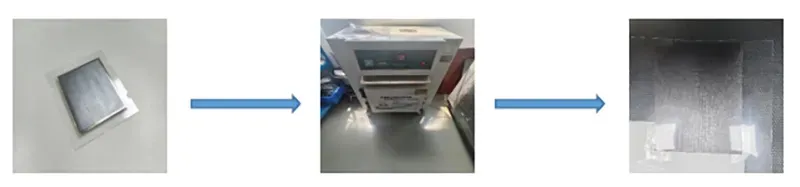
Test Method: A sample measuring 50mm × 40mm × 0.3mm was placed in a high-temperature oven at 125°C for 1,000 hours. Upon completion, the thermal resistance was measured and recorded at a pressure of 40 psi. The data is presented in the figure.
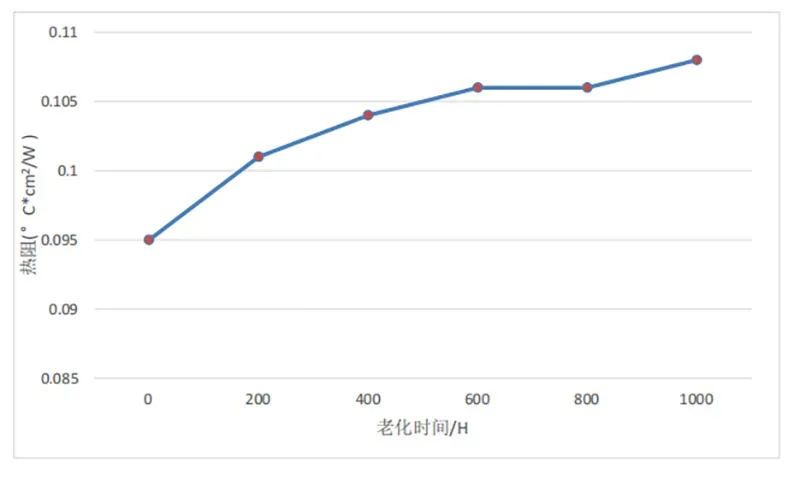
Conclusion: As shown in the figure and the data above, the graphene thermal pad demonstrated stable thermal resistance performance during the short-term aging test; after 1,000 hours, the thermal resistance increased by 13.7%, which falls within the acceptable range of variation.
Sheen Technology validates every Ultra-thin graphene thermal conductive film under accelerated testing, ensuring the graphene thermal interface film survives real-world abuse—not just lab conditions.
Need verified performance data before selecting a graphene thermal solution? Download the product datasheets to review thermal conductivity, thickness options, and reliability test results for ultra-thin graphene thermal conductive films.
Data Centers: Thin Film Enhances Rack Cooling
Data centers run hot, loud, and non-stop. To keep data centers stable under heavy computational loads, smarter thermal management is a must. That’s where the Ultra-thin graphene thermal conductive film steps in—slim, powerful, and built for serious heat dissipation.
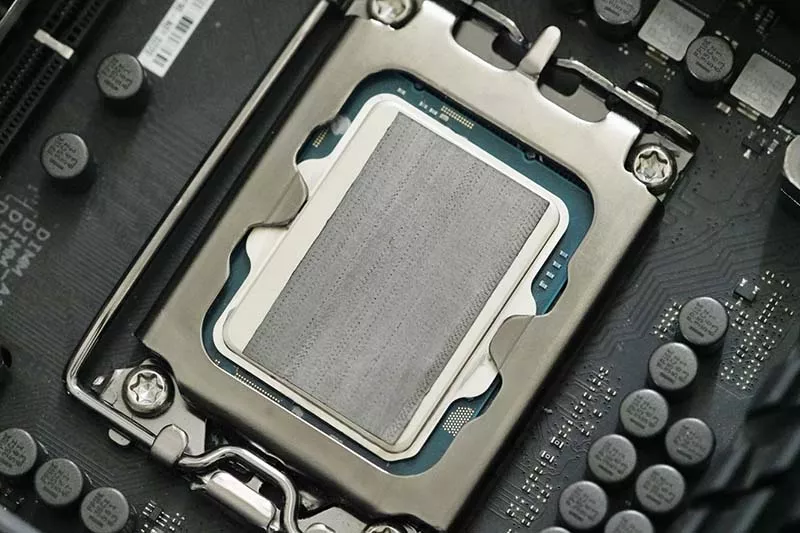
Consumer Electronics vs. Data Center Applications
In consumer electronics, space is tight. Phones and tablets rely on thin cooling solutions to protect compact electronic devices. In contrast, data centers focus on durability and scalable application areas where racks operate 24/7.
Key differences at a glance:
· Size constraints vs. rack-scale deployment
· Intermittent usage vs. continuous workloads
· Localized cooling vs. system-wide thermal management
Performance snapshot:
| Application | Heat Flux (W/cm²) | Typical TIM Thickness (µm) | Cooling Priority |
| Smartphone | 5–15 | 50–100 | Compactness |
| Laptop | 10–25 | 80–150 | Balance |
| AI Server | 50–120 | 10–40 | Efficiency |
| Telecom Rack | 40–90 | 15–50 | Scalability |
The Ultra-thin graphene thermal conductive film—built from ultra-thin, graphene, thermal conductive, film layers—bridges both worlds. It acts as a graphene thermal film that spreads heat fast while staying incredibly slim.
“AI server power density is rising faster than traditional cooling materials can handle,” noted the International Energy Agency in its 2025 data center outlook, highlighting advanced interface materials as a key enabler.
With Sheen Technology, operators get a thin graphene heat film tuned for rack environments, not just pocket gadgets.
Cooling High-Performance Computing: Thermal Interface Materials Comparison
For high-performance computing, every watt matters. Comparing thermal interface materials shows how graphene film shifts the game.
Material Layer
a. Traditional grease
b. Phase-change pads
c. Ultra-thin graphene thermal conductive film
Core Metrics
a. Thermal conductivity
i. Grease: 3–8 W/m·K
ii. Pads: 5–12 W/m·K
iii. Graphene-based film: 800+ W/m·K (in-plane)
b. Thickness control
c. Long-term cooling efficiency
System Impact
a. Lower junction temperature
b. Better heat transfer
c. Reduced fan load
Gartner’s 2025 infrastructure brief pointed out that advanced carbon-based TIMs are “gaining traction in AI and HPC clusters due to superior thermal conductivity and thin form factors.”
The Ultra-thin graphene thermal conductive film works like a highway for heat, moving it away from CPUs and GPUs before throttling kicks in. That’s a real upgrade in material comparison terms.
Scalability and Mass Production for Telecommunications Racks
Large-scale telecommunications racks need steady supply and consistent quality. Scalability isn’t hype; it’s survival.
Manufacturing Processes
a. Roll-to-roll coating
b. Chemical vapor deposition
c. Precision lamination
Production Volume Control
a. Batch inspection
b. Inline thickness monitoring
c. Thermal mapping tests
Deployment
a. Pre-cut rack modules
b. Custom thermal solutions
c. Rapid swap maintenance
Industrial data example:
| Process Stage | Output (m²/day) | Thickness Tolerance (µm) | Target Market |
| Pilot Line | 500 | ±5 | HPC Labs |
| Scale Line A | 3,000 | ±3 | AI Servers |
| Scale Line B | 5,000 | ±2 | Telecom |
| Automated R2R | 8,000 | ±2 | Hyperscale DC |
The Ultra-thin graphene thermal conductive film, also known as an ultra-thin graphene heat spreader, supports high production volume without losing performance. Backed by Sheen Technology, operators can scale from a single rack to thousands—keeping heat under control and uptime right where it should be.
【Request Technical Support】Not sure which ultra-thin graphene thermal conductive film fits your application? Share your operating temperature range, device structure, thickness requirements, and performance goals, and we’ll recommend the right thermal solution for your system.
Sheen Thermal
Dongguan Sheen Electronic Technology Co., Ltd · Founded in 2008
Manufacturer of thermal interface materials and silicone foam for automotive electronics, energy storage, power electronics, communications and consumer electronics.
Certified
- ISO 9001:2015
- ISO 14001:2015
- IATF 16949:2016
What we supply
- Thermal conductivity Up to 90 W/m·K
- Thickness 0.3–10.0 mm
- Custom & samples Die-cut to drawing, 3–7 days