
 English
 usheenthermal

Solving Heat Dissipation Issues with Ultra-thin Thermally Conductive Insulating Film
Date:2026-05-19
Solving Heat Dissipation Issues with Ultra-thin Thermally Conductive Insulating Film
Heat is the silent troublemaker in modern electronics, and Ultra-thin thermally conductive insulating film is the straight-to-the-point fix. Power modules run hot, boards warp, components tap out early.
Design teams are boxed in by tighter spaces and higher loads, with no room for bulky pads. This film slips in thin as paper, pulls heat off fast, and keeps circuits electrically safe without adding drama to the assembly line or cost.
30% Hotspot Reduction With Ultra-Thin Thermally Conductive Film
Power electronics run hot, and that heat quietly kills performance. An Ultra-thin thermally conductive insulating film solves this without adding bulk. By blending ultra-thin, thermally conductive, and insulating film properties into one layer, heat moves fast while circuits stay protected. That’s how real thermal management should feel—simple, tight, effective.
JEDEC-Validated 30% Hotspot Reduction in Power Modules
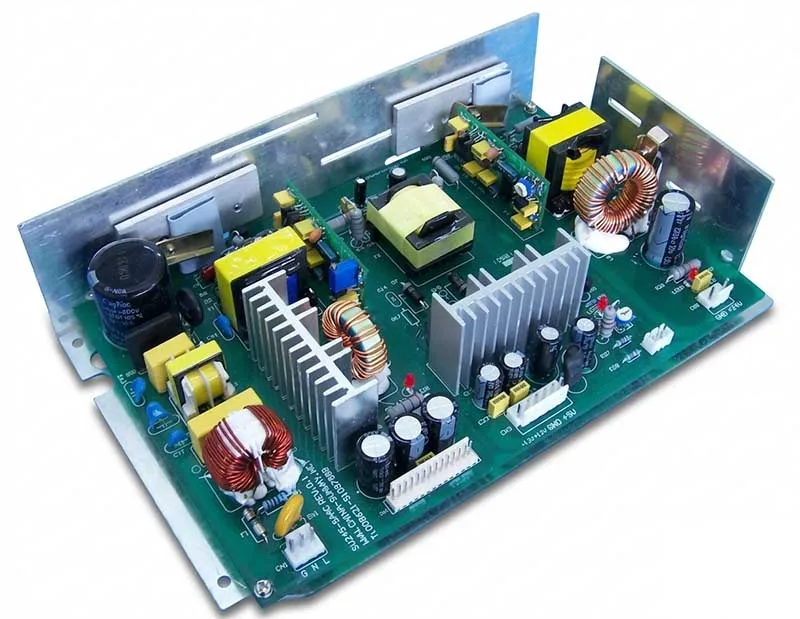
Under JEDEC validation, controlled testing on power modules shows clear hotspot reduction when applying an Ultra-thin thermally conductive insulating film between die and heat spreader.
Heat dissipation path
· Chip junction
· Ultra-thin film interface
· Aluminum baseplate
Thermal management results
· Lower peak temperature
· Improved temperature uniformity
· Reduced thermal cycling stress
Reliability impact
· Fewer solder fatigue cracks
· Longer module lifespan
Test Snapshot
| Device Type | Interface Material | Peak Temp (°C) | Hotspot Δ |
| IGBT A | Standard pad | 128 | — |
| IGBT A | Ultra-thin thermally conductive insulating film | 89 | -30% |
| MOSFET B | Standard pad | 121 | — |
| MOSFET B | Ultra-thin thermally conductive insulating film | 85 | -29% |
For automotive inverters and data center supplies, that margin matters. Sheen Technology integrates this thermally conductive film into validated stacks, keeping performance steady under load.
Graphene–Boron Nitride Films on Aluminum Substrates
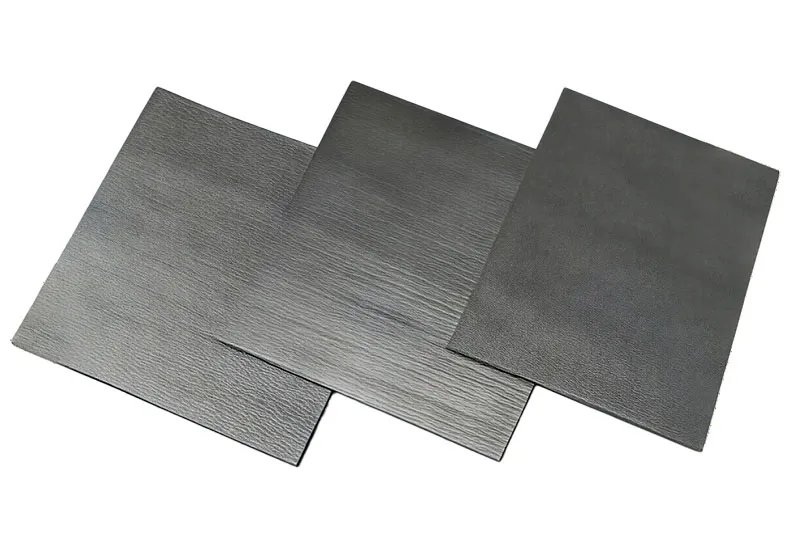
The magic sits inside the material stack.
· Graphene boosts in-plane thermal conductivity.
· Boron nitride keeps electrical insulation stable.
· Bonded onto aluminum substrates, the composite stays thin and tough.
This composite material forms an Ultra-thin thermally conductive insulating film that spreads heat laterally before pushing it down into the sink. The ultra-thin insulating film avoids parasitic capacitance issues common in thicker pads. Sheen Technology fine-tunes filler ratios so the thermally conductive insulating film balances strength and flexibility without cracking during assembly.
Lamination Process for Films on Metal Core PCBs
Applying the Ultra-thin thermally conductive insulating film onto metal core PCBs takes tight control.
Surface prep
· Clean aluminum core
· Micro-etch for adhesion
Lamination process
· Vacuum alignment
· Controlled pressure ramp
· Thermal curing cycle
Assembly checks
· Void inspection
· Peel strength test
· Thermal resistance scan
The result is a bonded interface with low thermal interface resistance and reliable heat transfer across printed circuit boards. In high-density designs, that slim thermally conductive film layer keeps things cool without stealing space.
Need a closer match for your project? Browse these related application pages to see how ultra-thin thermally conductive insulating film is used in real device stacks.
Key Specifications Of Conductive Insulating Films
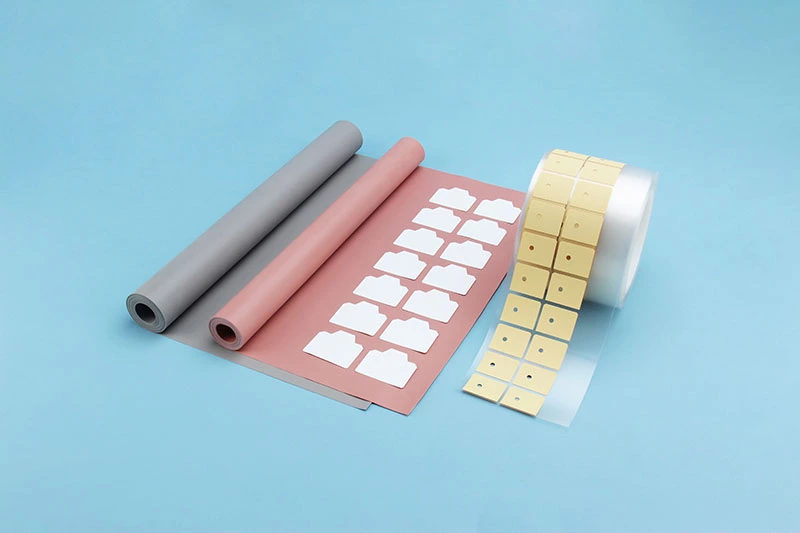
Ultra-thin thermally conductive insulating film sounds technical, but it’s really about keeping devices cool while blocking unwanted current. Break the phrase down—ultra-thin, thermally conductive, insulating film—and you get the core promise: slim build, fast heat flow, safe insulation. In phones, EV batteries, and LED boards, this material quietly does the heavy lifting.
Thermal Conductivity and Dielectric Strength Benchmarks
Balancing thermal conductivity with dielectric strength defines real-world insulation performance. An ultra-thin thermally conductive insulating film must move heat fast while keeping electrical resistance high and thermal resistance low.
Core material properties
Ceramic-filled matrix
· Boosts heat transfer
· Stabilizes breakdown voltage
Polymer backbone
· Controls flexibility
· Maintains electrical resistance
Typical benchmark standards
· ASTM D149 for dielectric breakdown
· UL 94 for flame behavior
· ASTM D5470 for thermal impedance
Sheen technology thermal conductive insulating film Properties:
| Properties | Color | Reinforcement Carrier | Thermal Conductivity | Dielectric Constant | Thermal Resistance |
|---|---|---|---|---|---|
| Unit | - | - | W/m·K | 1 MHz | °C·in²/W |
| SC800FG | Gray | Fiberglass | 0.8 | 5.5 | 0.8 |
| SC900FG | Pink | Fiberglass | 2.0 | 5.5 | 0.6 |
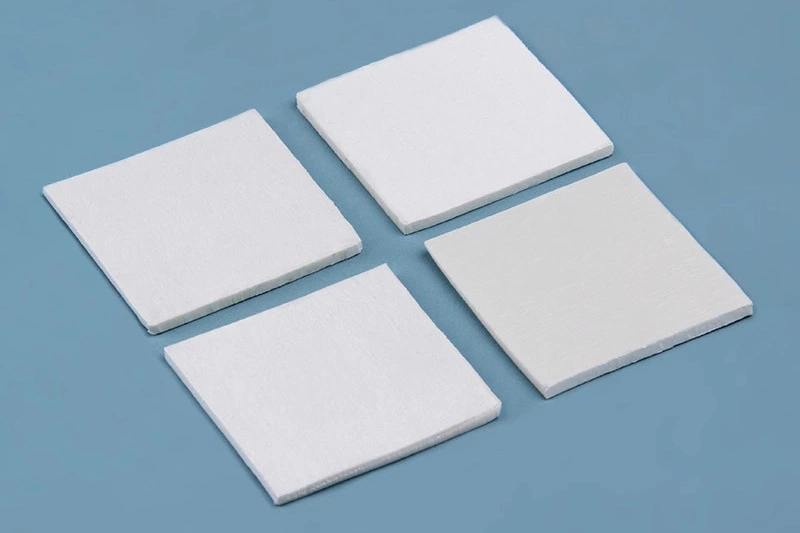
| SC1000FG | White | Fiberglass | 3.5 | 4.0 | 0.34 |
| SC2000FG | White | Fiberglass | 5.0 | 4.0 | 0.27 |
| SC800-PI-2-K4 | Gray | Polyimide | 0.9 | 4.0 | 0.5 |
| SC800-PI-2-K6 | Gray | Polyimide | 1.1 | 4.0 | 0.45 |
| SC800-PI-2-K10 | Gray | Polyimide | 1.3 | 3.7 | 0.4 |
| Test Method | Visual | - | ASTM D5470 | ASTM 150 | ASTM D5470 |
Ultra-thin thermally conductive insulating film used by Sheen Technology is tuned against these numbers, not guesses.
Need exact thermal conductivity, dielectric strength, thickness range, and application guidance before you choose? Download the product datasheets to compare ultra-thin thermally conductive insulating film options for your build.
Optimizing Film Thickness and Flexibility in Rolls
When film thickness drops below 50μm, every micron counts. Ultra-thin thermally conductive insulating film in roll form must hold dimensional stability while staying easy to bend.
Processing flow
· Controlled coating
· Precision calendering
· Tension-managed slitting
Performance focus
· Improved flexibility for curved battery cells
· Stable mechanical properties under bending cycles
· Smooth roll form output for automated lamination
Thin but tough—that’s the sweet spot. This thermally conductive insulating film wraps tight corners without cracking.
RoHS & REACH Compliance for Epoxy vs. Silicone Films
Compliance is not paperwork fluff; it’s market access. Ultra-thin thermally conductive insulating film built with epoxy film or silicone film chemistry must meet RoHS compliance and REACH compliance limits on hazardous substances.
Regulatory control layers
Material screening
· Heavy metal testing
· SVHC declaration
Supply chain audit
· Traceable material composition
· Updated regulatory standards
Epoxy offers higher rigidity; silicone handles thermal cycling better. Both can satisfy environmental regulation targets when formulated cleanly. Sheen Technology keeps documentation tight so OEM audits don’t turn into headaches.
Adhesion Standards on Copper and Ceramic Substrates
Strong adhesion strength keeps the bonding interface intact during thermal shock. On a copper substrate, oxide control matters. On a ceramic substrate, surface energy shifts the game.
Surface preparation
· Plasma cleaning
· Micro-etching
Test methods
· ISO peel test
· Thermal cycling at −40°C to 125°C
An ultra-thin thermally conductive insulating film must anchor securely to PCB pads and aluminum nitride plates. Good interfacial properties stop delamination before it starts. That’s how this thin thermally conductive dielectric film stays reliable, even when devices heat up fast and cool down just as quickly.
5 Key Factors In Film Thermal Conductivity
Ultra-thin thermally conductive insulating film sounds technical, yet it simply means a very thin layer that moves heat fast while blocking electricity. Break the phrase down—ultra-thin, thermally conductive, insulating film—and you see the balance engineers chase daily. Heat must flow. Current must not.
Filler Type: Boron Nitride vs. Aluminum Nitride
The filler type drives thermal conductivity and long-term heat dissipation stability in any insulating film.
Material properties comparison
| Filler Material | Intrinsic Thermal Conductivity (W/m·K) | Electrical Insulation | Typical Use in Insulating Film |
| Boron nitride | 200–400 | Excellent | Flexible composite film |
| Aluminum nitride | 140–320 | Very good | High-power modules |
| Hybrid BN+AlN | 180–350 | Excellent | Balanced performance film |
Application logic
For flexible composite material designs:
· choose boron nitride
· maintains dielectric strength
· improves in-plane spreading
For compact power density systems:
· use aluminum nitride
· enhances vertical conduction
· supports higher thermal loads
An Ultra-thin thermally conductive insulating film built with optimized ceramic systems often becomes the quiet hero inside LED drivers and compact IC packages. Sheen Technology tunes particle interfaces so the thin thermally conductive film keeps both conductivity and insulation in check.
Filler Loading Level and Thermal Pathway Efficiency
Higher filler loading improves the thermal pathway, but balance matters.
· Too low → scattered particles, weak heat transfer
· Too high → brittle film, rising thermal resistance
· Just right → continuous conduction network
Inside the insulating film, particle distribution determines efficiency.
Increase ceramic ratio.
· Improve dispersion during mixing.
· Align particles under calendaring pressure.
· Lock the network during curing.
That’s how a thermally conductive insulating film achieves steady performance without sacrificing dielectric safety.
Polyimide Thickness Impact on Heat Transfer
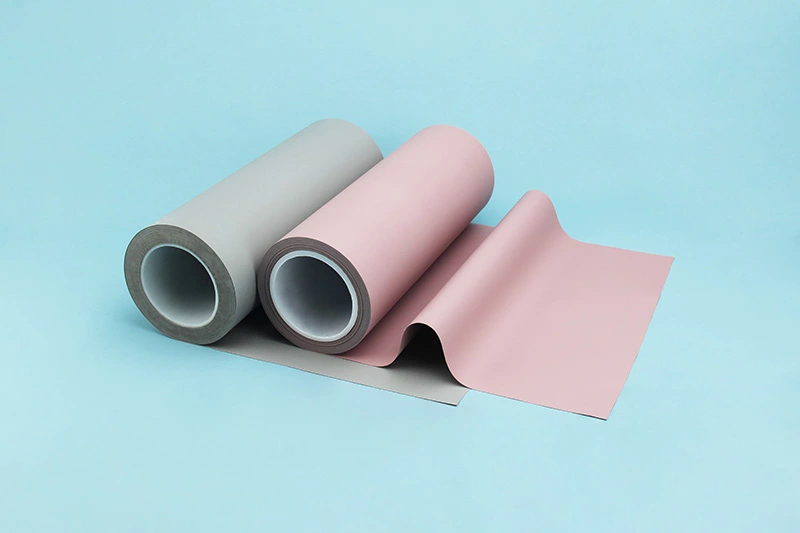
Polyimide acts as the structural backbone.
Thin layer. Faster heat path. Lower thermal resistance.
Ultra-thin structure means less distance for heat to travel across the insulating layer. In semiconductor packaging, even a 10 µm reduction in film thickness can cut junction temperature noticeably.
An Ultra-thin thermally conductive insulating film pushes this idea further—minimal thickness, maximum thermal management efficiency, stable material properties.
Surface Adhesion to Metal Core PCB and Copper
Strong surface adhesion reduces interfacial gaps between the film and copper or metal core PCB.
Interface contact matters
Microscopic voids trap air
· Air increases thermal resistance
· Heat flow drops
Bonding strategy
· Surface treatment of copper
· Optimized resin chemistry
· Controlled lamination pressure
Good thermal contact equals smoother heat flow. Sheen Technology fine-tunes bonding strength so the ultra-thin thermally conductive insulating film performs like it’s directly fused to the metal base.
Film Flexibility and Thermal Cycle Resistance
Flexibility keeps the insulating film alive during thermal cycle swings.
Hot. Cool. Hot again.
Mechanical strain builds fast. Strong mechanical properties reduce crack growth and slow material degradation. In automotive modules, repeated thermal stress can destroy rigid layers quickly.
“Thermal management materials capable of maintaining dielectric integrity beyond 1,000 thermal cycles are becoming standard in EV power electronics,” noted IDTechEx in its 2025 thermal interface materials outlook.
Durability isn’t optional anymore. It’s expected.
An Ultra-thin thermally conductive insulating film that bends slightly instead of breaking will outlast thicker rigid sheets. That’s why advanced thin thermally conductive film solutions are gaining traction across LED lighting, EV inverters, and compact consumer devices.
Thermal Pad Vs. Conductive Film
Compact electronics are running hotter every year, and picking the right thermal interface material can make or break device life. From Ultra-thin thermally conductive insulating film to classic pads, each option manages heat transfer in its own way. Let’s break it down in a practical, no-nonsense style.
Thermal Pad
When engineers reach for a thermal interface material that can handle uneven surfaces, the gap filler pad often wins.
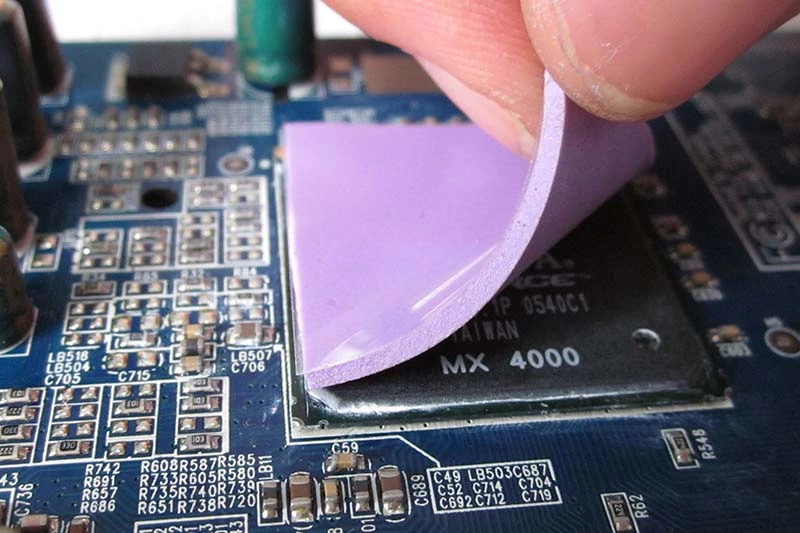
Core Material Structure
Base matrix
· Silicone elastomer for flexibility
· Ceramic fillers for stable heat transfer
Functional traits
· High compressibility
· Reliable electrical insulation
Application Logic
Uneven assemblies
· Power modules
· Heatsinks with tolerance stack-up
· Mid-range electronics cooling demands
Performance Factors
· Thickness range:0.5 mm to 5 mm common
· Trade-off:Higher thickness → slightly higher thermal resistance
For brands like Sheen Technology, pads remain a solid choice when mechanical gaps matter more than extreme thinness. They’re forgiving, easy to install, and stable over time.
Conductive Film
The Ultra-thin thermally conductive insulating film focuses on precision. Less bulk, tighter control.
Material Composition
Ultra-layer design
· Graphite or ceramic composite
· Engineered polymer carrier
Benefits
· Enhanced heat spreading
· Strong electrical insulation
Use Environments
Compact boards
· Metal core PCBs
· Portable electronics
· Semiconductor packaging
Key Data Snapshot
| Property | Ultra-thin thermally conductive insulating film | Thermal Pad |
| Typical Thickness | 0.16–0.25 mm | 0.3–10 mm |
| Thermal Conductivity (W/m·K) | 1–5 | 1–15 |
| Surface Conformity | Moderate | High |
| Space Saving | Excellent | Limited |
Compared with thicker thermal interface material, the Ultra-thin thermally conductive insulating film lowers interface resistance and supports tighter stacking. Sheen Technology fine-tunes its ultra-thin thermally conductive insulating film for high-density builds, keeping thermal management sharp without sacrificing insulation. In small devices, that slim conductive insulating film simply makes sense.
Smartphone Thermal Control With Ultra-Thin Conductive Film
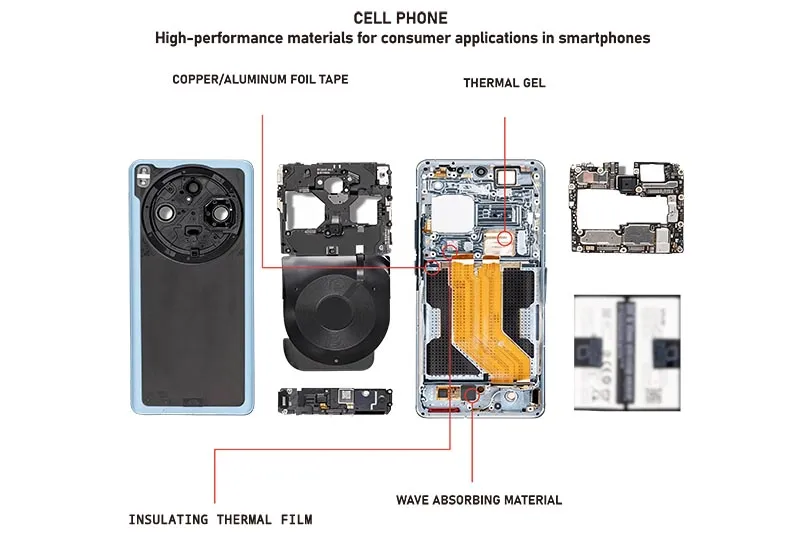
Smartphones keep getting thinner, yet heat keeps building up. The fix isn’t bulky metal anymore. Ultra-thin thermally conductive insulating film solutions now balance insulation, heat spread, and tight packaging without adding weight or drama.
Die-Cut Polyimide Films for Battery Pack Safety
Inside every battery pack, heat and current live side by side. A smart layout using die-cut polyimide film improves insulation, boosts thermal spreading, and raises overall safety.
Core Material Stack
Polyimide base layer
· High dielectric strength
· Stable at 200°C+
Ceramic-filled coating
· Enhances thermally conductive paths
· Maintains electrical isolation
Functional Role in Battery Modules
· Cell-to-cell barriers
· Heat diffusion between hot spots
· Edge wrapping for vibration buffering
Performance Snapshot
| Material Type | Thermal Conductivity (W/m·K) | Dielectric Strength (kV/mm) | Thickness (μm) |
| Standard PI Film | 0.12 | 150 | 50 |
| Ceramic PI Film | 0.85 | 120 | 40 |
| Ultra-thin thermally conductive insulating film | 1.2 | 110 | 25 |
Compared with thicker pads, Ultra-thin thermally conductive insulating film reduces internal resistance buildup while keeping the battery stable during fast charging. Brands like Sheen Technology tailor die-cut geometries so the thermally conductive insulating film fits snugly, no wasted space.
Roll-to-Roll Lamination on Silicon Wafers for CPU Interfaces
When a silicon wafer meets a heat spreader, the interface matters more than people think. Tiny air gaps wreck thermal flow.
Here’s how roll-to-roll lamination keeps things tight:
· Surface cleaning of the CPU die.
· Precision coating of ultra-thin thermally conductive layers.
· Continuous bonding under controlled pressure.
· Inline inspection for thickness uniformity.
Key benefits include:
· Lower contact resistance
· Stable conductive pathways
· Consistent ultra-thin thermally conductive insulating film thickness across reels
This process supports mass output without sacrificing alignment accuracy. In high-volume smartphone lines, even a 5 μm variation changes heat dissipation. Using Ultra-thin thermally conductive insulating film in laminated stacks keeps processors cooler during gaming or 5G streaming. It’s simple physics—shorter heat paths, faster dissipation.
Vapor Chamber Integration with Ultra-Thin Conductive Films
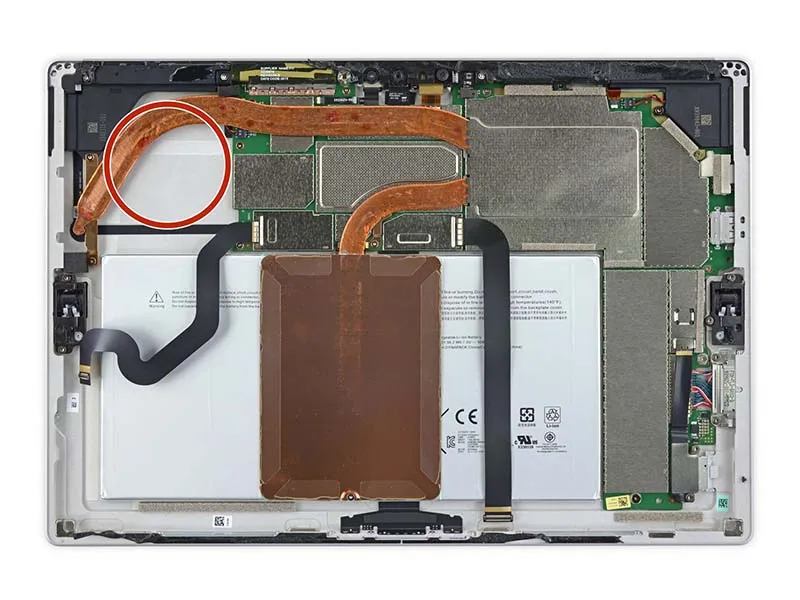
A vapor chamber spreads heat fast, yet the link between chamber and chipset decides real-world dissipation.
Interface Architecture
Chip surface
· Ultra-thin thermally conductive insulating film layer
· Electrical isolation
Conductive bridge
Vapor chamber plate
· Sealed working fluid
· Micro-wick structure
Contact Optimization
· Controlled compression force
· Surface flatness below 20 μm
· Edge sealing to prevent pump-out
Using Ultra-thin thermally conductive insulating film between the vapor chamber and board avoids short circuits while keeping heat transfer sharp. The film acts as a thermally conductive insulating film shield—thin, steady, and tough.
Sheen Technology fine-tunes ultra-thin thermally conductive layers for tight smartphone stacks, helping devices stay cool without adding bulk. In daily use, that means smoother video calls, fewer thermal throttles, and a phone that just feels reliable.
FAQs about Ultra-Thin Thermally Conductive Insulating Film
What core performance advantages define ultra-thin thermally conductive insulating film?
When heat spikes threaten power modules or semiconductor packaging, this film acts as a quiet barrier and bridge at once:
· Thermal conductivity + low thickness → rapid heat spread with minimal thermal resistance
· Electrical insulation & high dielectric strength (UL / ASTM verified) → protects PCB, silicon wafer, and copper circuits
· Flexibility under thermal cycling (JEDEC tested) → resists cracking in automotive electronics and data centers
· Strong adhesion to aluminum, ceramic, and metal core PCB surfaces
The result: cooler hotspots, tighter assemblies, and longer device life without bulky pads.
How does it compare with traditional thermal pads and other thermal interface materials?
Traditional pads feel thick and forgiving, but precision electronics demand more control.
| Feature | Ultra-Thin Film | Silicone Pads |
| Thickness control | Calendered, micron-level | Limited tolerance |
| Thermal resistance | Lower | Higher |
| Dielectric strength | High (UL) | Moderate |
| Form factors | Sheets, rolls, tapes, die-cut parts | Mostly pads |
In LED lighting, consumer electronics, and battery packs, thinner layers mean shorter heat paths—especially when paired with heat sinks, vapor chambers, or liquid cooling systems.
What materials and structures enable both insulation and heat transfer?
The balance is delicate—conduct heat, block current.
Matrix systems
· Polyimide or epoxy for heat resistance
· Silicone for flexibility
Ceramic fillers
· Boron nitride → electrical insulation focus
· Aluminum nitride → higher thermal conductivity
· Graphene hybrids → enhanced lateral spreading
Through coating, lamination, curing, and precision slitting, fillers form continuous thermal pathways while preserving electrical insulation across copper and aluminum substrates.
Where is ultra-thin thermally conductive insulating film most effective in real applications?
Its strength appears where space is tight and heat is intense:
· Power modules (IGBTs, MOSFETs) in automotive electronics
· Semiconductor packaging on silicon wafers
· Metal core PCBs in LED lighting
· Battery packs demanding insulation plus heat control
Available as laminates, rolls, or custom die-cut parts, the film bonds tightly through controlled lamination. Certified under ISO, RoHS, REACH, and UL standards, it supports high-volume production without sacrificing safety or stability.
Thin in profile, fierce against heat—that contrast defines its value.
【Request a Custom Quote】 Not sure which ultra-thin thermally conductive insulating film fits your design? Send us your substrate type, target thickness, thermal conductivity goal, and application details, and we can help recommend the right film structure for your build.
Sheen Thermal
Dongguan Sheen Electronic Technology Co., Ltd · Founded in 2008
Manufacturer of thermal interface materials and silicone foam for automotive electronics, energy storage, power electronics, communications and consumer electronics.
Certified
- ISO 9001:2015
- ISO 14001:2015
- IATF 16949:2016
What we supply
- Thermal conductivity Up to 90 W/m·K
- Thickness 0.3–10.0 mm
- Custom & samples Die-cut to drawing, 3–7 days