
 English
 usheenthermal

How to Select the Right Thermal Pad for High-Power Lasers
Date:2026-05-19
How to Select the Right Thermal Pad for High-Power Lasers
Thermal pad for high-power lasers isn’t a sidekick component; it’s the quiet hero keeping your million-dollar beam from frying itself under pressure.
Heat creep, electrical shorts, uneven surfaces—these headaches drain uptime and budgets faster than you can say warranty claim on repeat.
Recent analyses from MarketsandMarkets and Grand View Research report demand for thermal interface materials in photonics manufacturing, fueled by densities and reliability standards.
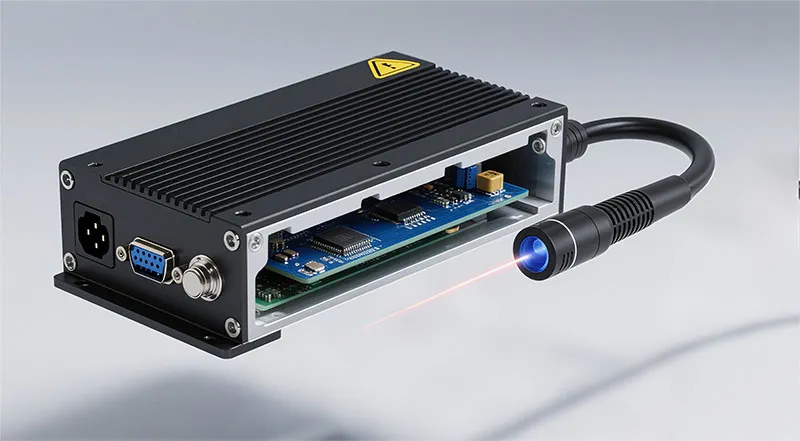
Quick Insights for Thermal Pad for High-Power Lasers
➔ Enhance heat paths with silicone or graphite pads, reducing thermal resistance by up to 40% for stable high-power operation.
➔ Ensure durable adhesion: composite silicone-ceramic pads withstand thermal cycling without delamination or pump-out.
➔ Fill microgaps: phase change films soften at operating temperature to conform, eliminate voids, and boost thermal transfer.
➔ Protect electrical integrity: high dielectric strength and volume resistivity guard against shorts in power-electronics integration.
➔ Maintain long-term reliability: choose pads proven under repeated thermal cycling, preserving adhesion and thermal performance.
Why Choose Thermal Pad For High-Power Lasers?
High-output laser systems run hot, no surprise there. A Thermal pad for high-power lasers keeps that heat in check, protects delicate chips, and helps optical gear stay steady under pressure. When you break down the phrase—thermal pad / high-power / lasers—it’s all about moving heat fast, safely, and reliably. Let’s unpack why it matters.
Thermal Pads Reduce Thermal Resistance by Up to 40% in Laser Diodes
In high-density laser diodes, excess heat increases thermal resistance, which blocks efficient heat transfer and hurts long-term thermal management. A Thermal pad for high-power lasers sits between the diode and heat sink, tightening that interface so heat dissipation improves and the semiconductor junction runs cooler.
Interface optimization
· Surface micro-gaps shrink under compression.
· Contact area increases.
· Air pockets drop significantly.
Material pathways
· Silicone matrix carries flexibility.
· Graphite fillers speed lateral heat transfer.
· Ceramic particles enhance vertical conductivity.
System results
· Lower operating temperature.
· Reduced thermal impedance.
· Stable optical output under continuous load.
For engineers selecting a Thermal pad for high-power lasers, these numbers translate into tighter beam stability and fewer shutdown headaches. Sheen Technology designs pads that match power density and mounting pressure, keeping high-power laser modules cool without overcomplicating assembly.
Struggling With Thermal Cycling? Composite Pads for Reliable Adhesion
Repeated thermal cycling brings thermal stress. Expansion. Contraction. Over time, weak bonding at the interface leads to material degradation and reduced reliability.
Composite pads tackle this through layered design:
Core Layer
· Elastic silicone backbone
· Maintains compressibility
Reinforcement Phase
· Ceramic fillers resist cracking
· Stabilize thickness under load
Surface Treatment
· Enhanced adhesion to metal heat sinks
· Reduced delamination risk
During temperature swings from −40°C to 125°C, a Thermal pad for high-power lasers must stay seated. That’s the difference between a lab prototype and field-ready hardware. Sheen Technology fine-tunes compression set values so the pad rebounds instead of creeping flat. Less gap growth. Less stress on the die.
Optical Modules Need Conformability: Phase Change Films Explained
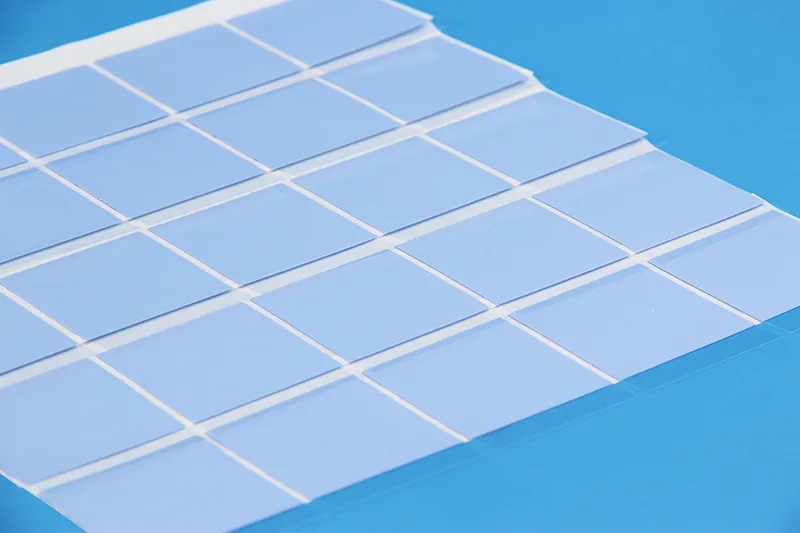
Compact optical modules don’t leave much room for error. Small height differences create air gaps that choke thermal conductivity. Here, phase change films act as a smart thermal interface material.
At room temperature, the film stays solid for easy handling.
At operating heat, it softens.
It flows into micro-voids.
That controlled softening improves conformability, boosts gap filling, and enhances heat transfer without messy pump-out. In tightly packed device assemblies, a Thermal pad for high-power lasers built with phase change layers supports smooth device integration while keeping assembly clean and repeatable.
High Dielectric Strength for Safe Power Electronics Integration
High-power systems mix heat and voltage. That’s risky territory. A Thermal pad for high-power lasers must offer strong dielectric strength while supporting thermal management.
Key protection layers include:
Electrical barrier
· High volume resistivity
· Reliable electrical insulation
Structural layer
· Maintains thickness under clamping force
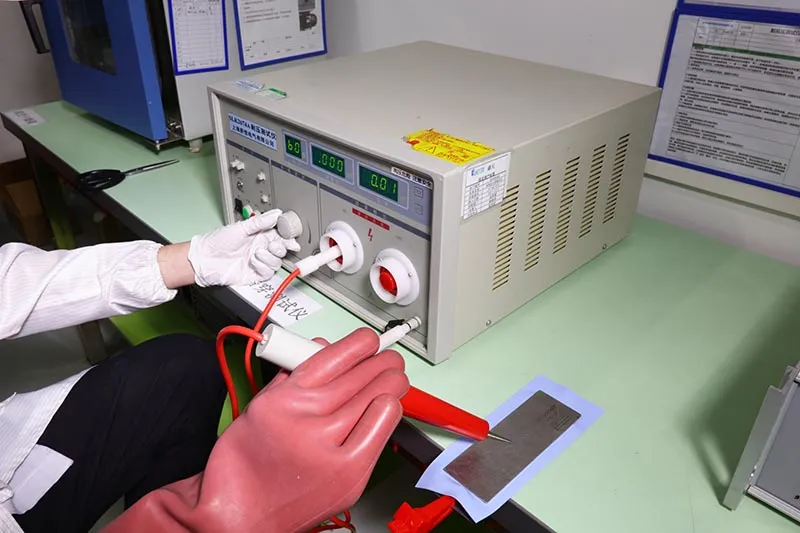
Safety margin
· Resists voltage breakdown
· Ensures long-term electrical isolation
In integrated power electronics, safe integration depends on stopping current leakage while still moving heat efficiently. That balance keeps drivers, diodes, and heat sinks working together without nasty surprises.
A well-matched laser thermal interface pad isn’t just filler—it’s a quiet protector. And when it’s engineered right, the whole laser system runs cooler, safer, and longer.
4 Factors Impacting Thermal Pad For High-Power Lasers
High-output laser modules run hot, no surprise there. If the Thermal pad for high-power lasers underperforms, junction temperature spikes and stability drops fast. From thermal transfer to electrical safety, every detail counts. Below breaks down how a laser thermal pad, heat sink interface, and insulation design keep high-power systems cool and reliable.
Maximizing Heat Dissipation Through Thermal Conductivity
When selecting a Thermal pad for high-power lasers, thermal conductivity is the headline act. Strong conductivity improves heat flow, lowers thermal resistance, and keeps the laser’s junction temperature within spec.
Material Core
1.1 Graphite-based pads
· Excellent in-plane thermal transfer
· Low bulk density
1.2 Ceramic-filled silicone
· Balanced thermal interface material performance
· Stable contact with heat sink assemblies
Interface Efficiency
2.1 Surface Contact
· Reduced air gaps
· Lower thermal resistance
2.2 Pressure Optimization
· Uniform compression
· Stable heat path
Performance Benchmarks
| Material Type | Thermal Conductivity (W/m·K) | Thermal Resistance (°C·in²/W) | Max Operating Temp (°C) |
| Silicone thermal pad | 1-15 | 0.1-0.9 | 200 |
| Boron nitride thermal pad | 15-20 | 0.06-0.1 | 150 |
| Graphene thermal pad | 75-90 | 0.013-0.016 | 150 |
| Phase-Change thermal material | 3-8 | 0.02-0.05 | 125 |
A high-power laser pad isn’t just about big numbers; it’s about steady performance over time. That’s where precision-engineered solutions from Sheen Technology come into play.
Adaptation to Surface Variations With Compressible Elastomers
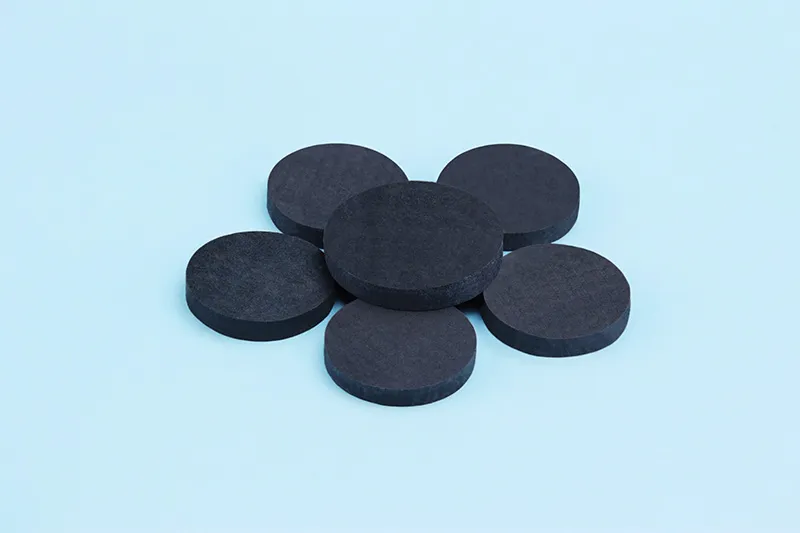
Even polished metal isn’t perfectly flat. A Thermal pad for high-power lasers must handle surface variations without drama.
Structural Behavior
1.1 Elastomer Matrix
· Silicone-based backbone
· Maintains flexibility at elevated temperature
1.2 Filler Distribution
· Even particle spread
· Stable gap filling
Mechanical Adaptation
2.1 Controlled compressibility
· Absorbs tolerance stack-ups
· Reduces contact resistance
2.2 Surface Matching
· High conformability
· Consistent heat path
A well-designed laser thermal pad quietly adapts under pressure, hugging microscopic roughness while preserving structural integrity. That subtle compliance directly improves overall thermal transfer from chip to heat sink.
Ensuring Electrical Insulation: High Dielectric Strength and Volume Resistivity
Power density is climbing, and insulation can’t be an afterthought. A Thermal pad for high-power lasers must combine electrical insulation with solid heat performance.
• High dielectric strength to prevent arc-over
• Strong volume resistivity to minimize leakage
• Stable dielectric constant under temperature swings
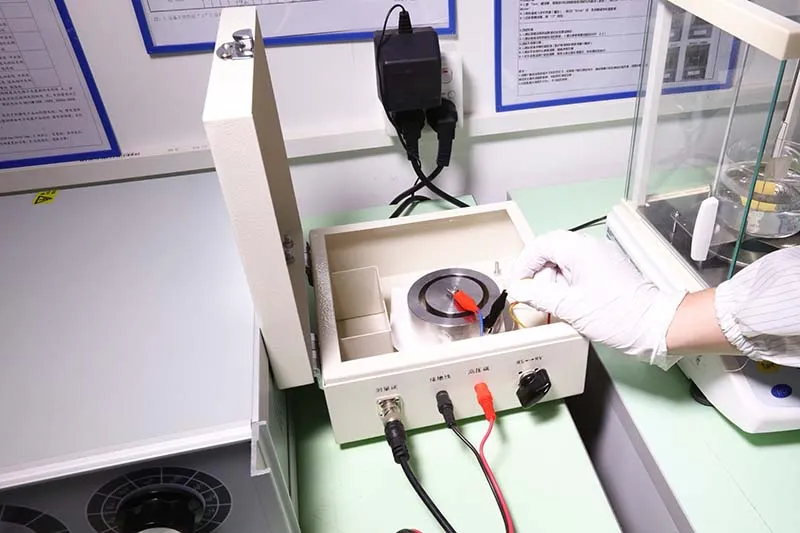
Electrical Safeguards
1.1 Breakdown voltage margins
1.2 Long-term insulation resistance stability
1.3 Reliable electrical isolation between substrates
Recent market observations back this up:
“As laser power density increases, demand for thermally conductive yet electrically insulating interface materials continues to rise across industrial photonics,” noted MarketsandMarkets in its 2025 thermal management materials outlook.
In short, the right high-power laser pad keeps heat moving while keeping electrons in their lane.
Evaluating Lifetime Reliability Under Thermal Cycling
A Thermal pad for high-power lasers faces repeated thermal cycling—on, off, hot, cool. That stress can cause material degradation and thermal fatigue.
Aging Resistance
1.1 Anti-cracking formulation
1.2 Low oil bleed
1.3 Structural density retention
Long-Term Performance
2.1 Stable long-term stability metrics
2.2 Extended operating life
2.3 Verified performance retention after 1,000+ cycles
Sheen technology SF1000 thermal pad Reliability Test Report
| Test Items | Test Conditions | Test Equipment |
| High-Temperature Aging | 125℃,1000H | Precision Oven |
| Constant Temperature & Humidity | 85℃、85%RH,1000H | Constant Temperature & Humidity Chamber |
| Thermal Shock | -40℃~125℃,1000H | Constant Temperature & Humidity Chamber |
Criteria for Judging Test Results
| Performance Parameter | Initial Value | Acceptance Criteria |
| Thermal Conductivity | 10.13 | ±15% |
| Hardness | 72 | ±10% |
| Compression (20% Compression Rate) | 31.4 | ±60% |
| Appearance | Smooth surface, uniform color | No abnormalities (e.g., powdering, discoloration) |
High-Temperature Aging Test Results
| High-Temperature Aging Test Record Sheet | |||||||
| Aging Time | H | 0 | 200 | 400 | 600 | 800 | 1000 |
| Thermal Conductivity | W/m*k | 10.13 | 10.40 | 10.58 | 10.71 | 10.62 | 10.73 |
| Hardness | Shore00 | 72 | 75 | 76 | 77 | 77 | 78 |
| Compression (20% Compression Rate) | psi | 31.4 | 34.3 | 36.6 | 39.5 | 38.7 | 40.5 |
Constant Temperature and Humidity Test Results
| Constant Temperature and Humidity Test Record Sheet | |||||||
| Aging Time | H | 0 | 200 | 400 | 600 | 800 | 1000 |
| Thermal Conductivity | W/m*k | 10.13 | 10.58 | 10.77 | 10.85 | 10.64 | 10.77 |
| Hardness | Shore00 | 72 | 74 | 76 | 77 | 77 | 77 |
| Compression (20% Compression Rate) | psi | 31.4 | 34.3 | 36.6 | 38.4 | 39.7 | 39.2 |
Thermal Shock Test Results
| Thermal Shock Test Record Sheet | |||||||
| Aging Time | H | 0 | 200 | 400 | 600 | 800 | 1000 |
| Thermal Conductivity | W/m*k | 10.13 | 10.64 | 10.88 | 10.75 | 10.67 | 10.80 |
| Hardness | Shore00 | 72 | 74 | 74 | 75 | 75 | 76 |
| Compression (20% Compression Rate) | psi | 31.4 | 35.9 | 34.8 | 37.9 | 40.2 | 41.9 |
Test Conclusion: After aging for 1000 hours under various conditions, the SF1000 maintained satisfactory performance with no changes to its appearance. Therefore, the SF1000-70° has successfully passed the reliability testing.
Risk Control Path
3.1 Lab Simulation:Accelerated aging tests
3.2 Field Validation:Real laser module trials
3.3 Continuous Improvement:Feedback-driven material refinement
When a thermal interface material survives cycling without pump-out or cracking, uptime stays high and maintenance stays low. That reliability is exactly why many engineers turn to Sheen Technology when specifying a Thermal pad for high-power lasers in demanding industrial systems.
Need exact thermal conductivity, thickness range, dielectric strength, and aging data before you choose? Download the product datasheets to compare thermal pad options for high-power lasers.
Thermal Pad For High-Power Lasers Vs. Pastes
High-output laser systems run hot, plain and simple. Choosing the right Thermal pad for high-power lasers or paste can make or break stability, beam quality, and long-term reliability in demanding industrial setups.
Thermal Pads
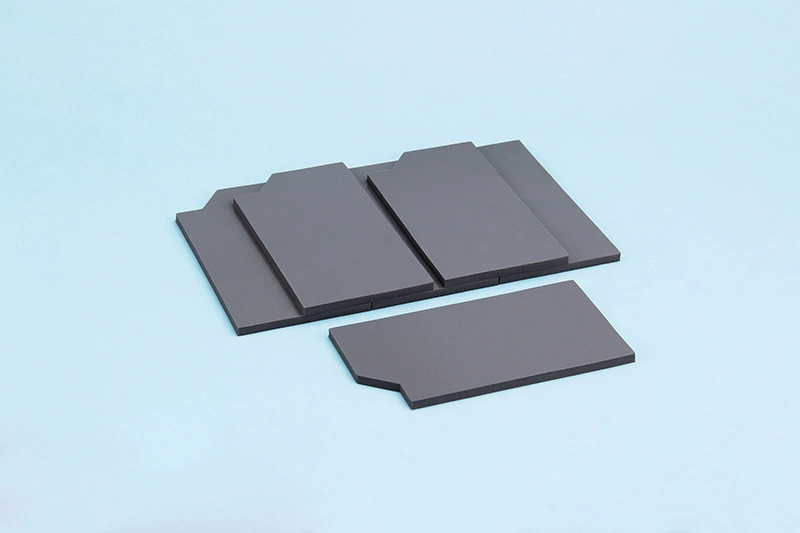
When selecting a Thermal pad for high-power lasers, decision-making often follows layered technical logic:
Performance Core
1.1 Heat Transfer
· Thermal conductivity defines how fast heat leaves the diode or module.
· Higher heat dissipation keeps optical output stable.
1.2 Structural Control
· Fixed thickness ensures uniform pressure.
· Controlled material composition avoids phase separation.
Electrical & Mechanical Protection
2.1 Safety Margin
· Strong dielectric strength protects drivers from short circuits.
2.2 Surface Adaptation
· Balanced conformability fills machining marks without squeeze-out.
Environmental Reliability
3.1 Thermal Limits
· Wide operating temperature range supports fiber, diode, and solid-state laser assemblies.
3.2 Long-Term Stability
· No migration under vibration or continuous duty cycles.
For integrators seeking a laser thermal interface that stays put, a Thermal pad for high-power lasers offers clean handling and predictable stack-up. Sheen Technology supplies engineered pads tailored for high-power laser modules where consistency matters more than hype.
Pastes
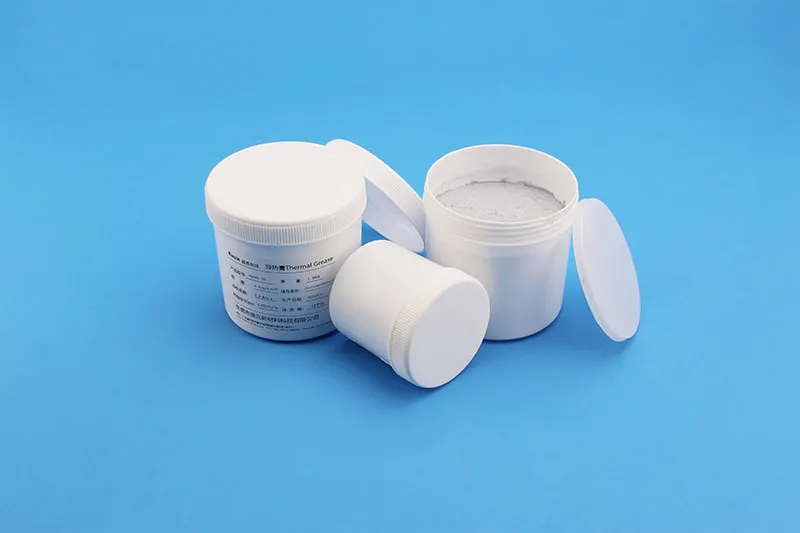
Thermal grease solutions follow a different evaluation path in laser builds:
Material Behavior
1.1 Flow Characteristics
· Viscosity impacts spread during assembly.
· Application depends heavily on application method.
1.2 Chemical Dynamics
· Some formulas require curing time before peak performance.
Thermal Function
2.1 Gap Management:Strong gap filling at micro-level surfaces.
2.2 Initial Metrics:Low starting thermal resistance under ideal compression.
Risk Over Time
3.1 Mechanical Stress:The pump-out effect appears under thermal cycling.
3.2 Durability:Questionable long-term stability in continuous high-power laser arrays.
A Thermal pad for high-power lasers often replaces thermal grease in systems exposed to shock, tilt, or frequent temperature swings. For high-power laser cooling where uptime equals revenue, the right thermal pad for laser modules keeps things steady and drama-free.
Need a closer match for your project? Browse these related application pages to see how thermal pads are used in real laser systems.
FAQs about Thermal Pad For High-Power Lasers
Why is a thermal pad critical in a high-power laser diode assembly?
Inside a compact laser diode module, heat builds fast and failure follows faster. A well matched thermal pad for high-power lasers acts as the silent protector between the diode and the heat sink.
It works on three levels:
· Heat control: lowers thermal resistance and stabilizes operating temperature, improving overall heat dissipation.
· Material science: silicone, graphite, or ceramic filled composite structures raise thermal conductivity while keeping steady thermal impedance.
· Mechanical fit: balanced compressibility and controlled thickness ensure close contact across uneven semiconductor surfaces.
When temperature stays controlled, reliability and device lifetime rise dramatically—especially in dense optical module or power electronics designs.
How do material and electrical properties affect safety and performance?
High-power lasers demand both heat transfer and electrical protection. A poorly chosen pad risks breakdown, short circuits, or unstable output.
Key properties to verify:
· Thermal performance – target thermal conductivity suited to diode wattage; lower thermal resistance reduces stress during continuous use.
· Electrical safety – strong dielectric strength, high volume resistivity, and stable insulation resistance prevent breakdown voltage events inside semiconductor assemblies.
· Mechanical endurance – correct hardness, density, and conformability maintain adhesion during repeated thermal cycling.
Silicone ceramic or graphite polymer composite pads balance heat flow and electrical insulation, protecting sensitive components under pressure.
Which format is better: gap filler pad or phase change film?
Both serve the same mission—efficient contact between component and heat sink—but behave differently under stress.
| Format | Typical Material | Best Use | Key Advantage |
| Gap filler (sheet, roll, pre-cut) | Silicone, elastomer, ceramic composite | Uneven surfaces | High compressibility, stable thickness |
| Phase change material film | Polymer-based film | Flat, precision surfaces | Softens at operating temperature, lowers interface thermal impedance |
For automated production, pre-cut sheets simplify quality control.
For tight optical assemblies, thin film formats reduce trapped air and improve conformability.
The right choice protects the laser diode, preserves adhesion over long thermal cycling, and keeps performance steady when the heat is at its peak
【Request a Custom Quote】 Not sure which thermal pad fits your laser system? Send us your diode power, mounting pressure, operating temperature, and stack-up details, and we can help recommend the right thermal solution for your build.
Sheen Thermal
Dongguan Sheen Electronic Technology Co., Ltd · Founded in 2008
Manufacturer of thermal interface materials and silicone foam for automotive electronics, energy storage, power electronics, communications and consumer electronics.
Certified
- ISO 9001:2015
- ISO 14001:2015
- IATF 16949:2016
What we supply
- Thermal conductivity Up to 90 W/m·K
- Thickness 0.3–10.0 mm
- Custom & samples Die-cut to drawing, 3–7 days