
 English
 usheenthermal

Can Thermal Pad Be Reused? Get the Facts Before You Rebuild
Date:2026-07-01
Can Thermal Pad Be Reused? Get the Facts Before You Rebuild
Can Thermal Pad Be Reused? sounds like a small shop-floor shortcut, but it’s a gamble that can quietly cook your hardware and your budget at the same time.
Pads lose their squish, pick up grime, and stop moving heat like they should, so reuse trades pennies saved for failures, rework, and headaches nobody signed up for in production on busy lines today.
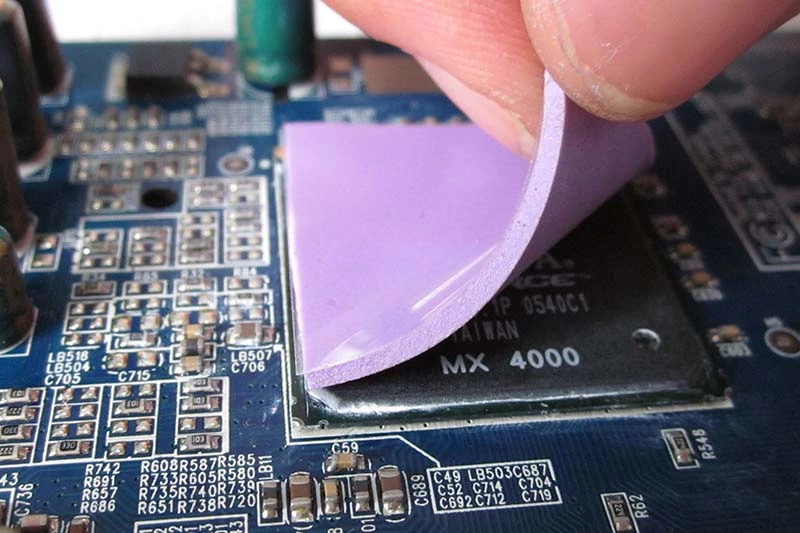
Quick Insights: Can Thermal Pad Be Reused?
➔ Thermal conductivity degrades over reuse, raising interface resistance and reducing heat dissipation.
➔ Loss of compressibility causes poor surface conformity, increasing bond line thickness and contact resistance.
➔ Contamination and material fatigue (dust, oils, cracks) undermine long-term reliability and risk overheating.
➔ Under high temperatures or voltage, reused pads may lose dielectric strength and fail safety requirements.
Can Thermal Pad Be Reused? Key Considerations
If you’ve ever pulled off a heatsink and paused, wondering, Can Thermal Pad Be Reused?, you’re not alone. Many techs and DIY users ask the same thing. Can Thermal Pad Be Reused? The answer depends on thermal conductivity, wear, and how the pad aged during service.
Evaluating thermal conductivity retention in reused pads
When people ask, Can Thermal Pad Be Reused?, what they really mean is: will the thermal interface material still move heat efficiently? Over time, material degradation affects thermal conductivity and raises thermal resistance, lowering overall pad performance.
Key performance factors include:
· Filler dispersion stability
· Silicone matrix aging
· Compression set after long-term load
Performance change can be summarized:
| Condition | Thermal Conductivity (W/m·K) | Thermal Resistance (°C·cm²/W) | Reusability |
| New pad | 6.0 | 0.12 | High |
| Lightly used | 5.4 | 0.15 | Moderate |
| Aged / hardened | 4.1 | 0.21 | Low |
If numbers drift too far, heat transfer drops fast. That’s when reuse becomes risky.
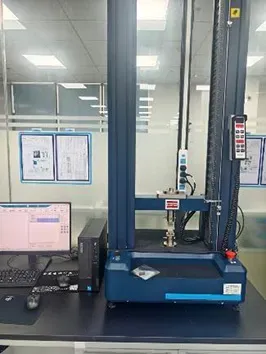
Sheen Technology High Rebound Graphene Thermal Pads Performance Testing
· Test Standard: ASTM D575.
· Sample Preparation: Material specimens measuring 25 mm × 25 mm × 0.3 mm.
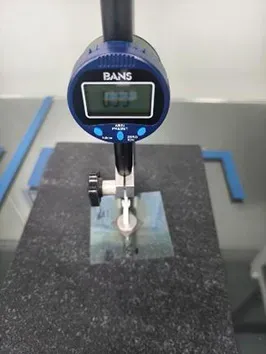
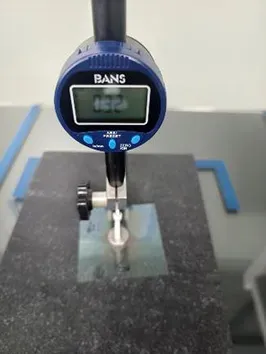
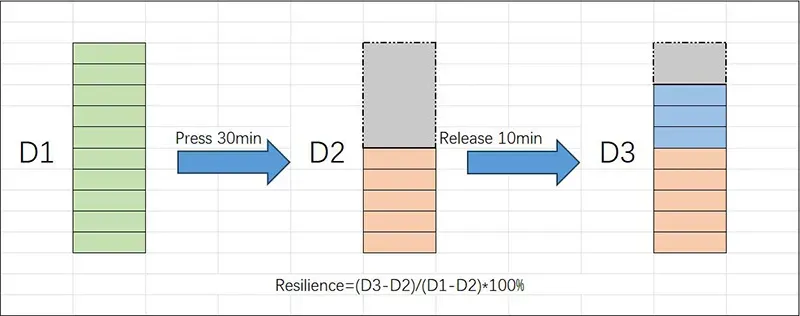
· Test Method: Zero the force reading before testing; apply a 2 N force to contact the sample surface. Set the compression speed to 0.5 mm/min and compress to 50% deformation. Maintain the load for 30 minutes. Let D1 be the initial thickness and D2 be the thickness after compression; measure the thickness again as D3 after a 10-minute recovery period. Calculate the recovery rate as (D3 - D2) / (D1 - D2) × 100%.
| Testing Equipment | Before Testing | After Testing |
 |
 |
 |
| Test Item | Test Data | |||
| 1 | 2 | 3 | Average Value | |
| Rebound Rate(%) | 92 | 94 | 95 | 93 |
At Sheen Technology, pads are engineered for controlled compression recovery, improving realistic reusability in moderate thermal cycles.
How compressibility loss impairs heat dissipation
A reused pad might look fine but lose compressibility. That’s the hidden issue.
· Reduced elastic recovery
· Increased pad thickness after release
· Poor surface contact
Once thermal contact weakens, gaps form. Air sneaks in. Heat dissipation suffers.
You might notice:
· Higher CPU temps
· Throttling under load
· Uneven heatsink imprint
In layered assemblies, the sequence matters:
Interface stack
· Chip surface
· Reused pad
· Heatsink base
If gap filling performance drops, thermal resistance climbs sharply. So when asking, Can Thermal Pad Be Reused?, check compression recovery—not just appearance.
Identifying contamination and material fatigue risks
Reuse isn’t just about heat. Contamination and material fatigue play a huge role.
Foreign particles can embed into the pad surface. Oils from fingers alter pad integrity. Over time, thermal cycling accelerates degradation and micro-cracking.
Watch for:
· Surface dust
· Edge tearing
· Delamination
Long-term aging impacts:
1) Structural softness
2) Filler bonding
3) Thermal performance consistency
Even slight cracking increases contact resistance. In high-power boards, that small rise becomes a real overheating risk.
So, can you reuse a thermal pad safely? Only if inspection confirms stable elasticity and clean surfaces.
When operating temperature and dielectric strength matter
High operating temperature environments change everything. Under constant thermal stress, material properties shift. Silicone hardens. Filler separation occurs. Thermal stability declines.
Electrical safety is another layer:
· Dielectric strength must remain intact
· Electrical insulation cannot weaken
· Risk of voltage breakdown increases in high-power modules
Consider this structured evaluation:
Thermal factors
· Max junction temperature
· Cycling frequency
Electrical factors
· Working voltage
· Required isolation rating
If the pad served near its rated high temperature limit, reuse becomes questionable.
That’s why engineers working with power MOSFETs and GPUs often replace pads after major service intervals. While Can Thermal Pad Be Reused? is a fair question, the smarter version is: Should it be reused in this thermal and electrical condition?
Reliable suppliers like Sheen Technology design pads with stable material properties, helping extend service life—but even the best pads have limits.
In short, Can Thermal Pad Be Reused? Yes, sometimes. But only when compression, cleanliness, and conductivity all check out.
Need verified thermal conductivity, compression recovery, dielectric strength, and long-term reliability data before choosing a thermal pad? Download the product datasheets to compare thermal pads for CPUs, GPUs, AI servers, power electronics, and other high-performance thermal management applications.
4 Pros and Cons of Reusing Pads
Reinstalling a thermal pad sounds simple, but the real question many techs ask is: Can Thermal Pad Be Reused? The answer depends on material condition, compression history, and heat cycling. Let’s break it down clearly and practically.
Faster installation via die-cutting pad reuse
When asking Can Thermal Pad Be Reused?, speed is usually the first reason people try. A pre-shaped die-cutting thermal pad already matches the component outline, so reinstalling it can feel like plug-and-play.
· No re-dispensing like thermal grease
· No curing delay
· Cleaner assembly workflow
1)Remove heatsink carefully
2)Inspect pad surface for cracks or debris
3)Realign and reinstall
4)Apply uniform torque
From an efficiency standpoint, reuse may shorten downtime in repair labs.
But the gain depends on material behavior:
Material condition
· Surface elasticity
· Edge integrity
Contact stability
· Even compression
· No trapped air
In high-volume electronics production, brands like Sheen Technology optimize thermal pad tolerances so reinstall alignment remains consistent. That consistency improves installation speed without sacrificing contact.
Still, asking “Can a thermal pad be reused?” should never ignore performance testing.
Hardening pad increases thermal resistance
The real issue behind Can Thermal Pad Be Reused? is thermal resistance growth.
As a thermal pad ages, hardening occurs due to polymer cross-linking and thermal cycling. Reduced softness means weaker surface conformity. That lowers heat transfer efficiency.
Key degradation drivers:
· High operating temperature
· Repeated compression cycles
· Long-term material oxidation
Below is a simplified performance comparison:
| Condition | Compression (%) | Thermal Resistance (°C·cm²/W) |
| New Pad | 30 | 0.45 |
| 1st Reuse | 25 | 0.58 |
| Aged Reuse | 18 | 0.76 |
As resistance rises, heat dissipation drops. That directly impacts device performance.
So when people ask again, Can Thermal Pad Be Reused?, the better follow-up is: has its mechanical recovery dropped?
Manufacturers such as Sheen Technology design pads with controlled compression set values to slow degradation, but reuse always increases risk.
Consistent bond line thickness without grease
Unlike paste, a thermal pad maintains defined bond line thickness. That’s a big advantage.
Consistency means:
· Stable interface spacing
· Predictable contact pressure
· Repeatable heat dissipation behavior
Compare this with thermal grease, where thickness depends on application force and viscosity.
Here’s how thickness stability works:
· Pad thickness defines interface gap
· Compression defines final contact pressure
· Material recovery keeps spacing controlled
Within this structure:
Thickness control
· Factory-set tolerance
· Uniform density
Interface quality
· Surface wetting
· Gap filling
For devices with tight mechanical tolerances, this consistency matters more than peak conductivity.
Still, the core concern remains: Can Thermal Pad Be Reused? If compression set exceeds design limits, the bond line becomes uneven. Then the benefit disappears.
Pump-out and dry-out risk with reused pads
Now to the downside most engineers worry about.
Pump-out happens when repeated expansion and contraction force interface material outward. Dry-out reduces internal flexibility. Both raise long-term risk.
Warning signs include:
· Surface cracking
· Edge shrinkage
· Reduced rebound
Step-by-step reliability impact:
· Thermal cycling begins
· Pad loses elasticity
· Micro-gaps form
· Hot spots increase
· Component failure risk grows
Within reliability evaluation:
Degradation factors
· Temperature swing amplitude
· Mounting pressure variation
Reliability outcome
· Shortened lifecycle
· Higher maintenance frequency
If you’re seriously evaluating Can Thermal Pad Be Reused?, always check compression recovery and surface conformity.
For high-demand applications, Sheen Technology recommends replacing rather than reusing in mission-critical systems. In casual repair scenarios, limited reuse may be acceptable—but only after careful inspection.
So yes, the question Can Thermal Pad Be Reused? has no one-size-fits-all answer. It’s about condition, load, and how much reliability you’re willing to trade for convenience.
Need to choose the right thermal interface material for your maintenance or product design? Browse these related application pages to see how thermal pads are applied across different thermal management systems.
Thermal Pad vs. Thermal Paste
Can Thermal Pad Be Reused? That question pops up in repair shops, gaming PC forums, and quick DIY chats almost daily. People want cleaner upgrades, lower cost, and solid cooling without wrecking delicate hardware during installation.
Thermal Pad

Many builders ask, “Can Thermal Pad Be Reused?” because a pad looks intact even after removal. In many cases, yes, but the answer depends on Material, Thickness, surface condition, and long-term Degradation.
Signs a thermal pad may still work
· Surface remains flexible
· No tearing during removal
· Stable Compressibility
· Minimal dust or oil contamination
Cases where reuse becomes risky
· Cracked edges reduce Heat transfer
· Uneven Gap filling
· Permanent flattening after heavy pressure
· Poor contact after repeated Installation
Practical reuse routine
· Remove the pad slowly
· Check texture and alignment
· Clean surrounding surfaces
· Reinstall with even pressure
IDC’s 2025 consumer hardware maintenance notes mentioned that reusable cooling materials continue gaining interest because users increasingly repair devices instead of replacing them outright.
People searching “Can Thermal Pad Be Reused?” usually care about convenience. Pads stay cleaner than grease, and brands like Sheen Technology market them toward users who hate messy maintenance. A reused thermal pad can still perform fine in routers, VRAM modules, or compact laptops if the pad keeps its shape and proper contact.
Thermal Paste
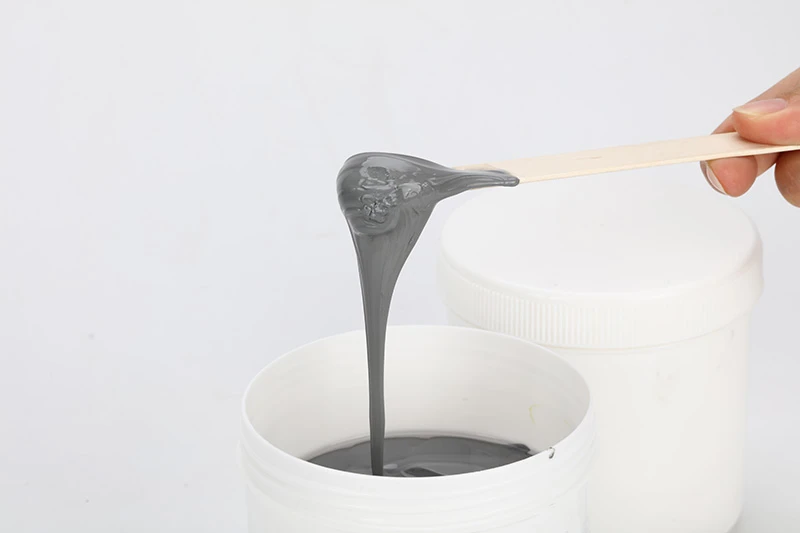
Thermal paste handles tiny surface flaws better, so raw Heat transfer often beats pads. Still, the tradeoff appears during Application and cleanup.
Strong points:
· Smooth Spreading
· Lower contact resistance
· Good for CPUs and GPUs
Common headaches:
· Messy Cleaning
· Uneven Viscosity
· Drying after years of heat
· Frequent Reapplication
Can Thermal Pad Be Reused? People ask that partly because paste usually cannot. Once pressure spreads grease across a chip, reusing it creates air pockets and unstable cooling. Some compounds also need Curing, while cheaper blends suffer Pump-out during thermal cycling.
A casual PC owner may prefer pads for speed. Enthusiasts chasing every degree still lean toward paste.
【Request a Custom Quote】 Not every application should reuse a thermal pad. Whether you're designing new hardware or servicing existing equipment, the right material depends on operating temperature, gap thickness, compression requirements, electrical insulation, and long-term reliability goals. Share your application details with our engineering team, and we'll recommend the most suitable thermal interface solution for your project.
Sheen Thermal
Dongguan Sheen Electronic Technology Co., Ltd · Founded in 2008
Manufacturer of thermal interface materials and silicone foam for automotive electronics, energy storage, power electronics, communications and consumer electronics.
Certified
- ISO 9001:2015
- ISO 14001:2015
- IATF 16949:2016
What we supply
- Thermal conductivity Up to 90 W/m·K
- Thickness 0.3–10.0 mm
- Custom & samples Die-cut to drawing, 3–7 days
LAST:Nothing