
 English
 usheenthermal

Scaling AI Clusters with Advanced GPU Server Thermal Management
Date:2026-09-17
GPU server thermal management gets tricky fast: pack more accelerators into tighter racks, and heat starts playing hardball with uptime, performance, and hardware life. At fleet scale, cooling becomes a materials problem, not just a bigger-fan problem.
At cluster scale, cooling is a materials problem more than a bigger-fan problem. Fans and pumps move heat, but interfaces, seals, and fluids decide how much of the design window is left for performance.
Buyers must weigh thermal conductivity, CTE, dielectric strength, coolant viscosity, sealing, and corrosion resistance. This guide maps those choices from GPU interfaces to rack cooling.
Key Insights on GPU Server Thermal Management
➔ Upgrade Thermal Interfaces: Deploy liquid metal or high-conductivity pads to slash junction-to-cooler resistance under heavy AI workloads.
➔ Mitigate CTE Mismatch: Select stable greases and underfills to prevent pump-out, gap formation, and thermal-cycling damage.
➔ Balance Coolant Viscosity: Choose dielectric or glycol-based fluids with optimized viscosity index and corrosion inhibitors to ensure uniform high-flow cooling.
➔ Implement Thermal Zoning: Use polyimide barriers, anodized seals, and aluminum-6061 fin stacks for cold-aisle insulation, hot-aisle containment, and effective heat spreading.

Note: This image was generated with the assistance of artificial intelligence; it is not a real photograph and is for reference only.
Why Do GPUs Overheat at Scale?
GPU server thermal management gets harder as accelerator density rises: heat must cross package interfaces, spread through boards, and finally enter moving coolant. Tiny material changes can become a big deal across thousands of GPUs. Sheen Technology addresses these GPU cooling pressure points from interface to fluid loop.
Thermal Conductivity: When Phase Change Material Falls Short
Phase Change Material can simplify assembly, but extreme GPU Heat Dissipation pushes it toward its limits.
Interface behavior
- Higher Thermal Conductivity lowers Thermal Resistance between the die and cooler.
- Micro-voids inside an Interface Material interrupt heat paths.
For GPU server thermal management, liquid metal, graphite sheets, or conductive pads can cut interface resistance when compatible with the package. That keeps GPU cooling from hitting a thermal wall.
Coefficient of Thermal Expansion and Interface Gaps in Thermal Grease
Repeated heating and cooling makes package materials expand by different amounts.
Thermal Cycling creates Mechanical Stress because the Coefficient of Thermal Expansion differs among silicon, substrate, and spreader.
That movement can trigger the Pump-out Effect in Thermal Grease.
- Void Formation and Interface Gaps follow.
- Contact resistance rises, so GPU server thermal management gradually loses performance.
It’s a small gap with a not-so-small temperature cost.
Copper Clad Laminate vs. Silicon Interposer Hotspots
Board scale
- Copper Clad Laminate supports wider Thermal Distribution across the Packaging Substrate.
Package scale
- A Silicon Interposer packs dies closely.
- Concentrated Heat Flux creates Hotspots and a steep Thermal Gradient.
That difference matters when GPU server thermal management moves from one accelerator to dense AI systems: package geometry can overwhelm otherwise capable server cooling.
Viscosity Index Challenges in High-Flow Dielectric Coolants
Dielectric Coolants change thickness with temperature, so Viscosity Index affects both Fluid Dynamics and operating cost.
| Flow rate | Draft’s illustrative pump power | Affinity-law prediction | Lesson |
| 8 L/min | 120 W | 120 W (baseline) | Reference point |
| 10 L/min | 145 W | ≈ 234 W — 120 × (10/8)³ | +25% flow costs roughly 2× the power |
| 12 L/min | 175 W | ≈ 405 W — 120 × (12/8)³ | +50% flow costs roughly 3.4× the power |
In Immersion Cooling or liquid loops:
- viscosity shifts can alter the Heat Transfer Coefficient;
- parallel paths may receive uneven Flow Rate;
- higher resistance increases Pump Power.
Stable fluid properties make GPU server thermal management easier to balance at scale, an important design focus for Sheen Technology.
4 Steps to Optimize Cluster Cooling
GPU server thermal management works best when heat, coolant, hardware, and electrical protection are treated as connected parts. High-power GPU servers can run seriously hot, so practical thermal management needs efficient heat movement plus careful checks on materials, cooling hardware, and insulation.
Step 1 Choose the Right Interface: Liquid Metal Is Not the Default
For high-flux hardware, thermal interface materials control how easily energy leaves the die. Production servers overwhelmingly ship with engineered greases, gap pads, or phase-change films; liquid metal is the exception, reserved for designs that need its conductivity and can manage its risks.
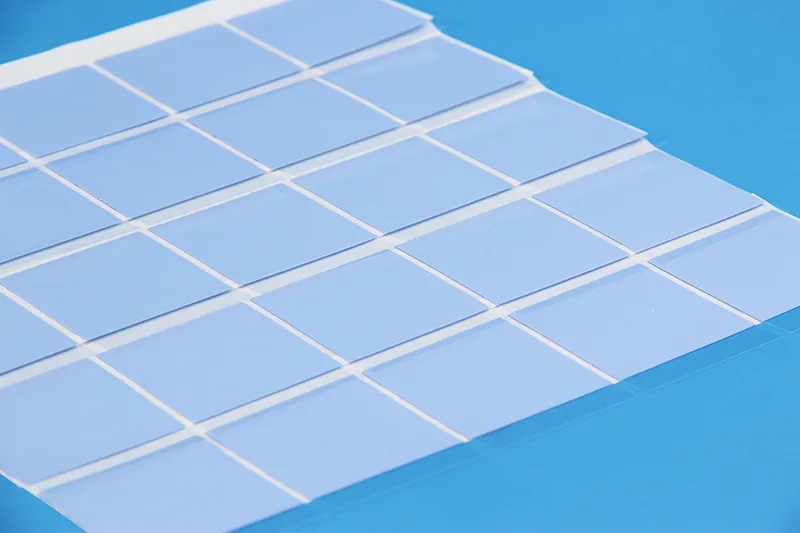
| Option | Typical bulk conductivity | Electrical | Best fit | Watch-outs |
| Gallium alloy (liquid metal) | Tens of W/m·K (alloy-dependent) | Conductive | Lapped, tightly controlled designs | Attacks aluminum severely; wets and penetrates copper over time (nickel barriers common); conductive-leak risk; service cleanup |
| Thermal grease | 1–5 W/m·K | Non-conductive (most) | Production default; re-workable | Pump-out under thermal cycling; oil bleed |
| Silicone Thermal pad / gap filler | 1–15 W/m·K | Non-conductive | Service-friendly, gap-tolerant; VRM and memory | Higher minimum bond line; pressure sensitivity |
| Phase-change film | 3–8 W/m·K | Non-conductive | Thin, uniform interfaces; re-wets each cycle | Transition temperature must sit inside the operating range |
Cooling interface
- A Micro-channel cold plate can carry concentrated GPU heat away quickly.
- Check gallium compatibility because some metals, especially aluminum, can suffer serious damage.
Done carefully, this approach gives GPU server thermal management a shorter path from silicon to coolant.
Step 2 Circulate Ethylene Glycol Solution and Corrosion Inhibitor
A well-tuned Liquid Cooling loop needs steady Coolant Circulation, not simply cold fluid. Ethylene Glycol adds freeze protection, while a suitable Corrosion Inhibitor helps protect mixed-metal parts.
- Size the Pump for reliable flow without excessive pressure.
- Route each Pipeline to limit restrictions and trapped air.
- Use the Heat Exchanger to reject server heat efficiently.
That balance keeps GPU cooling predictable and reduces corrosion risks inside long-running systems.
Step 3 Deploy Vapor Chamber and Heat Pipe Arrays
Hotspots call for heat spreading before final cooling occurs.
Heat collection
- A Vapor Chamber places its Evaporator near concentrated GPU heat.
- Internal Two-Phase Flow carries energy across a broad surface.
Heat rejection
- A Heat Pipe transports heat toward its Condenser.
- A coordinated Thermal Array improves Thermal Dissipation across larger fin areas.
This passive spreading helps GPU server thermal management avoid sharp local temperature peaks.
Step 4 Track Dielectric Strength and Glass Transition Temperature
Thermal Monitoring should cover materials as well as silicon. A well-placed Sensor supports accurate Temperature Control, while Dielectric Strength shows whether Insulation can maintain safe electrical separation.
Track Glass Transition Temperature limits too: excess heat can soften resin-based package materials and weaken long-term reliability. Pairing these checks with GPU thermal management supports Electrical Safety when AI servers stay under heavy load for hours.
High-Density Racks: Thermal Zoning Strategies
High-density racks pack serious heat into tight spaces, so GPU server thermal management works best when cold intake, component cooling, and hot exhaust are treated as connected zones. Sheen Technology combines insulation, engineered metals, and sealing choices to improve temperature control without making rack service a headache. Good GPU cooling starts with controlling where heat can travel.
Zone 1 Cold-aisle Insulation using Polyimide Film Barriers
Effective cold-aisle containment keeps supply air near GPU server intakes instead of letting it wander into hotter spaces.
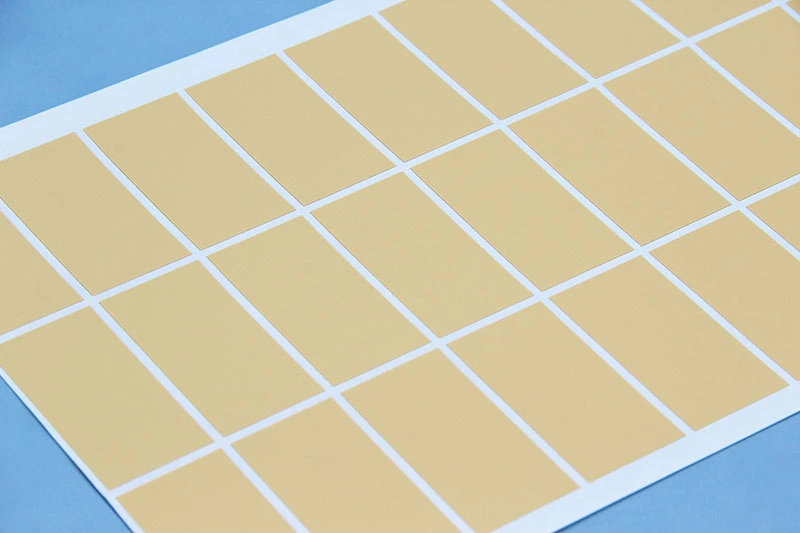
Cold-side barrier design
- Polyimide film provides thin electrical and thermal insulation near power and cooling hardware.
- A flexible barrier membrane blocks unwanted heat paths without taking up much room.
Rack integration
- Server rack sealing closes small bypass paths around cables and hardware.
- Better airflow management helps maintain predictable intake conditions, giving GPU server thermal management a steadier starting point.
Sheen Technology can match barrier placement to rack geometry, keeping the setup practical for maintenance.
Zone 2 Heat-sink Alloys—Fin Stack with Aluminum Alloy 6061
A heat sink needs more than plenty of metal. Its shape must move heat into passing air efficiently.
- Aluminum alloy 6061 offers useful thermal conductivity, low weight, corrosion resistance, and straightforward machining.
- An optimized fin stack adds surface area for faster heat dissipation while leaving enough space for air to pass.
- Lower thermal resistance supports stable GPU temperatures under sustained loads.
That balance makes the alloy a practical foundation for dense GPU cooling, where every bit of airflow counts.
Zone 3 Hot-aisle Sealing via O-ring Materials and Anodized Coating
On the exhaust side, little gaps can become a big deal.
Hot-aisle containment
- O-ring material supports dependable gasket sealing at joints and interfaces.
- Controlled exhaust airflow reduces hot-air recirculation.
Surface durability
- Anodized coating provides a protective surface treatment for aluminum parts.
- Added corrosion resistance and electrical insulation improve thermal protection near demanding hardware.
Cluster-scale GPU server thermal management is an exercise in compounding. Interface resistance, seal integrity, viscosity drift, and pump power each look small in isolation; multiplied across thousands of accelerators and months of sustained load, they decide throughput, energy cost, and hardware life. The discipline is to match the architecture to heat density first, then sweat the materials: every interface, every gasket, every degree of margin.
【Request a Custom Quote】Fighting pump-out, CTE mismatch, or hotspot buildup as rack density climbs? Send us your accelerator model, power envelope, coolant type and flow rate, interface thickness and clamping force, and thermal-cycling profile, and our engineers can recommend the material set for your GPU server thermal management.
Sheen Thermal
Dongguan Sheen Electronic Technology Co., Ltd · Founded in 2008
Manufacturer of thermal interface materials and silicone foam for automotive electronics, energy storage, power electronics, communications and consumer electronics.
Certified
- ISO 9001:2015
- ISO 14001:2015
- IATF 16949:2016
What we supply
- Thermal conductivity Up to 90 W/m·K
- Thickness 0.3–10.0 mm
- Custom & samples Die-cut to drawing, 3–7 days