
 English
 usheenthermal

What is Silicone Foam?
Date:2026-09-16
Silicone foam is a lightweight, closed-cell elastomer made from silicone rubber that is expanded into a cellular structure and then cured into a stable, compressible solid. It combines the temperature range, weathering resistance, and chemical inertness of silicone with the conformability and compressibility of a foam — which is why it appears wherever a seal, a cushion, or an insulating layer must survive conditions that would degrade organic foams.
How Silicone Foam Is Made — and Why the Cell Structure Matters
Silicone foam begins as a liquid silicone rubber, most commonly a platinum-cured (addition-cure) formulation. A blowing agent — or a hydrogen-release reaction built into the chemistry — generates gas as the compound cures; bubbles nucleate, grow, and are locked in place by the crosslinking network, so foaming and curing happen in the same step. The result is a solid elastomer whose volume is a controlled fraction of polymer and trapped gas.
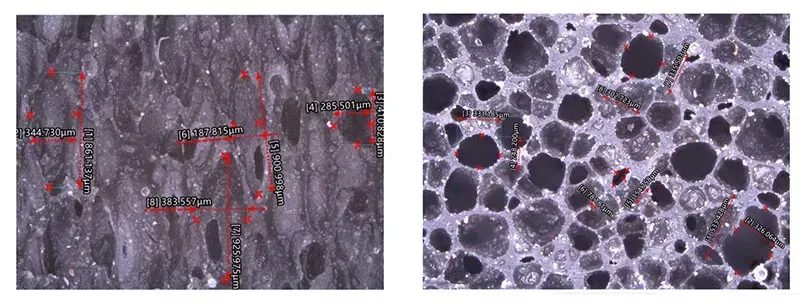
What the cells look like decides what the foam is good for. In closed-cell foam, each cell is sealed off from its neighbors: water, dust, and air cannot migrate through the material, which is what makes closed-cell silicone the standard choice for environmental gasketing and IP-rated enclosure seals. The trapped air also gives the foam its low thermal conductivity — an insulating benefit in its own right. In open-cell foam, the cells interconnect: the material breathes, absorbs sound, and feels softer, but it soaks up water and cannot seal. Commercial silicone foam for sealing and cushioning is predominantly closed-cell; open-cell variants serve acoustic and comfort applications.
Key Properties of Silicone Foam
Silicone foam stands out for its unique combination of properties that make it ideal for demanding applications. It offers excellent heat resistance, flexibility, and resilience, allowing it to maintain its shape and function in extreme environments. Additionally, silicone foam is inherently flame retardant and has a closed-cell structure that provides superior sealing capabilities against water, dust, and air.
Advantages of Silicone Foam:
- Heat Resistance: Silicone foam can withstand temperatures ranging from -55°C to 200°C, making it suitable for applications with high or fluctuating temperatures.
- Flexibility and Compressibility: The foam is soft and compressible, allowing it to conform to uneven surfaces, which makes it ideal for sealing and gasketing.
- UV and Ozone Resistance: Silicone foam resists UV rays, ozone, and weathering, making it durable for both indoor and outdoor applications.
- Flame Retardant: SHEEN's Silicone foam is UL94 V-0 flame resistant and self-extinguishing, providing a safer material option for sensitive environments.
- Chemical Stability: This material remains stable and doesn’t degrade in contact with various chemicals, enhancing its durability.
| Property | Typical range / rating | Relevance and reference |
| Service temperature | -55 °C to 200 °C (grade-dependent) | Both extremes of under-hood and outdoor enclosures; datasheets govern |
| Density | Low-density cushioning grades through dense gasket grades (a broad commercial span) | Sets compressive force, recovery, and cost per area; specify per application |
| Cell structure | Closed-cell (standard); open-cell for acoustic uses | Closed cells block water and dust migration — the basis of IP-rated sealing |
| Flame rating | UL 94 V-0 (Sheen grade, self-extinguishing) | Enclosed electronics, E/E compartments, mass transit |
| Compression set | Measured per ASTM D395 — a key gasketing criterion | Low set = the seal recovers and stays sealed over thermal cycling |
| Cellular spec basis | ASTM D1056 grade designations | The common language for ordering flexible cellular rubber |
| Environmental aging | UV- and ozone-resistant (inorganic backbone) | Outdoor and under-hood service without embrittlement |
Table 1 · Specification-relevant properties of silicone foam. Typical commercial character; specific values are grade-dependent and datasheet-governed.
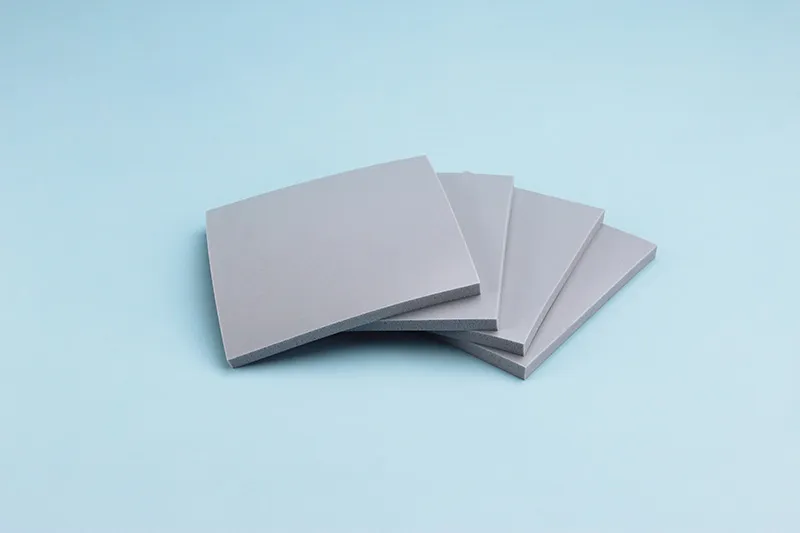
Sheen Technology Silicone Foam performance properties:
| Properties | SA700-200 | SA700-260 | SA700-300 | SA700-350 | SA700-400 | SA700-450 | SA700-500 | SA700-900 | Test Method |
| Color | White, Black | Grey, Black | Grey, Black | Black | Grey, Black | Grey, Black | Grey | Grey | Visual |
| Density (kg/m³) | 200±20 | 260±26 | 300±30 | 350±35 | 350±35 | 450±45 | 500±50 | 950±95 | ASTM D3574-95 |
| Thickness (mm) | 1.0~10.0 | 1.0~10.0 | 1.0~10.0 | 1.0~10.0 | 1.0~10.0 | 1.0~10.0 | 1.0~10.0 | 1.0~10.0 | - |
| Compression Set (%) | <5 | <5 | <5 | <5 | <5 | <5 | - | ASTM D3574-95 Test D @ 158°F | |
| Compression Force Deflection (kPa) | 1-17 | 7-48 | 40-97 | 110-140 | 110-140 | 140-180 | 148-180 | >900 | ASTM D3574 |
| Tensile Strength (kPa) | 126 | 180 | 168 | 300 | 260 | 350 | - | 1.8 MPa | ASTM D3574-95 Test E |
| Tear Strength(N/mm) | 2.5 | 2.8 | 3 | 3.9 | 3.3 | 5.5 | - | 0.5 MPa | ASTM D3574-95 Test E |
| Thermal Conductivity (W/m·K) | ≤0.2 | ≤0.2 | ≤0.2 | ≤0.2 | ≤0.2 | ≤0.2 | - | ≤0.3 | ASTM D5470 |
| Breakdown Voltage( Kv) | ≥8 | ≥8 | ≥8 | ≥8 | ≥8 | ≥9 | ≥4 | - | ASTM D149 |
| Flame Rating | V-0 | V-0 | V-0 | V-0 | V-0 | V-0 | V-0 | V-0 | UL 94 |
| Electrical Insulation | >1 × 10¹⁷Ω·cm | >1 × 10¹⁶Ω·cm | >1 × 10¹⁶Ω·cm | >1 × 10¹⁵Ω·cm | >1 × 10¹⁵Ω·cm | >1 × 10¹⁵Ω·cm | >1 × 10¹⁴Ω·cm | >1 × 10¹⁵Ω·cm | ASTM D412 |
Silicone Foam vs. Alternative Foams
"Why not EPDM or polyurethane foam?" is the question that ends most silicone foam evaluations — and the honest answer is that silicone is not always the right call. Silicone wins when temperature, weathering, compression-set recovery, or flame behavior are the binding constraints; EPDM and PU win on cost when they are not.
| Criterion | Silicone foam | EPDM foam | PU foam (standard grades) | PVC / NBR blends |
| Typical service range | -55 to 200 °C | Approx. -40 to 120 °C | Approx. -40 to 90 °C | Approx. -20 to 80 °C |
| UV / ozone aging | Excellent (inorganic backbone) | Good | Poor to fair (treatments needed) | Fair |
| Compression-set recovery | Excellent, incl. low temperature | Good | Fair — fatigues under long-term deflection | Fair |
| Flame behavior | Inherently flame resistant; UL 94 V-0 grades, low smoke | Additive-dependent | Additive-dependent; can be hazardous when burning | Additive-dependent |
| Relative material cost | Highest of the group | Moderate | Low to moderate | Low |
| Best fit | Severe temperature, outdoor, sealed electronics, transit | General outdoor sealing within its temperature window | Cushioning, packaging, comfort — benign thermal duty | Cost-driven sealing, HVAC in mild duty |
Table 2 · Silicone foam against the usual alternatives. Typical industry character of each material class; grade-specific data vary — compare on datasheets, not on class averages.
The pattern: silicone foam is the choice when the environment is the problem. Inside a heated office enclosure, a PU gasket may seal for a decade at a fraction of the price. Under a vehicle hood, on a rooftop, or inside a battery enclosure, the cheaper foams age, take a set, and leak — and the silicone premium is repaid in warranty claims avoided.
Applications of Silicone Foam
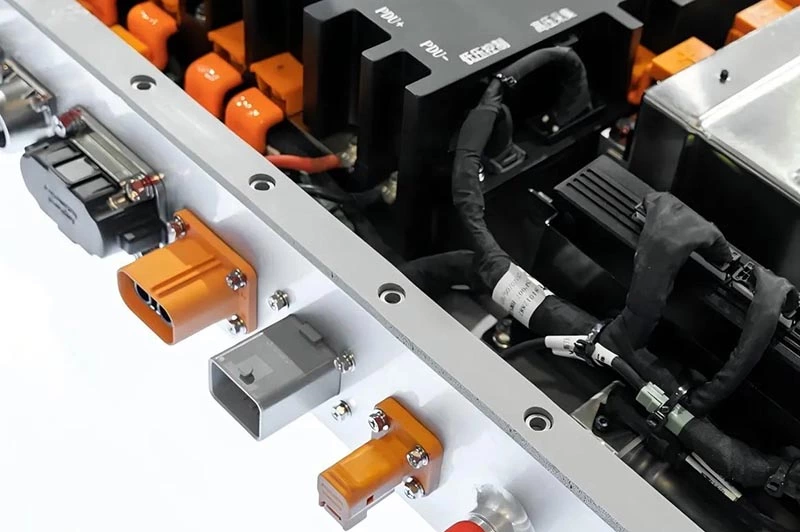
Silicone foam is used in various sectors, including automotive, electronics, aerospace, and industrial manufacturing, thanks to its durability and reliability in harsh conditions.
- Automotive: Used in sealing, gasketing, and vibration dampening, silicone foam enhances vehicle performance by preventing dust, water, and air intrusion.
- Electronics: Provides protective padding and insulation for delicate electronic components, helping prevent damage from heat or environmental exposure.
- Aerospace: In aerospace, silicone foam is used as an insulation material due to its heat resistance and lightweight properties.
- Industrial Equipment: Acts as a protective sealant and cushion in heavy machinery, absorbing vibration and extending equipment lifespan.
Why Choose Silicone Foam?
Silicone foam offers a combination of resilience, durability, and protective qualities that other cellular materials may lack: flame resistance, chemical stability, and tolerance of extreme temperatures in one material. For industries that require reliable sealing, insulation, or protection under demanding conditions, it provides a solution the cheaper foams cannot hold long-term.
From a buyer's seat the case is total cost of ownership: a silicone gasket that keeps its seal for the life of the enclosure against an organic gasket replaced at every service interval. Specify it where the environment is the constraint; specify something cheaper where it is not.
If you need a reliable sealing and insulating material that withstands harsh conditions, silicone foam is an excellent choice. Send your drawing or target specification — IP rating, temperature window, deflection range, flame class — and Sheen's engineering team will recommend a grade and confirm die-cut samples, typically in 3–7 days.
Sheen Thermal
Dongguan Sheen Electronic Technology Co., Ltd · Founded in 2008
Manufacturer of thermal interface materials and silicone foam for automotive electronics, energy storage, power electronics, communications and consumer electronics.
Certified
- ISO 9001:2015
- ISO 14001:2015
- IATF 16949:2016
What we supply
- Thermal conductivity Up to 90 W/m·K
- Thickness 0.3–10.0 mm
- Custom & samples Die-cut to drawing, 3–7 days