
 English
 usheenthermal

Why a Graphene Thermal Pad for DC-DC Converters Improves Reliability
Date:2026-07-27
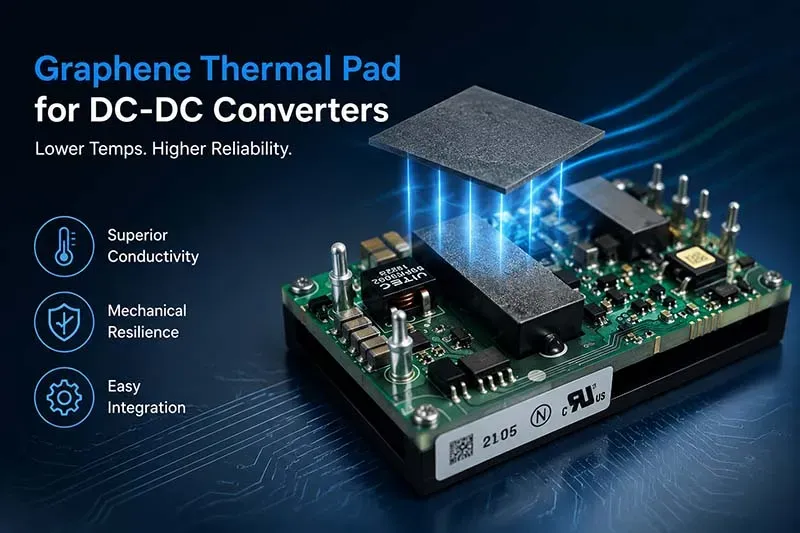
Heat is quietly killing converter reliability. Grease dries, pads crack, hotspots creep in, and efficiency dips. A graphene thermal pad for DC-DC converters steps in before these failure modes develop, keeping temps under control.
Recent analyses from McKinsey and the International Energy Agency highlight power density stressing thermal interfaces, pushing graphene adoption. This article examines how graphene-based TIMs improve reliability in DC-DC converters.
Quick Answers: Graphene Thermal Pad for DC-DC Converters
- Superior Conductivity: Graphene-enhanced pads outpace ceramic fillers, cutting thermal resistance and lowering junction temperatures in IGBTs and MOSFETs.
- Mechanical Resilience: Compliant polymer matrices absorb vibration and shock, boosting reliability in automotive and industrial control applications.
- Easy Integration: Pre-cut pads, sheets, or films with built-in adhesive and dielectric strength streamline assembly, ensuring consistent heat transfer and electrical insulation.
What Is a Graphene Thermal Pad?
A graphene thermal pad for DC-DC converters sits between power components and heat sinks, moving heat fast while maintaining electrical isolation. In compact DC-DC converters where every degree matters, this type of thermal interface material makes the difference between stable operation and creeping failure.
Defining Thermal Pads: Graphene vs. Conventional Ceramic Fillers
In simple terms, thermal pads act as thermal interface material that smooth out tiny air gaps so heat transfer actually happens.
Graphene-based pads vs. ceramic fillers:
- Higher thermal flow with graphene
- Lower thermal resistance
- Better performance under pressure
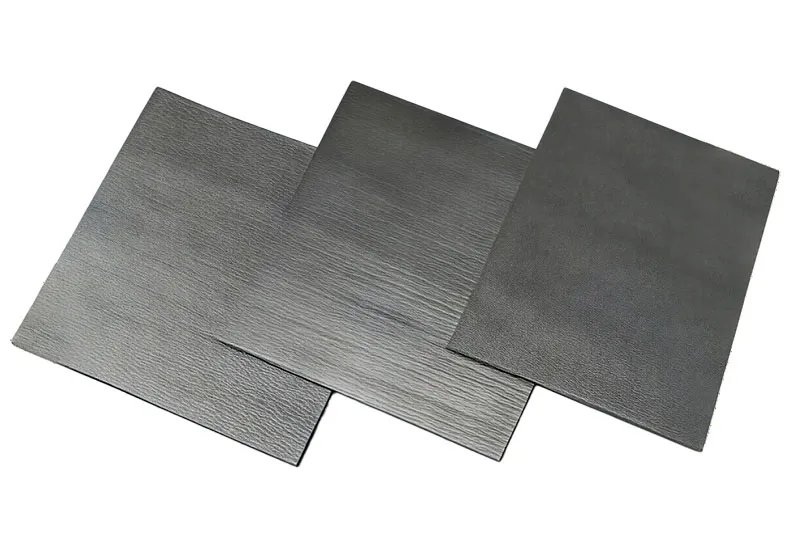
A graphene thermal pad for DC-DC converters often beats conventional materials like boron nitride because graphene pathways conduct heat more efficiently.
Recent thermal management reports (2025) note that graphene-enhanced interface materials can cut junction temperatures by over 10% in compact power systems.
Brands like Sheen Technology are pushing this shift, especially for high-density converter layouts.
Graphene Composition in a Polymer Matrix for DC-DC Converters
Here's how a graphene thermal pad for DC-DC converters comes together:
- Mix graphene flakes into a polymer matrix (usually silicone).
- Disperse evenly to form a stable composite material.
- Cure into flexible sheets that balance electrical insulation and heat dissipation.
- Cut or mold for tight-fit use in DC-DC converters.
This structure lets the pad conform to uneven MOSFET or inductor surfaces while keeping heat moving out fast.
Key Material Properties: Thermal Conductivity, Compressibility, Dielectric Strength
Performance comes down to a few core material properties, and they interact more than people expect:
Thermal conductivity
- Drives heat transfer speed
- Impacts overall thermal resistance
Compressibility
- Helps fill micro-gaps
- Improves real contact area
Dielectric strength
- Maintains electrical insulation
- Prevents short circuits
Key comparison snapshot:
| Property | Graphene Pad | Boron Nitride Pad | Impact |
|---|---|---|---|
| Thermal conductivity (W/m·K) | 75–90 | 16 | Faster cooling |
| Compressibility @40psi (%) | 30 | 15 | Better fit |
| Dielectric strength (kV/mm) | - | 4–8 | Safe isolation |
This is why a graphene thermal pad for DC-DC converters is often chosen in tighter, hotter designs.
Available Forms: Pre-cut Pads, Sheets, Films for Power Modules
Different builds call for different shapes.
- Pre-cut pads drop straight into power modules.
- Flexible sheets suit custom layouts.
- Ultra-thin films handle tight stacks where space is brutal.
Each form factor still serves the same goal: reliable thermal interface performance across varied application needs. Sheen Technology offers these options to match real-world assembly constraints without compromising on heat transfer.
3 Reasons to Choose Graphene Pads for DC-DC Converters
Heat issues in power electronics sneak up fast, especially in compact boards. A well-chosen graphene thermal pad for DC-DC converters keeps things cool, stable, and easier to assemble — without turning into a cost problem.
Reason 1: Superior Heat Dissipation Lowers Junction Temperature
Core effect of Graphene thermal pad in thermal management
Material behavior
- Ultra-high thermal conductivity spreads heat laterally
- Fast heat dissipation reduces hot spots
- Stable cooling performance under load cycling
Device-level impact
- Lower junction temperature in MOSFETs and IGBTs
- Improved efficiency in DC-DC converters
- Reduced thermal throttling, longer component life
System-level gains
- Higher power density designs
- Fewer heatsink constraints
- Better long-term reliability
| Properties | Unit | GSF75-03 | GSF90-03 | Test Method |
|---|---|---|---|---|
| Color | - | Black | Black | Visual |
| Thermal Conductivity | W/m·K | 75 | 90 | ASTM E1461 |
| Thermal Resistance (@40psi) | ℃*cm2/W | ≤0.12 | ≤0.10 | ASTM D5470 |
| Thickness | mm | 0.3~2.0 | 0.3~2.0 | ASTM D374 |
| Density | g/cm³ | 0.3~0.7 | 0.3~0.7 | ASTM D792 |
| Rebound Rate | % | ≥90 | ≥90 | - |
| Tensile Strength | Mpa | ≥0.03 | ≥0.05 | ASTM D412 |
| Oil Bleeding Rate | % | ≤3 | ≤3 | / |
| Application Temperature | ℃ | -40~150 | -40~150 | / |
| Flame rating | - | V-0 | V-0 | UL 94 |
Using a graphene thermal pad for DC-DC converters, especially from Sheen Technology, keeps thermal margins comfortably under control even when loads spike.
Reason 2: Enhanced Reliability through Vibration Resistance and Shock Resistance
Quick hits first:
- Absorbs mechanical stress without cracking
- Maintains contact under vibration resistance demands
- Handles sudden drops with shock resistance
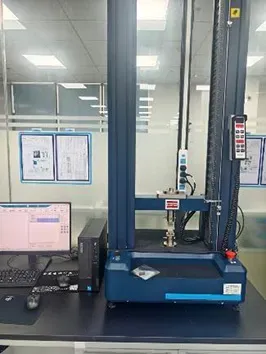
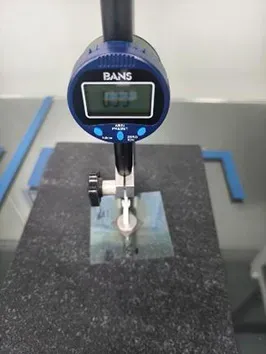
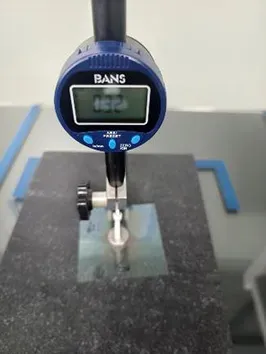
Sheen Technology High Rebound Graphene Thermal Pads Performance Testing
- Test Standard: ASTM D575.
- Sample Preparation: Material specimens measuring 25 mm × 25 mm × 0.3 mm.
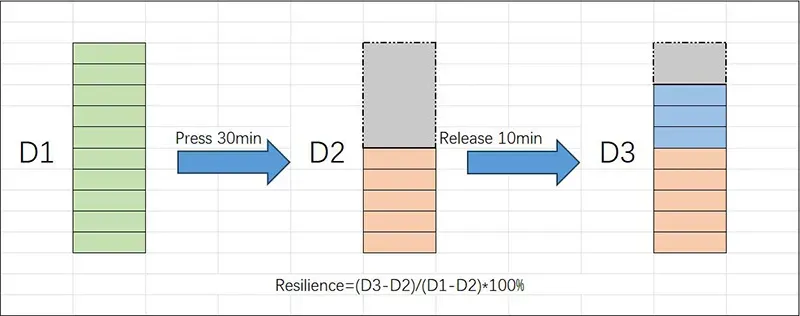
- Test Method: Zero the force reading before testing; apply a 2 N force to contact the sample surface. Set the compression speed to 0.5 mm/min and compress to 50% deformation. Maintain the load for 30 minutes. Let D1 be the initial thickness and D2 be the thickness after compression; measure the thickness again as D3 after a 10-minute recovery period. Calculate the recovery rate as (D3 - D2) / (D1 - D2) × 100%.
| Testing Equipment | Before Testing | After Testing |
 |  |  |
| Test Item | Test Data | |||
| 1 | 2 | 3 | Average Value | |
| Rebound Rate(%) | 92 | 94 | 95 | 93 |
Now a bit deeper. Flexible polymer-backed graphene pad layers behave less like rigid sheets and more like cushions. That matters in automotive boards and factory gear where constant motion is just part of the environment.
"Thermal interface materials with mechanical compliance are increasingly preferred in automotive electronics due to rising vibration exposure and miniaturization pressures." — Yole Group, 2025
Sheen Technology applies this idea cleanly, Laboratory physical performance tests on graphene thermal pads demonstrate a resilience of up to 90%; this high resilience helps mitigate failures caused by solder joint fatigue, thereby reducing the need for after-sales maintenance.
Reason 3: Thin Adhesive Layer and Electrical Insulation Simplify Installation
Start with placement
- Ultra thin layer fits tight board spacing
- Pre-applied adhesive keeps alignment steady
Move to integration
- Bonds directly as a thermal interface material
- Eliminates extra grease or pads
- Speeds up assembly time
Lock in performance
- Stable thickness ensures repeatable installs
- Clean surfaces improve ease of use
outcome
- Faster production lines
- Lower rework rates
- Consistent thermal behavior in DC-DC converters
With a graphene thermal pad for DC-DC converters, especially from Sheen Technology, installation feels less like precision surgery and more like a smooth, predictable step in the workflow.
Data Shows 35% Cooler Temps With Graphene Pad
A quick heads-up: swapping paste for a graphene thermal pad for DC-DC converters isn't hype — it's measurable. We're talking cooler silicon, steadier loads, and fewer thermal headaches across real-world converter stages.
Testing Setup: DC-DC Converters with Graphene Pads vs. Silicone Paste
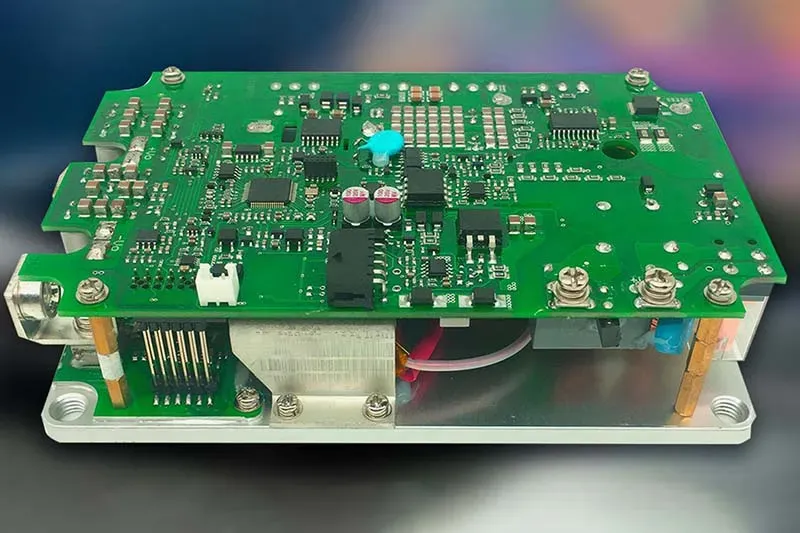
In this testing setup, identical DC-DC converters run side by side using different thermal interface material choices. One uses silicone paste; the other uses a graphene thermal pad for DC-DC converters.
- Same load profile, same ambient, same heat sink
- Sensors track junction temps, case temps, and airflow
- Pads cut variability that paste often introduces
Short snapshots:
- The graphene thermal pad for DC-DC converters spreads heat fast.
- Silicone paste shows pump-out after cycling.
- A graphene pad keeps contact stable.
"Advanced TIMs like graphene-based pads are trending toward consistent thermal impedance under cycling," notes a 2025 IDC component cooling brief.
Performance Metrics: Thermal Resistance, Power Density, Efficiency Gains
Here's how the performance metrics stack when a graphene thermal pad for DC-DC converters replaces paste:
1) Thermal resistance
- Lower interface resistance → faster heat transfer
- Stable over time, less drift
2) Power density
a) Higher allowable load before throttling
b) Smaller heat sinks possible
- tighter layouts
- lighter assemblies
3) Efficiency gains
- Reduced heat losses
- Better electrical efficiency at peak load
Across runs, the graphene thermal pad for DC-DC converters holds temps down while boosting usable headroom. Sheen Technology units show consistent spread, not hot spots.
Long-Term Impact: Improved Lifetime and Thermal Cycling Reliability
Step-by-step view of long-term impact with a graphene thermal pad for DC-DC converters:
- Lower peak temps reduce thermal stress on dies
- Fewer swings improve thermal cycling reliability
- Interfaces resist drying and pump-out
- Solder joints see less fatigue — longer operational lifespan
Net effect: better reliability and durability in power modules. Swap in a graphene thermal pad for DC-DC converters and the system ages more slowly, plain and simple — something Sheen Technology designs for from the start.
Sheen Technology provides graphene thermal pads with documented thermal conductivity, dielectric strength, and thermal cycling reliability, supporting engineers from prototype validation through production ramp.
Ready to optimize your thermal management design?
- Download Thermal Pad Datasheet Selection Guide: https://www.sheenmaterials.com/resource/datasheet-download/
- Refer to The Application Page for Details: https://www.sheenmaterials.com/applications/
- Schedule Technical Consultation: https://www.sheenthermal.com/feedback.html
Sheen Thermal
Dongguan Sheen Electronic Technology Co., Ltd · Founded in 2008
Manufacturer of thermal interface materials and silicone foam for automotive electronics, energy storage, power electronics, communications and consumer electronics.
Certified
- ISO 9001:2015
- ISO 14001:2015
- IATF 16949:2016
What we supply
- Thermal conductivity Up to 90 W/m·K
- Thickness 0.3–10.0 mm
- Custom & samples Die-cut to drawing, 3–7 days