
 English
 usheenthermal

High Dielectric Strength Boron Nitride Thermal Pad vs. Grease: Inverter Guide
Date:2026-08-22
A high dielectric strength boron nitride thermal pad for inverter designs tackles a tricky double act: cooling an IGBT while electrically isolating it from the heatsink. Thermal grease may cut interface resistance, but dispensing and migration can complicate production.
For volume buyers, conductivity alone won’t cut it. Compare dielectric strength, thermal impedance, thickness, compression, temperature limits, consistency, compliance, and supply capacity before choosing.
Key Notes on High Dielectric Strength Boron Nitride Thermal Pad for Inverter
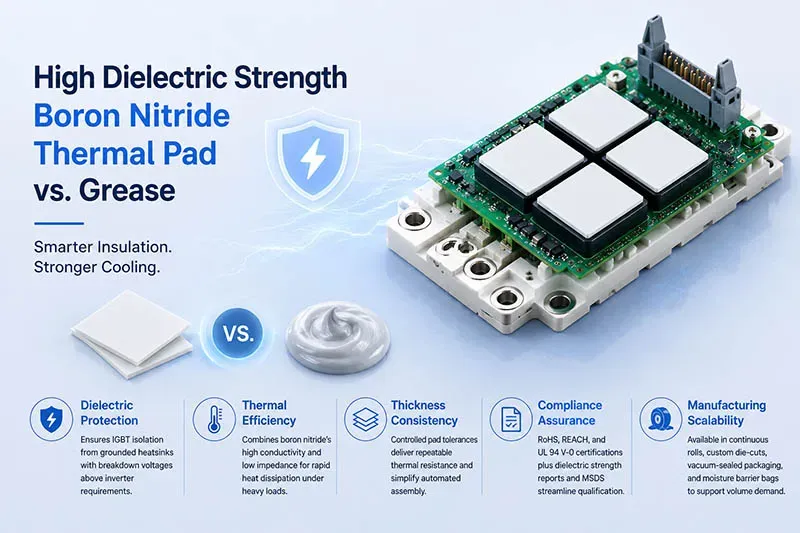
➔ Dielectric Protection: Ensures IGBT isolation from grounded heatsinks with breakdown voltages above inverter requirements.
➔ Thermal Efficiency: Combines boron nitride’s high conductivity and low impedance for rapid heat dissipation under heavy loads.
➔ Thickness Consistency: Controlled pad tolerances deliver repeatable thermal resistance and simplify automated assembly without grease variability.
➔ Compliance Assurance: RoHS, REACH, and UL 94 V-0 certifications plus dielectric strength reports and MSDS streamline qualification.
➔ Manufacturing Scalability: Available in continuous rolls, custom die-cuts, vacuum-sealed packaging, and moisture barrier bags to support volume demand.
Why Choose High Dielectric Strength Boron Nitride Thermal Pad For Inverter?
A high dielectric strength boron nitride thermal pad for inverter designs handles two jobs at once: moving heat and blocking current. That combo matters when compact electronics run hot. Sheen Technology offers this material approach for inverter cooling where insulation and safety count.
Unlocking Dielectric Breakdown Voltage for IGBT Protection
A high dielectric strength boron nitride thermal pad for inverter hardware creates Electrical Insulation between power switches and grounded cooling parts.
Electrical protection
- Dielectric Strength indicates how much electric field the Thermal Pad can withstand before failure.
- Higher Breakdown Voltage gives IGBT Protection extra margin when switching creates voltage stress.
Thermal control
- Boron Nitride supports heat transfer from the IGBT package.
- In a Power Inverter, that means designers can tackle heat without giving up isolation.
Put simply, one pad handles two headaches.
Enhancing Volume Resistivity in Power Inverter Modules
A high dielectric strength boron nitride thermal pad for inverter assemblies also benefits from high Volume Resistivity, which describes resistance to current flowing through the material.
- A Boron Nitride Thermal Interface Material sits between hot components and cooling hardware.
- High Electrical Resistance helps limit leakage current.
- Better Insulation Performance supports Module Reliability as a Power Inverter cycles through demanding loads.
This high-insulation BN thermal pad makes electrical separation practical without losing the thermal path.
Silicone-Free Thermal Interface Material for UL 94 V-0 Safety
For applications sensitive to silicone, a high dielectric strength boron nitride thermal pad for inverter equipment can offer a cleaner material choice.
Material goals
- Silicone-Free construction reduces concerns about silicone migration or contamination.
- Boron Nitride contributes useful Thermal Conductivity.
Safety goals
- A verified UL 94 V-0 rating identifies defined self-extinguishing behavior under the UL test method.
- That Flame Retardant performance supports inverter designs with a demanding Safety Standard.
The resulting Thermal Pad combines heat transfer, electrical isolation, and fire-performance needs in one practical interface.
What Are Thermal Interface Materials?
Thermal interface materials move heat across imperfect mating surfaces while meeting electrical and mechanical needs. For inverter designers, a high dielectric strength boron nitride thermal pad for inverter applications can cut thermal resistance without giving up safe voltage isolation.
Hexagonal Boron Nitride Filler vs. Electrically Insulating Polymer Matrix
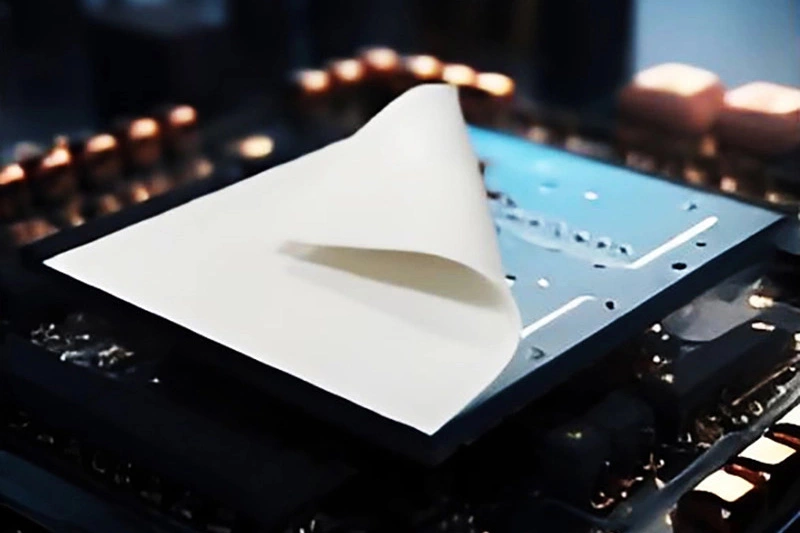
A high dielectric strength boron nitride thermal pad for inverter designs gets two jobs done through one composite material:
Hexagonal boron nitride
- Forms heat-transfer paths that raise thermal conductivity as filler loading increases.
- Keeps strong electrical insulation, unlike conductive metal fillers.
Polymer matrix
- Adds flexibility, handling strength, and surface contact.
- Helps preserve useful dielectric strength around high-voltage parts.
| Properties | Unit | SF1600- BN-03 | SF1600-BN-05 | SF1600-BN-07 | SF1600-BN-10 | SF1600-BN-15 | SF1600-BN-20 | SF1600-BN-30 | Test Method |
| Color | - | White | White | White | White | White | White | White | Visual |
| Thermal Conductivity | W/m·K | 16 | 16 | 16 | 16 | 16 | 16 | 16 | ASTM D5470 |
Thermal Resistance (@40psi) | ℃*cm²/W | ≤0.3 | ≤0.5 | ≤0.7 | ≤0.8 | ≤1.1 | ≤1.4 | ≤1.7 | ASTM D5470 |
Application temperature | ℃ | -40~150 | -40~150 | -40~150 | -40~150 | -40~150 | -40~150 | -40~150 | - |
Thermal weight loss rate | % | ≤1 | ≤1 | ≤1 | ≤1 | ≤1 | ≤1 | ≤1 | - |
| Thickness | mm | 0.2~5.0 | 0.2~5.0 | 0.2~5.0 | 0.2~5.0 | 0.2~5.0 | 0.2~5.0 | 0.2~5.0 | ASTM D374 |
| Breakdown voltage | KV,@AC | ≥4 | ≥5 | ≥6 | ≥10 | ≥12 | ≥12 | ≥12 | ASTM D149 |
| Dielectric constant | F/m, @ 1MHz | ≤4.2 | ≤4.2 | ≤4.2 | ≤4.2 | ≤4.2 | ≤4.2 | ≤4.2 | ASTM D150 |
| Volume resistivity | Ω*cm, @250V | ≥10¹³ | ≥10¹³ | ≥10¹³ | ≥10¹³ | ≥10¹³ | ≥10¹³ | ≥10¹³ | ASTM D257 |
| Rebound rate | % | ≥90 | ≥80 | ≥70 | ≥70 | ≥60 | ≥60 | ≥60 | - |
| Density | g/cm³ | 1.6±0.2 | 1.6±0.2 | 1.6±0.2 | 1.6±0.2 | 1.6±0.2 | 1.6±0.2 | 1.6±0.2 | ASTM D792 |
| Hardness | shore 00 | 60~80 | 60~80 | 60~80 | 60~80 | 60~80 | 60~80 | 60~80 | ASTM D2240 |
| Flammability rating | - | V-0 | V-0 | V-0 | V-0 | V-0 | V-0 | V-0 | UL 94 |
Note: The values above are based on internal test data from the SheenTechnology laboratory; performance parameters can be customized by adjusting the formulation.
Need dielectric breakdown voltage, volume resistivity, thermal conductivity, thermal impedance, and thickness tolerance data for high dielectric strength boron nitride thermal pads? Download the product datasheets to compare boron nitride thermal pads, thermal grease, phase change sheets, and ceramic composite insulators for power inverters, EV powertrains, and renewable energy converters.
Phase Change Thermal Sheet: How It Works
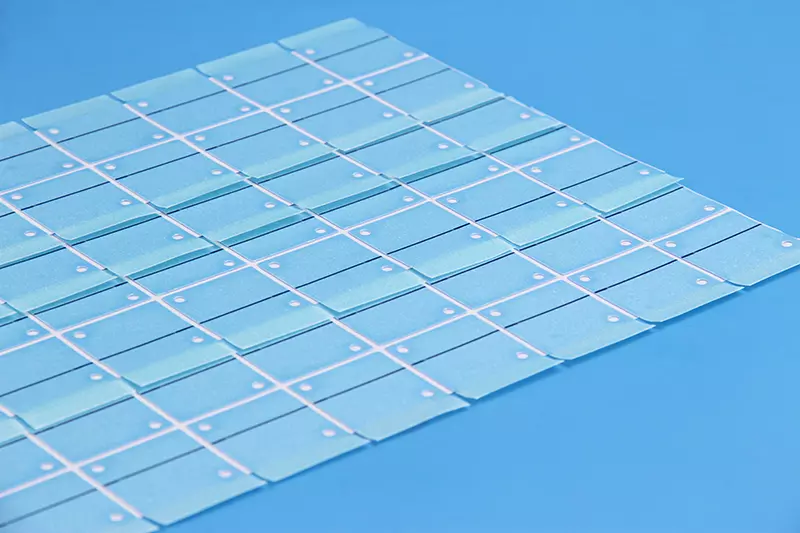
A phase change material starts firm, then softens around its melting point. Pretty handy: the thermal sheet flows into microscopic voids, improving gap filling and heat transfer.
During operation, reduced air pockets lower interface resistance. A high dielectric strength boron nitride thermal pad for inverter use may be preferred when electrical isolation and compliant gap filling matter more than phase-change behavior.
Grease Fundamentals: Composition and Surface Tackiness Control
Thermal grease typically blends silicone oil with a metal oxide filler or another conductive powder.
- Viscosity controls dispensing and spreading.
- Surface tackiness affects wetting and assembly handling.
Low bond-line thickness can reduce thermal resistance, but cycling can cause the pump-out effect.
Unlike grease, a high dielectric strength boron nitride thermal pad for inverter assembly offers a clean, preformed insulation layer.
High Dielectric Strength Ceramic Composite Explained
A ceramic composite combines insulating ceramic particles with polymer.
- High dielectric strength delays electrical breakdown.
- Controlled thickness supports dependable voltage insulation.
In a power inverter, the insulation layer must also support thermal management.
Thickness, flexibility, temperature rating, and conductivity all count.
For designs needing a high-dielectric BN thermal pad, Sheen Technology offers material options intended to balance heat flow with electrical isolation.
Thermal Conductivity Comparison: Pad Vs. Grease
Choosing an inverter interface comes down to more than peak thermal conductivity. A high dielectric strength boron nitride thermal pad for inverter use adds insulation and steady spacing, while grease can cut interface resistance. The best fit depends on real assembly conditions.
Boron Nitride Thermal Pad
A high dielectric strength boron nitride thermal pad for inverter hardware provides a solid interface material between a power device and heat sink. It supports heat dissipation while keeping electrical isolation predictable.
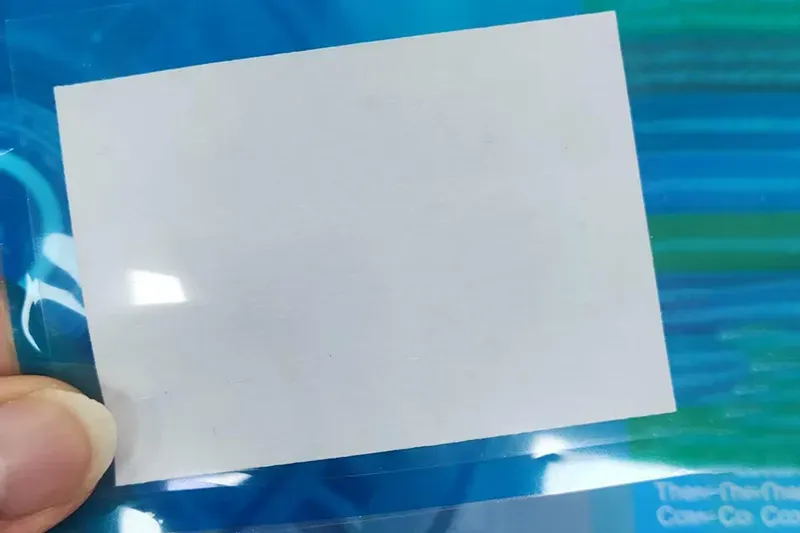
A boron nitride thermal pad combines useful thermal conductivity with electrical insulation.
- High dielectric strength helps isolate energized inverter parts from grounded cooling hardware.
- Fixed thickness makes thermal performance easier to repeat from one assembly to the next.
A high dielectric strength boron nitride thermal pad for inverter designs also offers mechanical stability.
- It stays put during assembly, which can make production less fiddly.
- Consistent compression supports dependable inverter cooling through repeated thermal cycles.
In short, the pad trades an ultra-thin bond line for controlled insulation and easier handling.
Thermal Grease
A high dielectric strength boron nitride thermal pad for inverter applications is not always the lowest-resistance choice. Thermal grease can form a much thinner layer, and good surface wetting fills microscopic surface flaws that otherwise trap air.
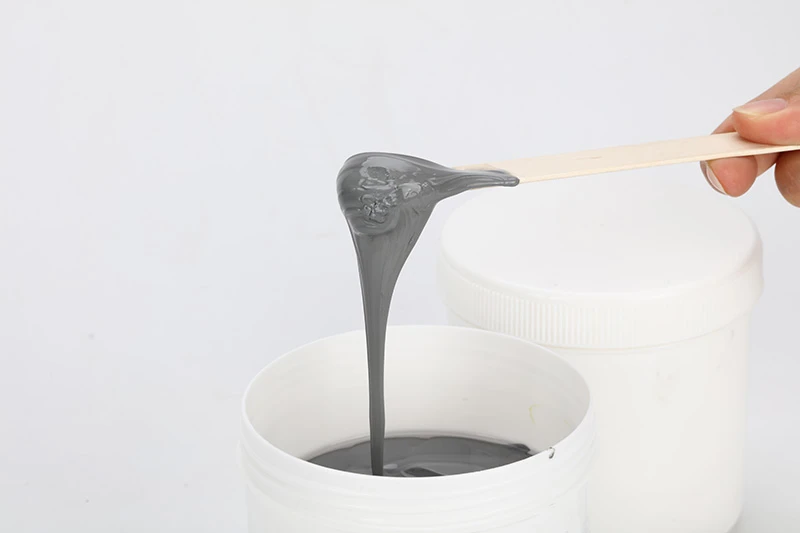
Proper application lowers contact resistance and improves heat transfer.
- Its gap-filling ability works best on small surface irregularities rather than large physical gaps.
Application control
- Viscosity affects dispensing and the final bond-line thickness.
- Too much grease can hurt performance rather than help it.
- Thermal cycling may cause the pump-out effect, pushing material away from the hot interface.
Comparison table:
| Property | BN Thermal Pad | Thermal Grease | Engineering Impact |
| Thermal Conductivity (W/m·K) | 16 | 1–5 | BN pad higher ceiling |
| BLT (μm) | 100–500 (controlled) | 20–100 (variable) | Grease lower resistance |
| Dielectric Strength (kV/mm) | 10–30 (inherent) | N/A (separate film) | BN pad integrated isolation |
| Pump-Out Resistance | Excellent (solid) | Poor–Moderate | BN pad cycling stability |
| Assembly | Pick-and-place | Dispense + inspect | BN pad automated |
| Rework | Peel + replace | Solvent clean | BN pad cleaner |
Note: The values above are based on internal test data from the SheenTechnology laboratory; performance parameters can be customized by adjusting the formulation.
So, a high dielectric strength boron nitride thermal pad for inverter assemblies suits controlled electrical isolation, while grease favors very thin interfaces when insulation and long-term migration are carefully managed.
5 Key Benefits Of BN Thermal Pad Vs. Grease
For inverter builders, choosing a boron nitride pad over grease can make thermal management cleaner and more predictable. Sheen Technology supplies high dielectric strength boron nitride thermal pad for inverter production.
Benefit 1: Low Thermal Impedance for Fast Heat Dissipation
A high dielectric strength boron nitride thermal pad for inverter designs combines useful thermal conductivity with electrical insulation.
- Low thermal impedance moves IGBT heat toward the heatsink quickly.
- Better heat dissipation helps limit junction temperature when a power inverter works hard.
Benefit 2: Consistent Thickness Tolerance Control
A stable thickness tolerance keeps assembly results predictable, plain and simple.
Consistent pad uniformity supports:
- Repeatable compression rate and interface pressure.
- Reliable dimensional stability and reduced mechanical stress.
- Custom gap filler shapes for automated assembly.
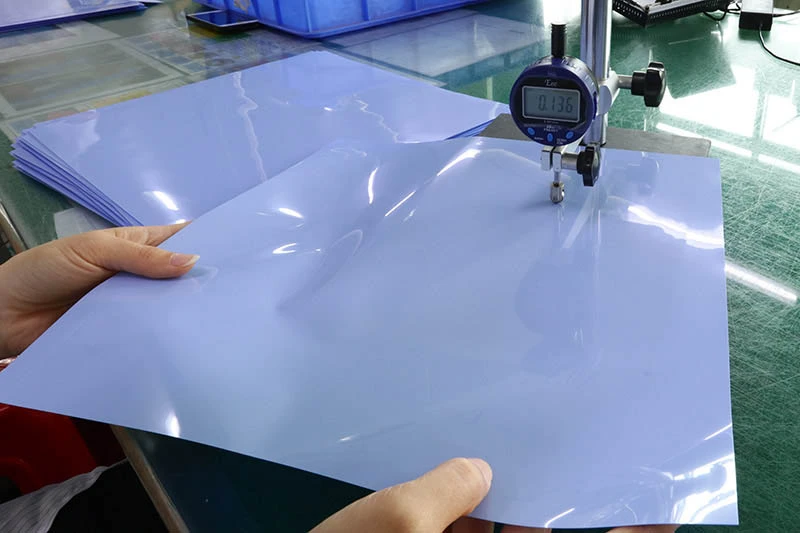
Sheen Technology can supply high dielectric strength boron nitride thermal pad for inverter applications in rolls or die-cut formats.
Benefit 3: Bulk Manufacturing Capacity for Large-Scale Supply
Mass production supports higher throughput.
- Automated cutting handles repeat shapes at industrial scale.
Traceable lots strengthen quality consistency.
- Stable manufacturing capacity can reduce supply chain headaches.
That makes high dielectric strength boron nitride thermal pad for inverter programs easier to scale.
Benefit 4: RoHS Compliance Verification and REACH Regulation Standard
Qualification documents should cover:
- RoHS compliance for controlled hazardous substances.
- REACH regulation and relevant chemical restriction records.
- Dielectric, thermal, safety, and environmental safety certifications.
Sheen Technology can support qualification needs for an eco-friendly BN thermal pad specification.
Benefit 5: Vacuum Sealed Packaging with Moisture Barrier Bag
Proper vacuum packaging adds practical protection.
A sealed moisture barrier:
- Supports suitable storage condition and shelf life.
- Provides oxidation protection.
Release liners and anti-static carrier films help protect each high-dielectric-strength boron nitride thermal pad for inverter assembly inside its sealed bag.
Inverter Cooling Scenario: Pad Vs. Grease
Choosing between pads and grease gets tricky when electrical safety, heat flow, and assembly pressure all matter. A high dielectric strength boron nitride thermal pad for inverter designs offers controlled thickness and insulation, while grease can suit very thin interfaces. Sheen Technology supports engineers comparing these trade-offs against real operating needs.
Electric Vehicle Powertrain: Sustained Performance at High Temperatures
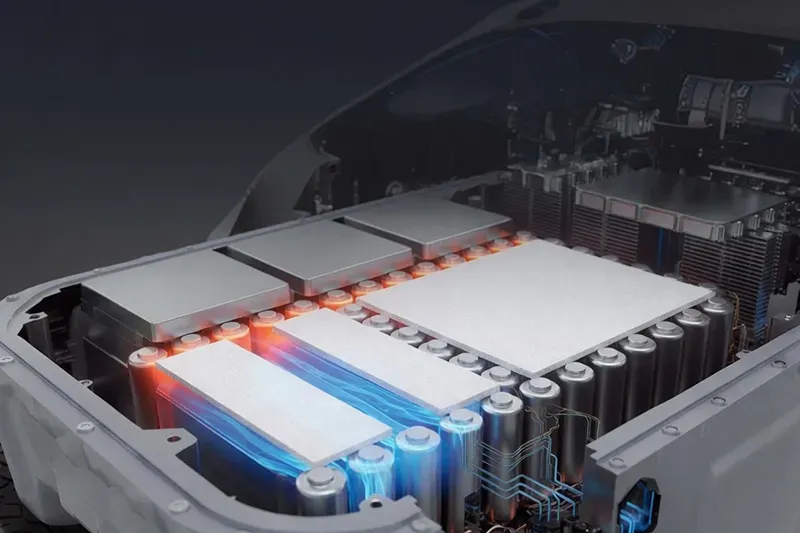
A power inverter sees changing loads and plenty of heat, so material behavior at the rated operating temperature needs verification.
Electrical protection
- Boron nitride supports dielectric strength while aiding heat dissipation.
- A high dielectric strength boron nitride thermal pad for inverter use keeps a defined insulating gap.
Thermal behavior
- A thermal pad can stay put through repeated heating cycles.
- Thermal grease may deliver a thin bond line, but pump-out and application control need checking.
Renewable Energy Converter: Maintaining Thermal Resistance Test Report Metrics
Qualified test values mean more when production parts can repeat them.
Interface control
- Fixed thickness makes a high dielectric strength boron nitride thermal pad for inverter applications easier to reproduce as an interface material.
- Controlled compression supports predictable heat transfer.
Performance checks
- Track thermal resistance rather than relying only on advertised thermal conductivity.
- Confirm electrical insulation after thermal cycling in the energy converter. Small assembly differences can otherwise throw test metrics off.
High-Frequency Transformer: Optimal Compression Force Deflection
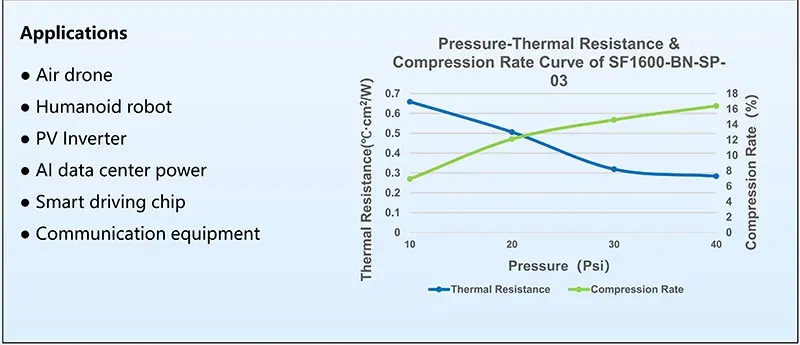
Mounting pressure deserves careful tuning; tighter is not automatically cooler.

Fit
- Choose pad thickness that fills the thermal interface without forcing nearby parts.
- Set mounting pressure from supplier force-deflection data.
Mechanical balance
- Enough compression force improves surface contact.
- Excess deflection can raise mechanical stress around a high-frequency transformer, while too little pressure leaves air gaps and hurts cooling.
High dielectric strength boron nitride thermal pads offer a unique combination of through-plane thermal conductivity, inherent electrical isolation, and production repeatability for inverter cooling. Sheen Technology provides BN pad products with ASTM/IEC-referenced test data, custom die-cutting, and bulk supply capability for EV, renewable, and industrial inverter applications.
→ Contact Sheen Technology for BN Pad Inverter Selection Support
Sheen Thermal
Dongguan Sheen Electronic Technology Co., Ltd · Founded in 2008
Manufacturer of thermal interface materials and silicone foam for automotive electronics, energy storage, power electronics, communications and consumer electronics.
Certified
- ISO 9001:2015
- ISO 14001:2015
- IATF 16949:2016
What we supply
- Thermal conductivity Up to 90 W/m·K
- Thickness 0.3–10.0 mm
- Custom & samples Die-cut to drawing, 3–7 days