
 English
 usheenthermal

Expert Guide to High-Power Switches Thermal Management Solutions
Date:2026-09-02
High-power switches concentrate rising heat flux into compact power modules, and junction temperature is a primary limit on reliability and output.
Effective thermal management depends on more than bulk conductivity — substrate selection, interface quality, mounting pressure, electrical insulation, cooling capacity, and process consistency all determine how quickly heat escapes.
As NREL notes, thermal management becomes critical for power electronics as heat fluxes rise, so material selection must be treated at the system level.
Designed to meet the thermal management needs of large-format, high-power-consumption chips in next-generation switches, Sheen Technology's graphene thermal pads offer exceptional thermal conductivity. They efficiently dissipate the immense heat generated during chip operation, rapidly lowering operating temperatures; capable of withstanding the rigorous thermal demands of high-power chips, they ensure the long-term, stable, and reliable performance of core chips.
Key Insights: High-Power Switches Thermal Management Solutions
-> Thermal Resistance Targets: Optimize direct bonded copper thickness, ceramic conductivity, and die-attach adhesives to hit low junction-to-sink resistance under peak loads.
-> Junction Temperature Margins: Leverage aluminum nitride bases and solder preforms to maintain safe Tj across switching losses and thermal cycles.
-> Cooling Hardware Trade-Offs: Balance copper heat sinks, vapor chambers, and liquid cold plates for weight, spreading, and integration.
-> Interface Best Practices: Prep surfaces, apply greases or phase-change pads under controlled pressure, and verify with thermocouples and heat-flux sensors.
→ Request the High-Power Switch Substrate Selection Guide

High-Power Switches Thermal Management Solutions
High-Power Switches Thermal Management Solutions keep demanding electronics cooler under real loads. Good thermal management balances materials, interfaces, cooling, and measurement so designers can catch trouble before reliability takes a hit.
Thermal Resistance Targets for Direct Bonded Copper Substrates
Set the thermal resistance target for each power module.
- Check direct bonded copper thickness and copper spreading.
Compare ceramic thermal conductivity and die-attach resistance.
Under peak power, verify heat dissipation from substrate to sink against measurable performance targets.
This makes High-Power Switches Thermal Management Solutions easier to validate without guesswork.
Substrate materials for high-power switches:
| Substrate | Thermal Conductivity (W/m·K) | Electrical | Notes |
| Alumina (Al₂O₃) | 20–30 | Insulating | Low cost, good durability; lower conductivity |
| Aluminum nitride (AlN) | 140–180 | Insulating | High conductivity + insulation; common for high-power |
| Silicon nitride (Si₃N₄) | ~80–90 | Insulating | Higher toughness/fracture resistance |
| Direct-bonded copper (DBC) | Cu path ~390 | Cu conductive on ceramic | Thick copper spreads heat; ceramic isolates |
Values above are bulk material ranges; final selection must use manufacturer datasheet values at the specified thickness and pressure.
Junction Temperature Limits with Aluminum Nitride Bases
Start with the semiconductor maker’s maximum junction temperature, then build in margin. An aluminum nitride baseplate supports strong heat transfer, but switching losses still matter.
- Calculate peak losses in the semiconductor device.
- Add solder-preform and cooling resistance.
- Check thermal limits during cycling; repeated excursions can cut reliability.
Sheen Technology can support high-power switch thermal management designs where material choice and cooling capacity need to work hand in hand.
Thermal Impedance of Phase Change Materials
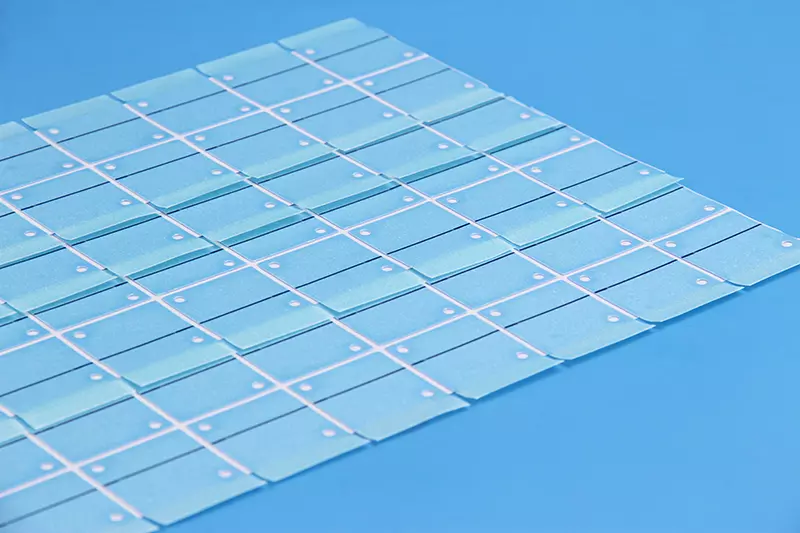
Measure thermal impedance after the phase change material reaches activation temperature.
- Control interface material bond-line thickness and mounting pressure.
Track voids through repeated cycles.
- Compare contact resistance before and after aging.
- Confirm thermal conductivity supports the heat spreader and expected cooling efficiency.
Evaluating Heat Flux with Infrared Thermography Targets
Heat flux sensors provide local energy-flow data, while infrared thermography maps surface temperature.
- Thermal imaging reveals the wider temperature distribution.
- Thermocouple wires provide reference readings.
- Hotspot detection and sensor-based evaluation show where heat spreading falls short.
Together, these checks make High-Power Switches Thermal Management Solutions far less of a shot in the dark.
Layered Analysis: Switch Die, Heat Sink, Thermal Interface
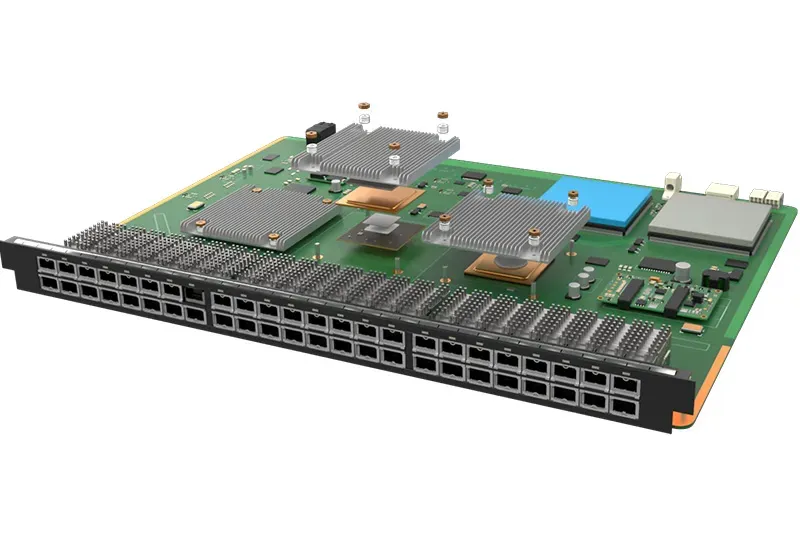
High-Power Switches Thermal Management Solutions work best as a connected thermal path, not a pile of cooling parts. From the semiconductor base to the final cooler, material choice and contact quality decide how quickly heat escapes. Sheen Technology applies this layered approach to practical high-power switch cooling where reliability matters.
Switch Die on Alumina Ceramic: Balancing Conductivity and Durability
For a switch die, alumina ceramic provides a useful balance:
Electrical layer
- Strong insulation helps isolate the semiconductor.
- Typical thermal conductivity is roughly 20–30 W/m·K, below aluminum nitride at about 140–180 W/m·K.
Physical layer
- Good mechanical durability and lower cost make alumina a practical substrate.
- Silicon nitride offers higher toughness, while direct-bonded copper improves heat dissipation through thick copper paths.
That trade-off keeps High-Power Switches Thermal Management Solutions practical without going overboard on material cost.
Copper Heat Sinks vs. Vapor Chambers: Cooling Hardware Comparison
A copper heat sink conducts heat well, but a vapor chamber uses phase change to spread concentrated heat across a wider area. For high-power switch thermal management solutions, the choice comes down to packaging.
- Copper: heavier, simple to integrate, orientation independent, and easy to pair with heat pipes or liquid cold plates.
- Vapor chamber: better spreading and lower local thermal resistance at high heat flux, though manufacturing complexity and orientation can affect thermal performance.
| Option | Strength | Limitation | Best For |
| Copper heat sink | Simple, orientation-independent | Heavier; limited spreading | Moderate flux, low cost |
| Vapor chamber | Low local resistance, wide spreading | Mfg complexity, orientation-sensitive | High heat flux, flat surfaces |
| Liquid cold plate | Very high heat removal | Pump/plumbing, maintenance | Dense racks, sustained load |
Both forms of cooling hardware support effective heat transfer when sized correctly.
Graphite Sheets and Silicone Grease: Optimizing Thermal Interface
1. Place a graphite sheet where lateral heat conduction can spread hot spots.
- Keep it flat and well supported.
2. Apply a thin layer of silicone grease.
- It fills surface roughness and lowers interface resistance rather than acting as a thick gap filler.
3. Control mounting pressure.
- Excess grease thickness can raise resistance; poor pressure encourages pump-out during thermal cycling.
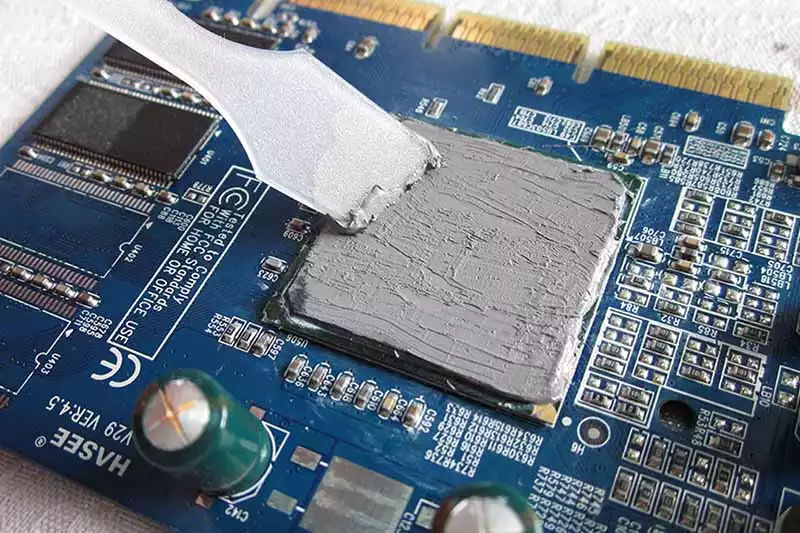
This pairing makes the thermal interface material stack a key part of High-Power Switches Thermal Management Solutions, especially where switch cooling must stay stable through repeated heating and cooling.
Note: a graphite sheet is electrically conductive and conducts strongly in-plane. Use it for lateral spreading on non-energized surfaces, or specify an edge-sealed (Sheen Technology Graphene Thermal sheet with edge-sealed) / film-laminated variant when the interface is near live conductors. Do not rely on bare graphite as a dielectric isolation layer between a power switch and its heat sink.
Five Steps: Applying Thermal Interface Materials Properly
Reliable High-Power Switches Thermal Management Solutions start at the interface, where tiny gaps can quickly raise temperature. From clean surfaces to final sensor checks, careful handling keeps heat moving toward the cooler. Sheen Technology applies practical thermal management controls that make high-power switches easier to assemble consistently.
Step 1: Surface Prep and Thermal Grease Applicator Techniques
Clean the mating surfaces before applying grease.
- Remove oil, dust, oxidation, and old thermal interface material.
- Inspect for scratches or particles that could upset bond-line thickness.
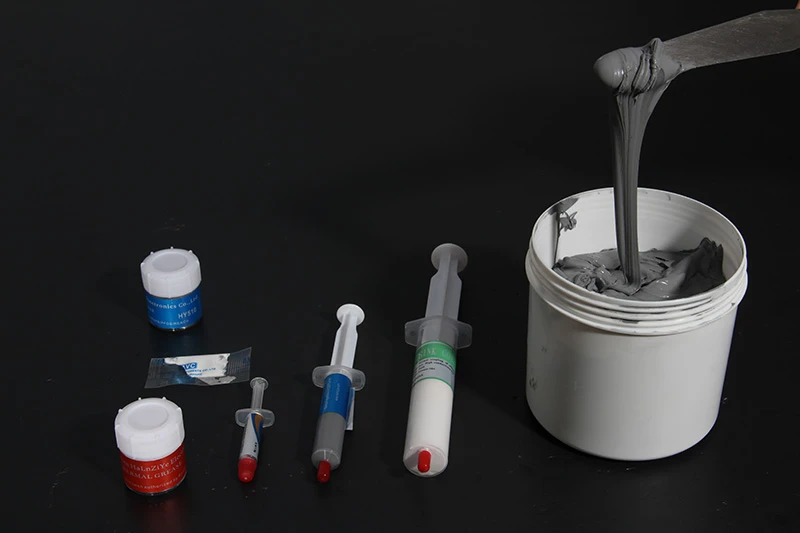
Set the thermal grease applicator for repeatable volume. Good prep gives High-Power Switches Thermal Management Solutions a solid starting point—no fuss.
Step 2: Dispensing Thermal Conductive Silicone Grease Evenly
Apply thermal conductive silicone grease across the contact zone.
- Keep the pattern even to limit trapped air.
- Avoid excess material that causes squeeze-out.
For high-power thermal management, consistent thickness helps prevent local hot spots. Sheen Technology targets controlled dispensing rather than simply adding more grease.
Step 3: Installing Phase Change Materials under Controlled Pressure
Center the phase change material on the device.
- Apply the specified mounting pressure.
- Protect ceramic substrates from excess mechanical load.
Once activated by heat, stable contact supports High-Power Switches Thermal Management Solutions without pushing material out of place.
Step 4: Aligning Thermal Conductive Gap Pads for Minimal Voids
Place thermal conductive gap pads carefully.
- Do not stretch or contaminate the pad.
- Compress only enough to fill tolerance gaps and air pockets.
Correct alignment also preserves electrical insulation between power switches and cooling hardware. That small detail matters.
Step 5: Verifying Contact with Heat Flux Sensors and Thermocouples
Check the finished interface with heat flux sensors and thermocouple wires.
- Compare temperature rise with power dissipation.
- Investigate unusual readings for voids, uneven pressure, or poor contact.
This final check confirms High-Power Switches Thermal Management Solutions are moving heat as intended and gives Sheen Technology measurable feedback for process control.
Test Standards Summary
The methods above should be tied to recognized standards so results are comparable and auditable.
Standards for switch thermal management:
| Property | Standard | What It Verifies |
| Through-plane thermal impedance | ASTM D5470 | Steady-state interface resistance |
| Dielectric strength | ASTM D149 / IEC 60243 | Isolation of substrate / pad |
| Junction temperature | JEDEC JESD51 series | Tj under real load |
| Thermal cycling / reliability | IEC 60068-2-14 | Repeated thermal excursion life |
| Substrate conductivity | ASTM E1461 (laser flash) | Ceramic / bulk conductivity |
High-power switch thermal management is a system-level discipline: substrate selection (Al₂O₃, AIN, Si₃N₄, or DBC), cooling hardware (copper, vapor chamber, or liquid cold plate), and interface practice (graphite-sheet spreading plus controlled-pressure grease or PCM) must be specified together. Sheen Technology provides substrates, interface materials, and application engineering for high-power switch thermal management.
→ Contact Sheen Technology for High-Power Switch Thermal Design
Sheen Thermal
Dongguan Sheen Electronic Technology Co., Ltd · Founded in 2008
Manufacturer of thermal interface materials and silicone foam for automotive electronics, energy storage, power electronics, communications and consumer electronics.
Certified
- ISO 9001:2015
- ISO 14001:2015
- IATF 16949:2016
What we supply
- Thermal conductivity Up to 90 W/m·K
- Thickness 0.3–10.0 mm
- Custom & samples Die-cut to drawing, 3–7 days