
 English
 usheenthermal

Low Thermal Resistance Graphene Sheet vs. Traditional Thermal Pads
Date:2026-07-06
Low Thermal Resistance Graphene Sheet vs. Traditional Thermal Pads
Low thermal resistance Graphene sheet steps in when heat starts acting like a saboteur, choking performance and cooking margins while cramped designs push hardware to its limits.
Old Silicone pads can’t keep up; hotspots linger, costs creep, reliability takes a hit, so buyers want smarter heat spreading that pays off.
Symphony of Key Points: Low Thermal Resistance Graphene Sheet
➔ Unmatched Conductivity: Harness extreme Vertical thermal conductivity to spread heat rapidly across CPUs, GPUs, and power electronics.
➔ Ultra-Thin Flexibility: Conform seamlessly to uneven surfaces, reducing contact resistance and ensuring uniform temperature control in compact devices.
➔ Long-Term Durability: Resist pump-out and thermal cycling degradation, outperforming silicone pads for reliable cooling in LEDs, batteries, and IC assemblies.
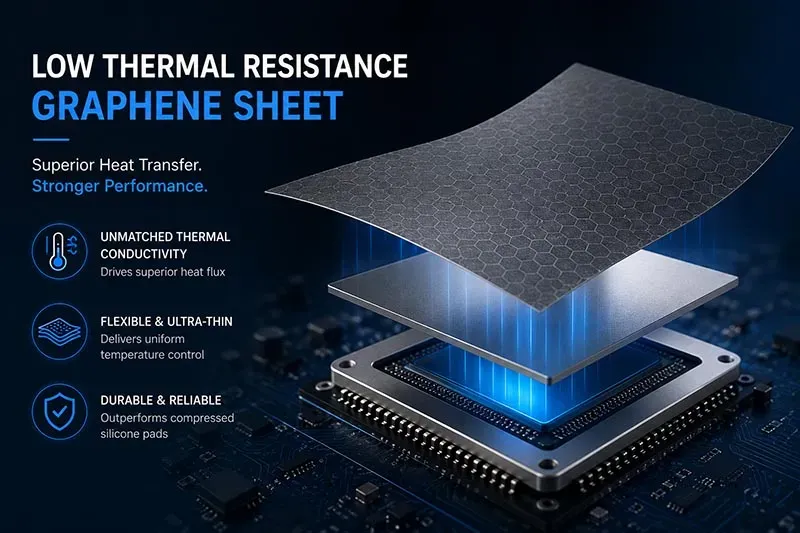
Why Low Thermal Resistance Graphene Sheet Tops Thermal Pads
Modern electronics are running hotter and thinner at the same time. That tension makes low-thermal-resistance Graphene sheet solutions a go-to choice for brands chasing serious thermal performance without bulk or breakdown.
Unmatched Thermal Conductivity Drives Superior Heat Flux
When engineers compare Low thermal resistance Graphene sheet with pads, the story centers on measurable thermal conductivity and sustained heat flux.
Core performance factors:
Thermal conductivity
· Vertical thermal conductivity of up to 90 W/m·K.
· Facilitates rapid heat conduction in the vertical direction.
Superior performance
· Reduces peak chip temperature under load.
· Stabilizes CPUs and GPUs during burst cycles.
Below is Sheen Technology Thermal Interface materials simplified comparison: simplified comparison:
| Material Type | Thermal Conductivity (W/m·K) | Thickness (mm) |
| Graphene sheet | 75-90 | 0.3–2.0 |
| Silicone pad | 1–15 | 0.3–10.0 |
| Thermal grease | 1–5 | Variable |
| Phase-change pad | 3–8 | 0.2–0.5 |
That’s why Low thermal resistance Graphene sheet keeps heat moving instead of trapping it.
Need exact thermal conductivity, thermal resistance, thickness range, and integration data before comparing graphene sheets with silicone thermal pads? Download the product datasheets to evaluate low thermal resistance graphene sheet options for CPUs, GPUs, batteries, LEDs, and power electronics.
Flexibility and Thinness Deliver Uniform Temperature Control
Ultra-thin Graphene film changes how contact happens.
· Flexibility
· Thinness
· Conformability
A low-thermal-resistance Graphene sheet bends into micro-gaps that thick silicone pads simply bridge over. That tighter contact lowers interface gaps, improving thermal spreading across aluminum frames and vapor chambers.
Short and simple: thinner means closer. Closer means less thermal interface material resistance. Less resistance means smoother temperature control.
In smartphones and wearables, this Graphene sheet approach creates a more uniform temperature map across the casing. No sharp hot corners. No sudden throttling.
Sheen Technology engineers optimize Graphene sheet layering so that low thermal resistance Graphene sheet stacks match device geometry instead of fighting it. The result feels steady in your hand, even during gaming.
Durable Graphene Film Outperforms Compressed Silicone Pads
Long-term stress separates materials fast.
Material properties under cycling:
Graphene film
· Stable carbon lattice structure.
· Strong mechanical strength.
Silicone pads
· Polymer softening over time.
· Risk of compression set.
Performance over lifecycle:
· Initial install → comparable contact.
· 500+ thermal cycles → Graphene sheet retains thermal reliability.
· Extended load exposure → silicone pads show pump-out and rising resistance.
Recent market analysis noted rising demand for advanced Graphene-based thermal materials in compact electronics through 2025.
“High-conductivity Graphene materials are increasingly adopted in mobile and AI hardware due to reliability and long-term stability advantages,” states a 2025 Yole Group thermal materials outlook.
That durability, paired with stable durability and long-term stability, explains why Low thermal resistance Graphene sheet continues replacing pads in LED modules and power electronics.
Sheen Technology supports this shift with precision-engineered Graphene film formats tailored for consistent low thermal resistance Graphene sheet integration across high-density devices.
3 Reasons to Choose Graphene Sheet Solutions
Thermal pressure in modern electronics is real. A Low thermal resistance Graphene sheet helps move heat fast, keep chips steady, and slim down hardware. From servers to wearables, this low thermal resistance Graphene sheet approach changes how thermal management feels in daily use.
Faster Junction Temperature Control
When heat spikes, response time matters. A Low thermal resistance Graphene sheet improves heat transfer rate, cutting junction temperature before it creeps into danger zones.
· Rapid heat dissipation
· Stable temperature regulation
· Better device performance
Here’s how it plays out in real hardware:
CPU / GPU Boards
· Core Layer:Low thermal resistance Graphene sheet spreads heat from silicon die,Reduces hotspot buildup.
· Secondary Layer:Supports even thermal management.
Power Modules
· Direct interface to junction
· Shorter thermal path improves heat transfer rate
The result? Smoother gaming, steadier data loads, fewer surprise throttles.
High Anisotropy for Directed Thermal Spreading
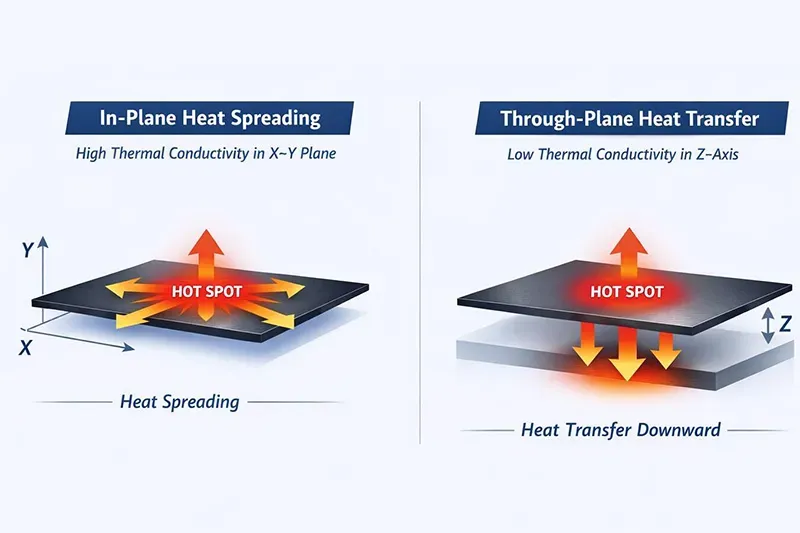
A Low thermal resistance Graphene sheet is built on anisotropic conductivity. Heat flows sideways fast, not randomly.
➤ Controlled directional heat flow
➤ Balanced heat distribution
Inside dense layouts:
Battery Packs
· Guided heat management
· Safer thermal design margins
LED Modules
· Reduced center overheating
· Stable light output
This low thermal resistance Graphene sheet setup keeps the thermal path intentional, not chaotic. Fewer hotspots. Longer component life.
Ultra-Thin, Lightweight Integration
Bulk heatsinks feel old-school. A Low thermal resistance Graphene sheet supports ultra-thin, lightweight integration without sacrificing thermal conductivity.
Short and simple:
· Slim form factor
· Real space-saving
· Noticeable weight reduction
In compact builds:
Smartphones
· Flexible Graphene layer
· Maintains cooling under load
Tablets
· Enhanced design flexibility
· Consistent temperature regulation
Wearables
· Thin profile
· Reliable heat dissipation
A low thermal resistance Graphene sheet proves you don’t need bulk to win at thermal management. Slim can still run cool.
Need a closer match for your project? Browse related application pages to see how low thermal resistance graphene sheet materials are used in smartphones, tablets, wearables, GPUs, battery systems, and other compact high-heat electronics.
Graphene Sheet vs. Thermal Pad Conductivity
When devices get thinner and hotter, heat control stops being optional. This is where Low thermal resistance Graphene sheet solutions step in. By breaking down “Low thermal resistance Graphene sheet” into low thermal resistance + Graphene sheet + heat spreading layer, we see how material choice shapes performance, lifespan, and everyday reliability in electronics.
Graphene Sheet
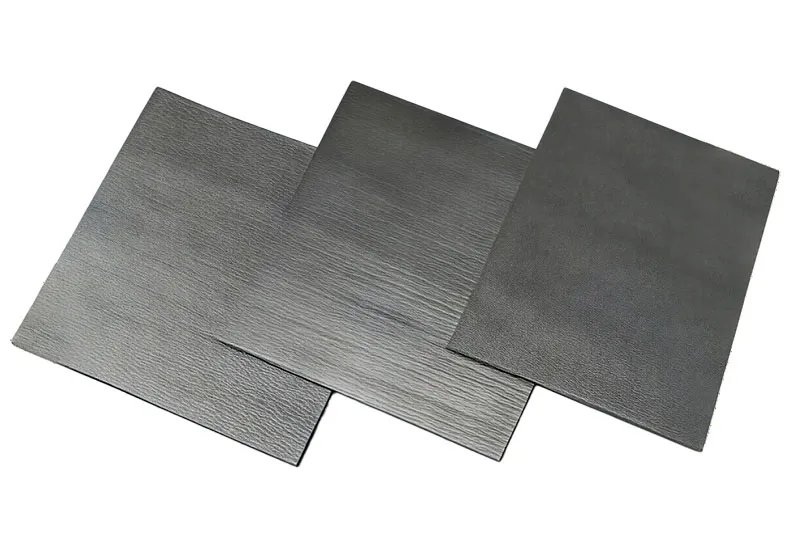
A Low thermal resistance Graphene sheet works as a high-efficiency heat spreading layer built on an anisotropic carbon structure. Its strength lies in thermal conductivity that moves heat at high speed while maintaining low resistance through minimal thickness.
Core Material Traits
Thermal conductivity
· High conduction for rapid heat spreading
· Stable thermal conductivity under compact loads
Low resistance
· Reduced interface loss
· Lower thermal impedance than traditional pads
Structural Advantages
· Extreme thinness
· Lightweight profile
· Mechanical flexibility
· Long-term durability
In smartphones and tablets
· Prevents hotspot buildup
In batteries
· Stabilizes temperature swings
In power electronics
· Supports sustained output without thermal throttling
★ Compared with silicone gap fillers, Graphene sheet solutions provide broader heat diffusion.
According to IDC’s 2025 mobile device thermal design outlook, “advanced Graphene-based heat spreaders are becoming standard in high-density consumer electronics due to their superior dissipation efficiency.”
Sheen Technology Graphene Sheet performance properties:
| Properties | Unit | GSF75-03 Graphene Thermal Pad | GSF90-03 Graphene Thermal Pad | Test Method |
| Color | - | Black | Black | Visual |
| Thermal Conductivity | W/m·K | 75 | 90 | ASTM E1461 |
| Thermal Resistance (@40psi) | ℃*cm2/W | ≤0.12 | ≤0.10 | ASTM D5470 |
| Thickness | mm | 0.3~2.0 | 0.3~2.0 | ASTM D374 |
| Density | g/cm³ | 0.3~0.7 | 0.3~0.7 | ASTM D792 |
| Rebound Rate | % | ≥90 | ≥90 | - |
| Tensile Strength | Mpa | ≥0.03 | ≥0.05 | ASTM D412 |
| Oil Bleeding Rate | % | ≤3 | ≤3 | / |
| Application Temperature | ℃ | -40~150 | -40~150 | / |
| Flame rating | - | - | V-0 | UL 94 |
Sheen Technology integrates Low thermal resistance Graphene sheet materials into custom thermal stacks, balancing heat spreading, mechanical flexibility, and electrical isolation design. If you need a high thermal conductivity Graphene sheet that stays thin yet tough, this is the sweet spot.
Thermal Pad
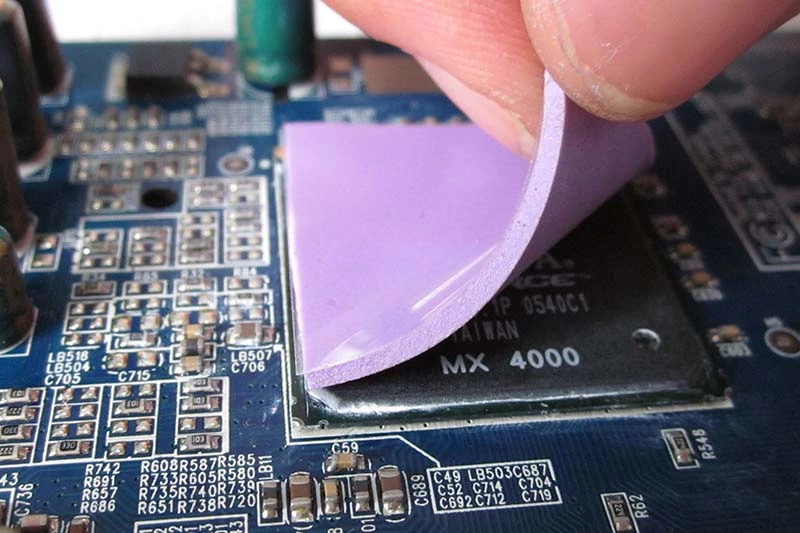
A thermal pad acts mainly as a thermal interface and gap filler. It’s usually a silicone material engineered for compressibility and electrical insulation.
• Fills uneven gaps between chips and heatsinks
• Improves surface contact
• Simplifies assembly lines
1) Place pad
2) Apply compression
3) Achieve basic heat transfer
Short story? Easy to use. Affordable. Traditional.
Yet its thermal impedance is higher. In contrast, a Low thermal resistance Graphene sheet reduces bulk while boosting diffusion. Sheen Technology often combines Graphene sheet layers with selective pad placement, creating balanced systems where gap filling meets low thermal resistance Graphene sheet performance.
Can Graphene Sheet Reduce Component Failures?
Heat is the silent killer inside modern electronics. A Low thermal resistance Graphene sheet spreads heat fast, keeps temperatures steady, and helps sensitive parts survive longer under real-world stress.
Does Improved Thermal Resistance Lower GPU Fail Rates?
When a GPU runs hot, failure rates creep up. High thermal resistance slows heat dissipation, trapping energy at the silicon junction. A Low thermal resistance Graphene sheet changes that flow path.
· Lower peak junction temperature
· Faster Vertical direction heat spreading
· Reduced thermal cycling fatigue
1)Heat leaves the die.
2)The graphene sheet conducts heat to the heat sink.
3)The cooling system removes it efficiently.
Performance gains are not magic; they’re thermal math.
GPU Reliability Chain
Cooling Path
· Die → thermal interface material
· TIM → Low thermal resistance Graphene sheet
· Graphene → heatsink
Stress Control
· ↓ Thermal gradient
· ↓ Solder fatigue
· ↑ Long-term reliability
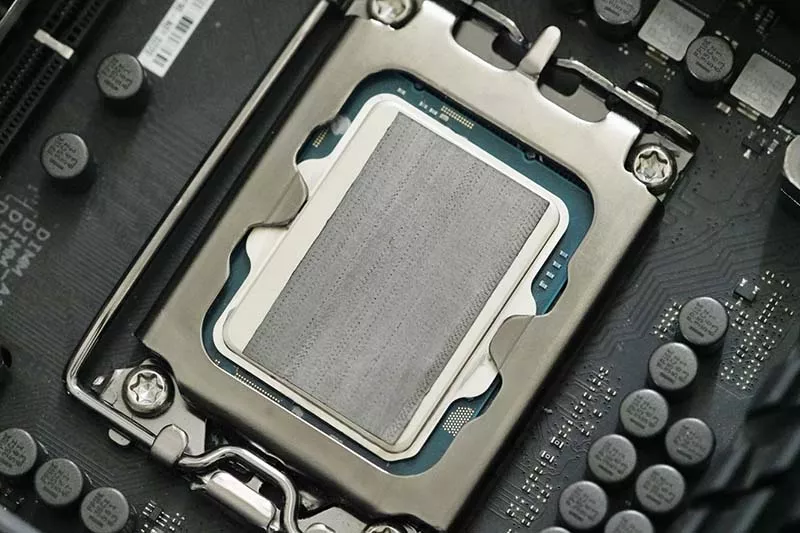
A low-resistance Graphene sheet also improves sustained clock stability. The low thermal Graphene layer keeps hotspots from spiking during gaming bursts. That steadier profile supports better system performance over time.
Temperature Uniformity Impact on Battery Lifespan
A battery hates uneven heat. One overheated corner speeds degradation during charging and discharging. A Low thermal resistance Graphene sheet spreads heat, improving temperature uniformity and extending lifespan.
Thermal Distribution in Li-ion Packs
· Even surface temperature· Reduced internal stress
· Safer fast charging
BloombergNEF’s 2025 battery outlook notes:
“Thermal management remains one of the decisive factors in improving lithium-ion cycle durability and safety margins.”
A low thermal resistance Graphene sheet supports balanced thermal management, keeping cell chemistry stable and slowing aging.
Adhesion and Assembly for Reliable IC Cooling
For any IC, contact matters. A Low thermal resistance Graphene sheet works best when adhesion and assembly are dialed in.
Contact Integrity Framework
Interface Control
· Clean mating surface
· Correct compression force
· Low contact resistance
Material Stack
· Chip
· Thermal interface material
· Low thermal Graphene sheet
· Shield or frame
Heat Transfer Stability
· Minimized air gaps
· Consistent pressure
· Long-term reliability
Poor bonding increases heat transfer resistance. Even a great Graphene sheet can underperform if assembly is sloppy.
Sheen Technology designs integration-ready Low thermal resistance Graphene sheet solutions that simplify alignment and maintain pressure consistency. The result feels simple: better cooling, fewer returns, longer device life.
In tight electronics, small thermal tweaks make a big difference. A well-installed low thermal resistance Graphene sheet keeps the heat moving—and keeps components alive.
【Request a Custom Quote】 Not sure whether a low thermal resistance graphene sheet or a traditional thermal pad is the better fit for your device? Send us your operating temperature range, target thickness, gap conditions, and thermal performance requirements, and we can help recommend the right thermal interface solution for your project.
Sheen Thermal
Dongguan Sheen Electronic Technology Co., Ltd · Founded in 2008
Manufacturer of thermal interface materials and silicone foam for automotive electronics, energy storage, power electronics, communications and consumer electronics.
Certified
- ISO 9001:2015
- ISO 14001:2015
- IATF 16949:2016
What we supply
- Thermal conductivity Up to 90 W/m·K
- Thickness 0.3–10.0 mm
- Custom & samples Die-cut to drawing, 3–7 days