
 English
 usheenthermal

Thermal Glue vs Thermal Paste vs Thermal Pads: Which Should You Use?
Date:2026-03-04
Thermal Glue vs Thermal Paste vs Thermal Pads: Which Should You Use?
If you’ve ever watched a $2,000 GPU throttle its clock speeds because of a bad "paste job," or seen a drone sensor fall off mid-flight because the "thermal solution" didn't have enough grip, you know that the Thermal Interface Material (TIM) is the unsung hero of the PCB.
At Sheen Technology, we’ve spent 20 years in the trenches of thermal management. We’ve seen it all: the messy pastes, the squishy pads, and the permanent commitments of thermal glue, Each solution has advantages. Each has trade-offs. And choosing incorrectly can quietly sabotage your thermal design. Let’s break down the "Great TIM Debate" of 2026 and help you decide which one belongs in your next design.
What Are Thermal Glue, Thermal Paste, and Thermal Pads?
Before comparing performance, we need to define the contestants. While all three are thermal interface materials, their functions differ significantly. The following example uses thermal interface materials manufactured by Sheen Technology:
What Is Thermal Glue?
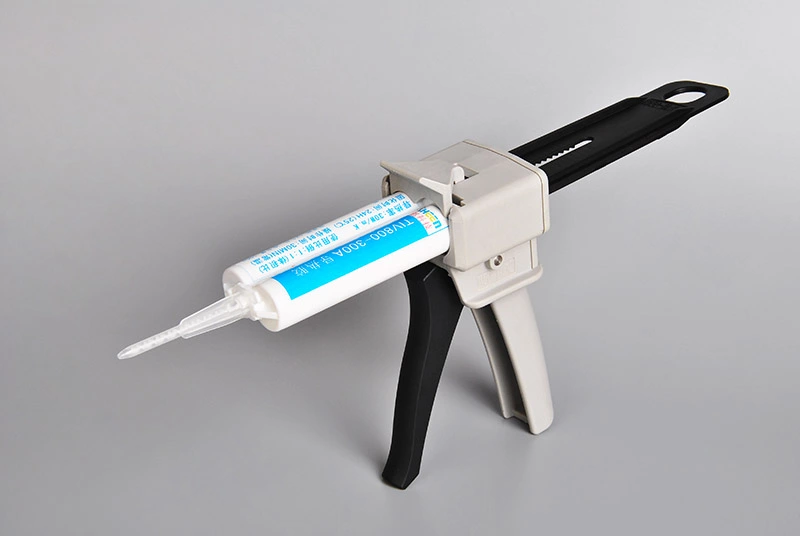
Thermal Glue is a thermally conductive adhesive, this is the "marriage" option. It provides a permanent mechanical bond while offering thermal conductivity. Once it cures, your heatsink and your chip are essentially one single unit.
It is typically used when:
· Mechanical fixation is required
· Fasteners are not desired
· Vibration resistance is important
· Permanent assembly is acceptable
Key Characteristics:
· Conductivity: 1–3 W/m·K
· Permanent bond
· Requires curing
Thermal Glue = bonding + heat transfer in one material. It is both structural and thermal.
What Is Thermal Paste?
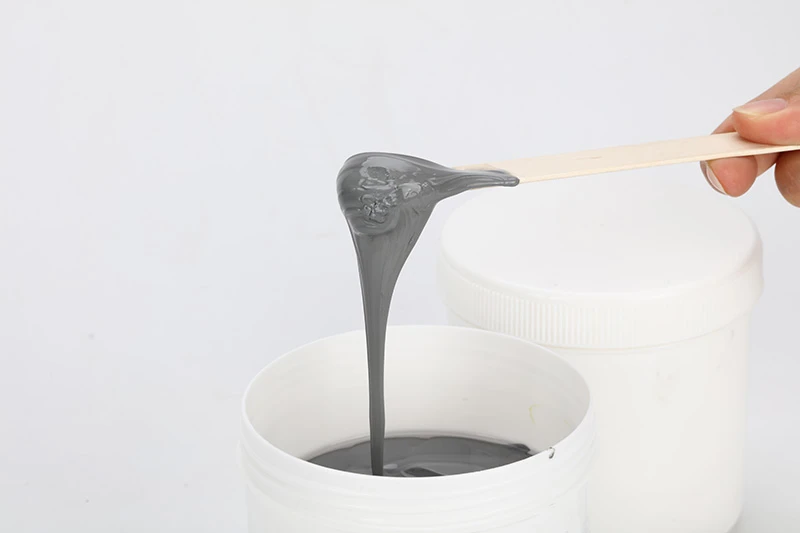
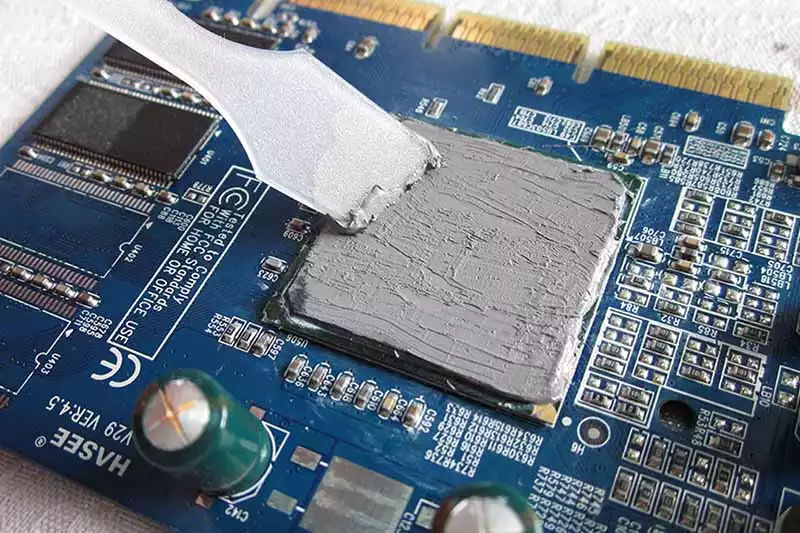
Thermal Paste (also called thermal compound or grease),Often affectionately called "forbidden gray toothpaste," this is a high-viscosity liquid or semi-solid compound. It is designed to be applied as thinly as possible to fill the microscopic peaks and valleys of a component surface,to improve heat conduction.
It is commonly used in:
· CPUs and GPUs
· High-performance computing
· Applications requiring periodic maintenance
Key Characteristics:
· Conductivity: 1–5+ W/m·K
· No curing required
· Rework-friendly
· Can experience pump-out over time
Thermal Paste = maximum thermal performance with zero structural support.
What Is a Thermal Pad?
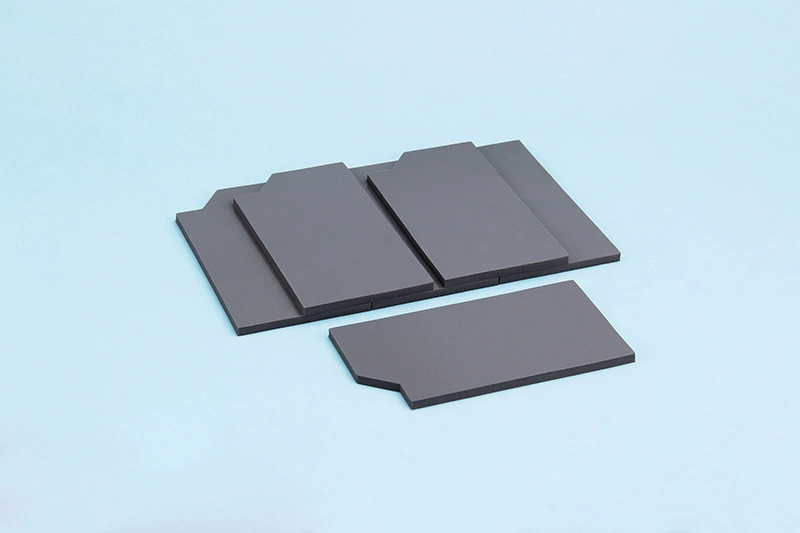
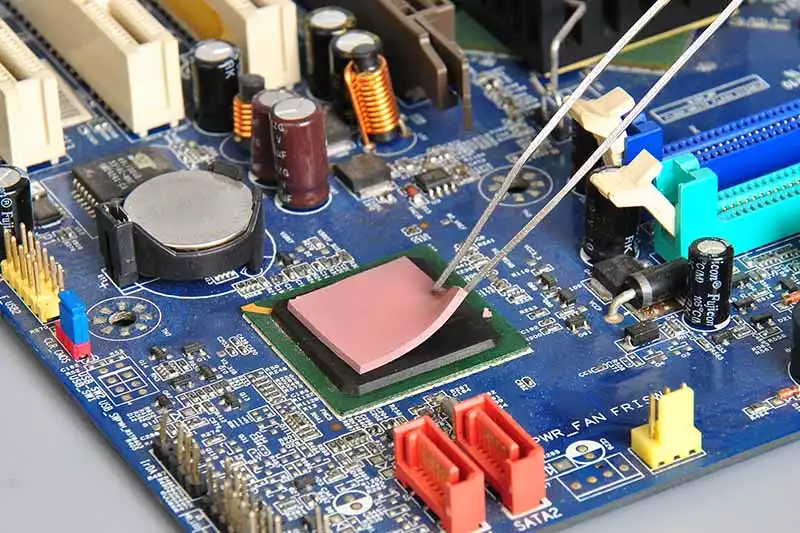
These are pre-formed, squishy solid sheets. They are the "peel-and-stick" champions of the engineering world, designed to bridge larger, irregular gaps where a liquid just wouldn't stay put.
Typical applications include:
· Power electronics
· VRMs
· LED modules
· EV battery systems
Key Characteristics:
· Conductivity: 1–15 W/m·K
· Electrically insulating
· No curing required
· Easy to install
Thermal Pad = convenient, insulating, and gap-filling solution.
Effectively, these three materials represent different physical states of thermal management. Paste is the fluid perfectionist for tight gaps, Pads are the logistical dream for filling space, and Glue is the structural powerhouse for when you want things to stay put forever.
Performance Comparison – Thermal Efficiency and Resistance
Thermal performance is often the first decision factor. However, conductivity numbers alone can be misleading. You can have a material with massive conductivity, but if it’s too thick or doesn't "wet" the surface properly, your heat stays trapped. This section compares how these materials actually handle the "heat wave" from a high-frequency die.
Real-world heat transfer depends on:
· Interface thickness
· Contact pressure
· Surface flatness
· Mechanical stability
Below is a practical comparison based on Sheen Technology's Thermal interface materials:
| Property | Thermal Glue | Thermal Paste | Thermal Pad |
| Conductivity (W/m·K) | 1–3 | 1–5 | 1–15 |
| Typical Thickness | 0.1–0.5 mm | <0.1 mm | 0.3–10 mm |
| Thermal Resistance | Medium | Low | Medium-High |
| Bonding Strength | High | None | None |
| Reusability | No | Yes | Sometimes |
Thermal Paste typically provides the lowest thermal resistance due to its ultra-thin bond line (BLT). It "wets" the surface perfectly, eliminating every single air pocket.
Thermal Glue generally the lowest of the three (typically 1–3 W/m·K). Because it has to balance "stickiness" with "cooling," it can't be loaded with as many conductive particles as a pure paste.
Thermal Pad increases resistance due to thickness but compensates with insulation and gap tolerance.
If you are chasing the absolute lowest junction temperatures on a flagship CPU or GPU, Thermal Paste is still your heavyweight champion.
Mechanical Reliability and Structural Considerations
Heat isn't the only enemy; vibration, gravity, and thermal expansion (CTE mismatch) are constantly trying to tear your cooling solution apart. In 2026, as electronics find their way into autonomous EVs and high-vibration aerospace drones, the "mechanical" part of the Thermal Interface Material is just as important as the "thermal" part.
The Structural Bond (Glue): Thermal glue is the only option that replaces screws and brackets. It creates a rigid or semi-flexible bond that can survive high-G environments without budging.
Best for:
· Industrial electronics
· LED modules
· Embedded systems
· Harsh environments
The Pump-Out Problem (Paste): Paste is a non-structural liquid. Over thousands of heat cycles, it can actually "pump out" from the center of the die, leaving a dry spot. 2026 "Phase-Change" pastes have largely solved this, but it’s still a factor for long-term reliability.
Best for:
· CPUs
· GPUs
· Systems requiring serviceability
Compression vs Adhesion (Pads): Thermal Pads rely on "squish" (compression). They need a mechanical force (like a spring-loaded screw) to stay in contact. In 2026, we use "low-hardness" pads to ensure they don't exert too much stress on delicate solder joints.
Best for:
· Power modules
· EV battery packs
· PCB-level insulation
If your device is going to be vibrating at 60mph on an EV engine block, Thermal Glue is your best friend. If you’re building a desktop workstation that will stay stationary, the non-structural nature of Thermal Paste or Thermal Pads is perfectly acceptable and much easier to maintain.
Ease of Application and Manufacturing Impact
In production environments, assembly speed and repairability matter.
| Factor | Thermal Glue | Thermal Paste | Thermal Pad |
| Application | Dispense + cure | Dispense | Place and press |
| Cure Time | Required | None | None |
| Automation Friendly | Yes | Yes | Yes |
| Rework Difficulty | High | Low | Low |
· Thermal Pads (The Speed King): You can't beat "peel and stick." Pre-cut pads are the easiest to automate on an assembly line and have zero "curing time."
· Thermal Paste requires controlled dispensing but no curing delay.
· Thermal Glue (The Production Challenge): Glue requires a "curing schedule." Whether it’s 24 hours at room temp or 30 seconds under a UV lamp, it adds a step to your manufacturing flow that the others don't.
For high-volume manufacturing where yield rate and speed are everything, Thermal Pads are the undisputed winner. They are foolproof, clean, and allow for instant quality control inspections without waiting for a chemical reaction to finish.
Electrical Insulation and Safety
Electrical isolation is critical in high-density and high-voltage systems.
Most Thermal Pads are electrically insulating. Some high-end pastes and glues use metal particles (Silver/Liquid Metal). If these ooze out onto the board SMDs, it's game over.
For:
· EV battery modules → insulation is mandatory.
· Power MOSFET boards → dielectric strength is critical.
· CPU applications → insulation depends on system design.
At Sheen, we’ve pioneered "Edge-Sealing" for 2026 graphene pads, allowing for high carbon conductivity in the center while maintaining non-conductive safety on the borders.
When you are working in tight spaces with exposed traces, Thermal Pads are the safest bet. They provide a physical, insulating barrier that paste and glue simply can't guarantee once they start to spread under mounting pressure. Always confirm dielectric strength and volume resistivity before finalizing your thermal interface choice.
Application-Based Decision Guide
Here is a simplified engineering decision matrix:
| Application | Recommended Option | Reason |
| AI Accelerators / CPU/GPU | Thermal Paste | Lowest thermal resistance |
| LED modules | Thermal Glue | Bond + heat transfer |
| EV battery modules | Thermal Pad or Glue | Insulation + durability |
| Prototyping boards | Thermal Pad | Easy rework |
| Vibration-heavy industrial electronics | Thermal Glue | Structural stability |
| VRAM and VRMs | Thermal Pad | Different gaps and electrical insulation |
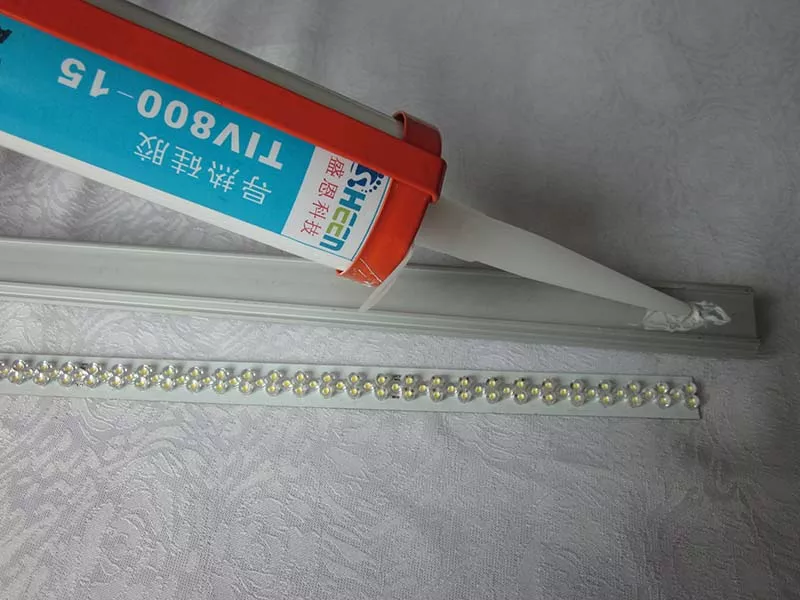
Stop overthinking and start matching. No single material wins every battle; the "perfect" TIM depends entirely on the mission. In 2026, we see a "Hybrid Strategy" becoming the norm, where a single device might use all three materials in different zones.
Common Selection Mistakes
Even experienced engineers make these errors:
★ The "More is Better" Fallacy: Applying a thick layer of paste is like wearing three winter coats in the summer—it insulates the heat instead of moving it. Thin is always win.
★ Stacking Pads: Never stack two thermal pads to fill a 2mm gap. The air trapped between the pads will act as a thermal wall. Buy the correct thickness (0.5mm to 3.0mm) from the start.
★ Ignoring Shore Hardness: If you pick a pad that is too "hard," it won't compress. You’ll end up bending your PCB or leaving a massive air gap over your chip.
★ Other common mistakes include selecting thermal interface materials solely based on W/m·K values, neglecting rework requirements, and using thermal adhesive in areas requiring maintenance.
The best solution balances thermal performance, mechanical stability, and long-term reliability.
FAQs
Which offers the best thermal performance?
Thermal Paste generally provides the lowest thermal resistance.
Can Thermal Glue replace Thermal Paste?
Only if permanent bonding is acceptable and slightly higher resistance is tolerable.
Can I replace thermal pads with thermal paste?
Usually no. Paste is too thin to fill the gaps that pads are designed for. You’ll end up with a gap that the paste can't bridge, leading to instant overheating.
Are Thermal Pads reusable?
Some are, but performance may degrade after compression.
Is Thermal Paste electrically conductive?
Some types are — always check specifications.
Which option offers the best long-term durability?
Thermal Glue typically provides the most structural reliability.
Choosing between Thermal Glue, Thermal Paste, and Thermal Pads isn’t about finding the “best” material. It’s about matching the material to your design priorities:
★ Need maximum cooling performance? → Thermal Paste
★ Need structural bonding and vibration resistance? → Thermal Glue
★ Need easy installation and electrical insulation? → Thermal Pad
In modern electronics, the interface layer is not an afterthought. It is a performance-critical component. Select it with the same attention you give to your processor, power module, or PCB layout — because when it comes to heat, small layers make big differences.
Still not sure which "flavor" of TIM your project needs? Don't guess with your hardware's life. [Contact Sheen’s Engineering Team] today for a custom thermal simulation and sample kits tailored to your specific 2026 design requirements.
Sheen Thermal
Dongguan Sheen Electronic Technology Co., Ltd · Founded in 2008
Manufacturer of thermal interface materials and silicone foam for automotive electronics, energy storage, power electronics, communications and consumer electronics.
Certified
- ISO 9001:2015
- ISO 14001:2015
- IATF 16949:2016
What we supply
- Thermal conductivity Up to 90 W/m·K
- Thickness 0.3–10.0 mm
- Custom & samples Die-cut to drawing, 3–7 days