
 English
 usheenthermal

What is Thermal Glue? A Complete Guide for Electronics Designers
Date:2026-03-02
What is Thermal Glue? A Complete Guide for Electronics Designers
Electronics are getting faster, smaller, and hotter. From LEDs to power modules and embedded CPUs, heat can quietly sabotage performance and reliability if not managed properly. Enter Thermal Glue—the "secret sauce" of the modern production line. It’s part structural adhesive, part thermal highway, and 100% mission-critical for the next generation of thin-and-light hardware.
In this guide, we’re going to pull back the curtain on the "sticky stuff." We’ll break down the chemistry, the application pitfalls, and why Sheen’s engineering team often recommends a high-performance adhesive over the "old-school" mechanical route. If you’ve ever watched a component shake loose in a vibration test or throttle due to a bad bond line, settle in—we’re about to fix that.
What exactly is Thermal Glue?
To understand thermal glue, you have to stop thinking of it as superglue with some metal in it. It is a highly engineered composite material designed to perform two contradictory tasks: it must be a strong enough adhesive to hold a heavy heatsink in a vibrating EV engine, while simultaneously acting as a bridge for phonons to travel across. In 2026, we’ve moved beyond simple mixtures into advanced polymer matrices that can handle temperatures exceeding 200°C without cracking or "de-gassing."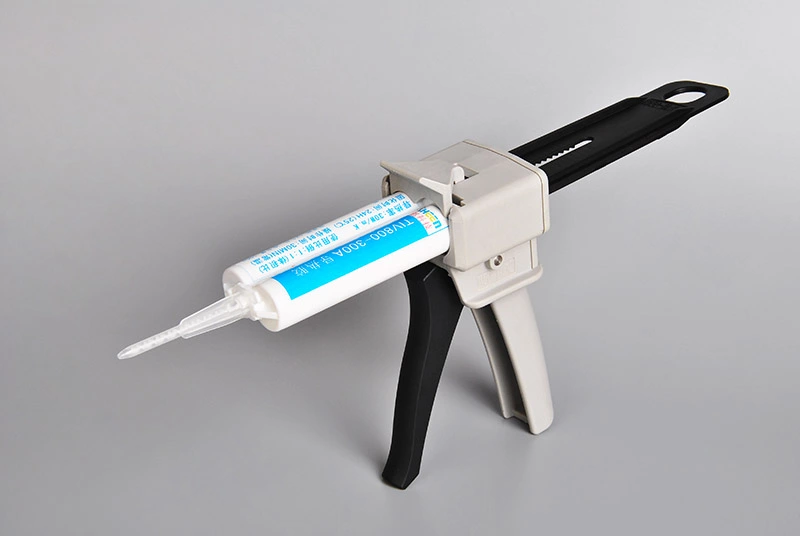
• The Resin Matrix: Usually epoxy or silicone-based, this provides the "grip" and determines the flexibility of the bond.
• Conductive Fillers: This is where the magic happens. We load the resin with microscopic particles of Aluminum Oxide, Boron Nitride, or even Silver to move the heat.
• Curing Agents: The chemical "timers" that tell the glue when to turn from a liquid to a rock-solid thermal bridge.
• Wetting Agents: These ensure the glue flows into every microscopic canyon on your chip's surface, eliminating the "air gap" enemy.
The performance of your thermal glue depends entirely on the synergy between the resin and the filler. At Sheen, we tell designers that the "chemistry of the stick" is just as important as the W/m·K rating; if the resin fails under thermal expansion, the highest conductivity in the world won't save your chip.
Key Parameters to Consider When Selecting Thermal Glue
Selecting a thermal glue by looking at the price tag is a fast track to a "Blue Smoke Event." As a designer, you are balancing a triangle of Thermal Conductivity, Mechanical Strength, and Dielectric Insulation. In the 2026 landscape of high-frequency microprocessors, you also have to consider the "Bond Line Thickness" (BLT)—because even the best glue becomes a thermal insulator if you apply it as thick as peanut butter.• Thermal Conductivity (W/m·K): The headline stat. Most standard glues hover around 1.0–3 W/m·K, while premium silver-filled variants can hit 10+.
• Viscosity: Does it flow like honey or sit like putty? This determines if you can automate the dispensing or if you're stuck doing it by hand.
• Dielectric Strength: Does the glue conduct electricity? If you're bonding a CPU, you need it to be an insulator; if you're grounding a shield, you need it conductive.
• Pot Life & Cure Time: How long do you have to work with it before it sets? In 2026, UV-curing options are the gold standard for high-speed assembly.
Sheen Technology's TIV series thermal glue product parameters:
| Properties | Unit | TIV800-10 | TIV800-12 | TIV800-15 | TIV800-20 | Test Method |
| Thermal Conductivity | W/m·K | 1.0 | 1.2 | 1.5 | 2.0 | ASTM D5470 |
| Main Component | - | Silicone Resin | Silicone Resin | Silicone Resin | Silicone Resin | - |
| Appearance | - | Semi-flowable | Semi-flowable | Semi-flowable | Semi-flowable | - |
| Tack-Free Time (@25℃) | min | 5~10 | 5~10 | 1~5 | 1~5 | - |
| Full Cure Time (@25℃) | h | 24 | 24 | 24 | 24 | - |
| Bond Strength | Mpa | ≥1.5 | ≥1.5 | ≥1.5 | ≥1.5 | - |
| Density | g/cm3 | 1.8±0.2 | 2.4~2.8 | 2.1±0.2 | 2.3±0.2 | ASTM D792 |
| Hardness | Shore A | 40~60 | 40~60 | 40~60 | 40~60 | ASTM D2240 |
| Operating Temp. | ℃ | -50~200 | -50~200 | -50~200 | -50~200 | - |
| Dielectric Strength (@AC) | kV/mm | 20 | 20 | 20 | 20 | ASTM D149 |
| Volume Resistivity | Ω·cm | 3.0*1013 | 3.0*1013 | 3.0*1013 | 3.0*1013 | ASTM D257 |
| RoHS | - | PASS | PASS | PASS | PASS | IEC 62321 |
| Halogen | - | PASS | PASS | PASS | PASS | EN14582 |
| REACH | - | PASS | PASS | PASS | PASS | EN14372 |
You have to match the glue’s personality to your project’s environment. A high-conductivity glue is useless if it’s so brittle that it cracks during a thermal cycle, or so runny that it shorts out nearby capacitors.
Why Electronics Designers are Ditching Screws for Thermal Glue
The Screw-less Revolution isn't just a trend—it’s a necessity. As devices get thinner and more wearable, there simply isn't room for a M3 bolt or a bulky mounting bracket. Mechanical fasteners add weight, create localized stress points on the PCB, and—most importantly—they don't help with heat. Thermal glue, however, provides uniform contact pressure across the entire surface of the die, which is the "holy grail" for thermal management.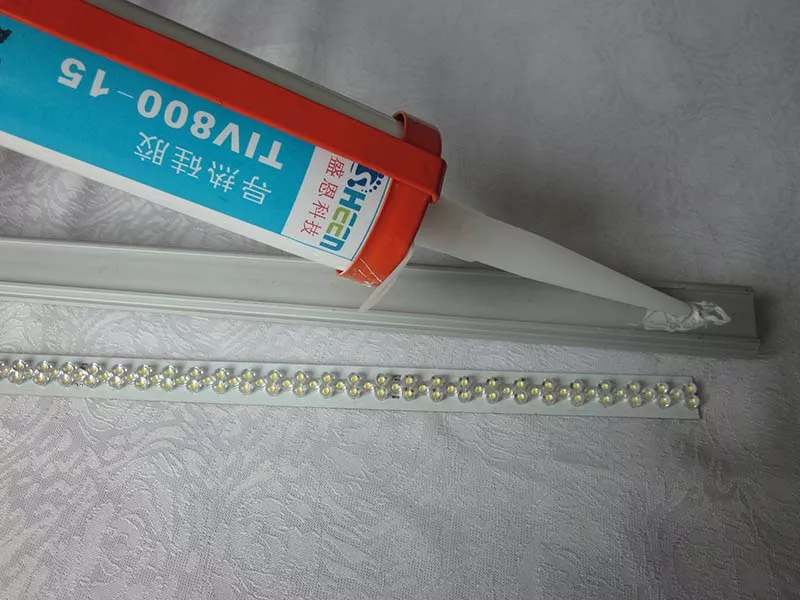
• Weight Reduction: Removing four screws and a bracket can save 10–15g per unit—a massive win for drones and mobile tech.
• Vibration Resistance: Screws can back out; a properly cured epoxy bond is essentially permanent and absorbs high-frequency vibrations.
• Even Pressure: Unlike a spring-loaded clip that can "tilt" a heatsink, glue creates a perfectly flat, uniform interface.
• Lower BOM Cost: Fewer parts mean a simpler supply chain and faster "pick-and-place" times on the factory floor.
Moving to an adhesive-based design simplifies your Bill of Materials (BOM) and opens up design possibilities that mechanical fasteners literally can't fit into. It transforms the assembly from a "nuts and bolts" headache into a streamlined, automated process.
Pros and Cons of Thermal Glue in Electronics
Thermal glue is powerful, but it’s not perfect. Knowing when to use it over pads or paste ensures you get the most from your design.Pros:
• Permanent bond prevents mechanical separation
• Fills gaps and irregular surfaces effectively
• Maintains a consistent thermal path over time
Cons:
* Hard to remove or rework
* Potential degradation under extreme temperatures
* Less suited for prototyping or modular assemblies
Thermal glue excels in long-life, low-maintenance devices but is less ideal for iterative designs or systems requiring frequent disassembly. If you want your component glued for life (literally), it’s perfect; if you like experimenting, maybe not.
How to Apply Thermal Glue for Optimal Performance
Even the most expensive Thermal Glue will fail if the application is sloppy. As engineers, we often see thermal failures that are actually just cleaning failures. In 2026, with the precision required by high-density boards, the difference between a 5°C and 15°C temperature delta often comes down to the technician's prep work and the consistency of the dispensing bead.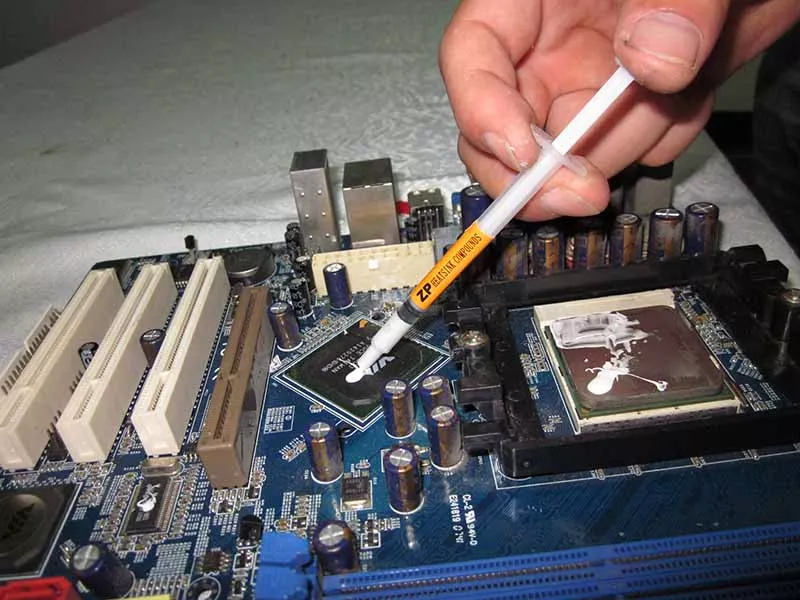
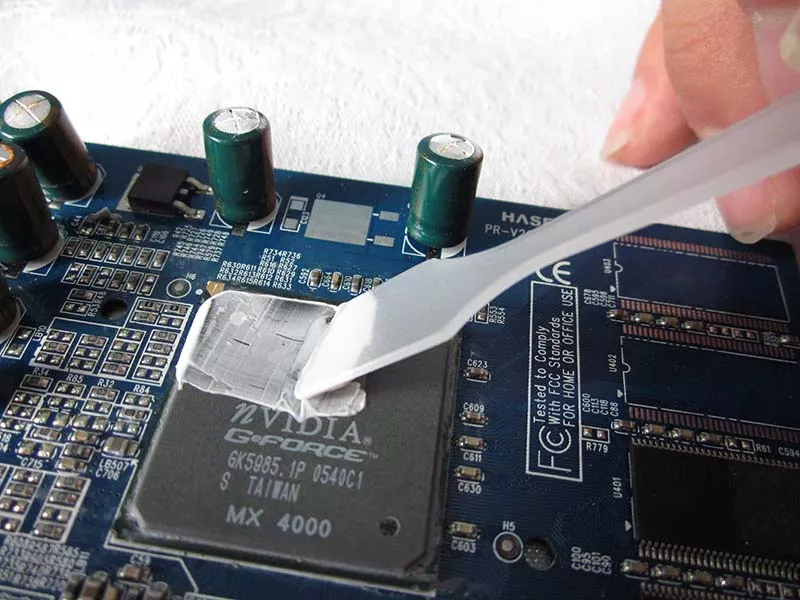
• Surface Preparation: 99% Isopropyl Alcohol is your best friend. Any finger oils or dust will turn your "permanent bond" into a "temporary annoyance."
• The "Pea-Sized" Method: Just like paste, center-point dispensing allows the glue to spread outward, pushing air bubbles out of the way.
• Managing BLT (Bond Line Thickness): Use a shim or a controlled-pressure jig to ensure the layer is as thin as possible while still maintaining a full bond.
• Curing Cycles: Don't rush the process. If a glue requires a 24-hour cure at 25°C, hitting it with a heat gun might make it "look" done while leaving the core soft and thermally inefficient.
Precision is the price of performance. If you want the reliability of a factory-sealed unit, you must treat the application process with the same respect as the chip design itself.
Thermal Glue vs Thermal Paste vs Thermal Pads: Which Should You Use?
This is the most frequent question we get in the Sheen lab. While they all live in the same TIM family, they have very different jobs. Using glue when you should have used a pad is like using a wedding ring when you should have used a friendship bracelet—it’s a commitment you might regret when it’s time for repairs.Taking Sheen Technology's thermal conductive product parameters as an example:
| Property | Thermal Glue | Thermal Paste | Silicone Thermal Pad |
| Bond Strength | Permanent / Structural | None | Low |
| Conductivity | Moderate (1.0–3.0 W/m·K) | Moderate (1.0–5.0 W/m·K) | High (1.5–15.0 W/m·K) |
| Reworkability | Very Difficult | General | Very Easy |
| Gap Filling | Excellent | Minimal (Thin gaps only) | Excellent (Large gaps) |
Use paste for CPUs you might upgrade, pads for bridging uneven gaps between VRMs, and Thermal Glue when the heatsink has no other way of staying attached. Choose the tool that matches the intended lifespan of the component.
Common Thermal Glue Issues and How to Solve Them
No engineering solution is without its gremlins. Thermal glue can be temperamental, especially when dealing with the "CTE Mismatch"—where the chip expands at one rate and the glue at another, leading to the dreaded "delamination." Understanding these failure points is the difference between a successful launch and a massive product recall.• Voids and Air Bubbles: These act as "heat dams." Solve this by using a vacuum-degassed adhesive or improving your dispensing pattern.
• Incomplete Curing: Often caused by "amine blush" in high-humidity environments. Keep your assembly line's climate controlled.
• Delamination: If the glue pops off the heatsink, it's usually a surface energy issue. Consider "roughening" the metal surface or using a primer.
• Brittleness: If the bond snaps like a cracker, you need a glue with higher elongation or a silicone-based formula that stays flexible.
Most glue failures are predictable and preventable. By monitoring your "curing schedule" and matching the flexibility of the glue to the thermal expansion of your materials, you can avoid 90% of field failures.
FAQ
Can I use thermal glue as a gap filler?Yes, but be careful. Thick layers of glue have higher thermal resistance. If the gap is >1mm, consider a pad.
How do I remove it?
It’s tough. You usually need a specialized solvent or a "thermal shock" (extreme cold/heat) to snap the bond—but you risk the PCB.
What’s the difference between thermal glue and thermal paste?
Thermal glue bonds components permanently and is moderately conductive; thermal paste is removable and generally more conductive.
Is thermal glue suitable for high-power electronics?
Yes — if the formulation supports the operating temperature and thermal load.
How long does thermal glue take to fully cure?
Depending on type: room-temperature glues 24–72 hours, heat/UV-cured glues 5–30 minutes.
Does it conduct electricity?
Some do (Silver-filled), some don't (Alumina-filled). Always check the "Dielectric Strength" on the datasheet.
Thermal glue is more than a sticky solution — it’s a strategic material that combines mechanical bonding and thermal management for electronics designers. Key Takeaways:
• Match glue type to thermal load, mechanical stress, and repairability
• Proper application ensures both thermal performance and bond strength
• Avoid shortcuts — preparation, dispensing, and curing are critical
• Best used in long-life, vibration-prone, or permanently bonded devices
Selecting and applying thermal glue correctly safeguards performance, reliability, and longevity, making it an indispensable tool in modern electronics design. From cooling the AI sensors in autonomous vehicles to keeping next-gen LEDs bright and stable, the right adhesive provides the structural integrity and thermal throughput that modern engineering demands.
Ready to stop guessing and start bonding? Don't let a weak bond be the weak link in your design. [Contact Sheen’s Engineering Team] for a custom adhesive audit and let us help you find the perfect adhesives for your next high-performance project.
Sheen Thermal
Dongguan Sheen Electronic Technology Co., Ltd · Founded in 2008
Manufacturer of thermal interface materials and silicone foam for automotive electronics, energy storage, power electronics, communications and consumer electronics.
Certified
- ISO 9001:2015
- ISO 14001:2015
- IATF 16949:2016
What we supply
- Thermal conductivity Up to 90 W/m·K
- Thickness 0.3–10.0 mm
- Custom & samples Die-cut to drawing, 3–7 days