
 English
 usheenthermal

Thermal Management Solutions for 2026 AI Laptops
Date:2026-01-08
Thermal Management Solutions for 2026 AI Laptops
By early 2026, the laptop market has fundamentally shifted. The AI Laptops is no longer a niche product for developers; it is the standard for consumers and professionals alike. With the integration of powerful NPUs (Neural Processing Units) alongside CPUs and GPUs, modern laptops are now capable of running local Large Language Models (LLMs) and generating images on the fly. However, this leap in intelligence comes with a significant physical cost: heat.For manufacturers, the challenge has evolved from cooling short "bursts" of activity (like opening an app) to managing the intense, sustained thermal output of "always-on" AI agents. To prevent performance degradation, engineering teams must look beyond traditional thermal pastes and embrace next-generation thermal management for AI laptops.

Why Next-Gen AI Laptops Need Advanced Laptop Overheating Solutions
The thermal profile of a 2026 AI laptop is drastically different from its predecessors. Traditional laptops were designed for "bursty" workloads—high power for a few seconds, then idle. In contrast, AI workloads—such as running a local transcription agent or a background coding assistant—require the NPU to run continuously at high efficiency.While NPUs themselves are highly efficient, integrating them with high-performance CPUs and GPUs into a unified architecture results in a total thermal design power (TDP) that cannot be ignored.
The Consequence of Poor Cooling:
- Reduced NPU performance.
- Excessive device temperature.
- Accelerated component aging.
Comparing High Conductivity Thermal Pads and Phase Change Materials
Choosing the right Thermal Interface Material (TIM) is no longer just about the initial thermal conductivity number. It is about how that material behaves over thousands of thermal cycles.1. Phase Change Materials (PCM): The New Standard
.webp "Phase Change Materials")
For main processor chips (CPU/GPU/NPU), traditional thermal paste is no longer effective. The "pump-out effect"—where rapid heating and cooling cycles squeeze the thermal paste out from the center of the chip—leaves air gaps after just a few months of AI use, severely impacting cooling performance.
Sheen’s Phase Change Materials (PCM) for notebooks offer the perfect hybrid solution:
- At Room Temperature: They are solid pads, making them easy to apply during automated assembly without the mess of paste.
- At Operating Temperature (45~55°C+): They soften and flow like a liquid, filling microscopic gaps in the heatsink surface for minimum thermal resistance.
- Result: They resist pump-out, maintaining consistent cooling performance for the device's lifespan.
| Properties | Thermal Impedance (℃*in2/W) @30psi | Thermal Conductivity(W/m·K) | Thickness(mm) | Density(g/cm³) | Operating Temp(℃) | Phase Change Temp(℃) |
| SP205A-30 | 0.05 | 3.0 | 0.2 | 2.85 | -40~125 | 45 ~ 55 |
| SP205A-35 | 0.04 | 3.5 | 0.2 | 2.75 | -40~125 | 45 ~ 55 |
| SP205A-40 | 0.03 | 4.0 | 0.2 | 2.75 | -40~125 | 45 ~ 55 |
| SP205A-50 | 0.02 | 5.0 | 0.3 | 2.9 | -40~125 | 45 ~ 55 |
| SP205A-60 | 0.015 | 6.0 | 0.3 | 3.0 | -40~125 | 45 ~ 55 |
| SP205A-L-80 | 0.007 | 8.0 | 0.3 | 2.8 | -20~100 | 45 ~ 55 |
| SP350P | 0.4 | 1.8 | 0.13~0.5 | - | -40~125 | 45 ~ 55 |
| Test Method | - | ASTM D5470 | ASTM D5470 | ASTM D751 | ASTM D3418 | ASTM D3418 |
2. High Conductivity Carbon Fiber Thermal Pads
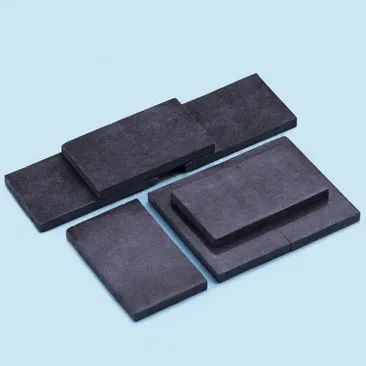
While PCMs handle the main processor, other hot components—like power delivery VRMs and high-speed memory—require bridging larger gaps. Here, high conductivity thermal pads made with aligned carbon fiber are superior.
- Vertical Conductivity: Unlike generic silicone pads, carbon fiber pads (like Sheen's CSF Series) align fibers vertically, creating a direct heat highway to the chassis.
- Performance: With conductivities reaching 15–45 W/m·K, these pads are essential for cooling the dense power stages required to feed 80+ TOPS (Trillions of Operations Per Second) AI chips.
| Properties | Thermal Conductivity(W/m·K) | Thermal Impedance(℃*in2/W) 1mm,@20psi | Thickness(mm) | Density(g/cm³) | Standard Hardness(Shore 00) | Operating Temp(℃) |
| CSF15 | 15.0 | 0.28 | 0.3 ~ 12.0 | 2.7 | 40/60±5 | -50~160 |
| CSF20 | 20.0 | 0.18 | 0.3 ~ 12.0 | 2.7 | 40/60±5 | -50~160 |
| CSF25 | 25.0 | 0.12 | 0.3 ~ 12.0 | 2.7 | 40/60±5 | -50~160 |
| CSF30 | 30.0 | 0.10 | 0.3 ~ 12.0 | 2.6 | 40/60±5 | -50~160 |
| CSF40 | 40.0 | 0.08 | 0.3 ~ 12.0 | 2.6 | 40/60±5 | -50~160 |
| CSF45 | 45.0 | 0.07 | 0.3 ~ 12.0 | 2.6 | 40/60±5 | -50~160 |
| Test Method | ASTM D5470 | ASTM D5470 | ASTM D374 | - | ASTM D2240 | - |
Beyond Thermal Conductivity: Why 1000-Hour Reliability is Critical
In the B2B and OEM sectors, even the highest specifications are meaningless if a product fails in real-world applications. This is where Sheen's expertise lies and what sets us apart. From the SF-PCM series to thermal gels, we not only test product reliability but also their stability over 1000 hours of operation.Case Study: The "Pump-Out" Solution
A leading consumer electronics manufacturer discovered a 12% return rate (RMA) on its high-end laptops after 6 months of use due to overheating. Analysis revealed that the standard thermal paste they were using had failed, leaving the CPU exposed.By switching to Sheen's phase-change thermal interface material, they achieved:
- 0% thermal paste failure rate over a simulated 3-year lifespan.
- 3°C reduction in peak NPU temperature under sustained AI workloads.
- 15% reduction in assembly time due to the thermal pad being easier to handle than thermal paste.
Frequently Asked Questions (FAQ)
Q1: What is the "Pump-Out Effect"?A: The pump-out effect occurs when repeated thermal expansion and contraction (thermal cycling) physically pushes thermal grease out of the gap between the chip and the heatsink.
Q2: What is the best thermal interface for an AI laptop in 2026?
A: For the main processor die, Phase Change Materials (PCM) are currently the best. For memory and VRMs, high conductivity carbon fiber pads are recommended.
Q3: Are silicone-free thermal pads better for high-end laptops?
A: Yes, specifically for components near cameras, screens, or optical sensors. Silicone oil can bleed over time and fog up lenses or contaminate sensitive contacts; silicone-free pads eliminate this risk.
Q4: How does NPU thermal throttling affect AI performance?
A: When an NPU (Neural Processing Unit) overheats, the system firmware reduces its clock speed to prevent hardware damage.
Q5: Is a higher Thermal Conductivity always better for my design?
A: Not necessarily. While a high W/m·K rating (like our 35 W/m·K carbon fiber pads) is vital for high-wattage chips, the interfacial thermal resistance is often more important.
Q6: Can Sheen’s materials support automated assembly?
A: Absolutely. We offer thermal gels and dispensable TIMs designed for high-speed robotic dispensing, reduces labor costs and human error in large-scale manufacturing environments.
Q7: Are your thermal interface materials comply with the 2026 RoHS and REACH standards?
A: Yes. All Sheen products are fully compliant with the latest RoHS and REACH environmental regulations.
The AI PC era demands new standards in thermal management. Traditional thermal paste and generic thermal pads cannot withstand the sustained heat generated by high-performance NPUs by 2026. To protect your brand reputation and ensure your devices deliver the 80+ TOPS performance customers expect, you need durable materials.
With 20 years of expertise and a portfolio of products tested under 1000 hours of extreme conditions, Sheen Technology is your ideal partner for tackling thermal challenges in the AI revolution. Contact Sheen's engineering team today for a customized thermal assessment or to request our latest phase-change materials and carbon fiber thermal pad solutions.
Sheen Thermal
Dongguan Sheen Electronic Technology Co., Ltd · Founded in 2008
Manufacturer of thermal interface materials and silicone foam for automotive electronics, energy storage, power electronics, communications and consumer electronics.
Certified
- ISO 9001:2015
- ISO 14001:2015
- IATF 16949:2016
What we supply
- Thermal conductivity Up to 90 W/m·K
- Thickness 0.3–10.0 mm
- Custom & samples Die-cut to drawing, 3–7 days