
 English
 usheenthermal

Choosing the Right Thermally Conductive Insulator for PV Inverter Safety
Date:2026-08-08
Pick the wrong thermally conductive insulator for photovoltaic inverters, and heat turns from a nuisance into a budget killer—efficiency drops, components age fast, warranties bite.
As Sheen Technology engineers noted in 2025 technical briefs, material choice directly dictates dielectric reliability and junction temperature control in high-voltage inverter modules.
Pick smart, balance heat and insulation, and your system lasts.
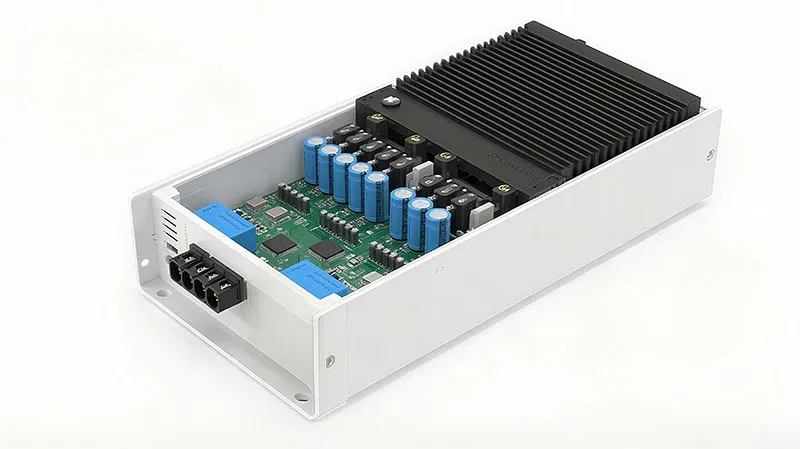
Reading Notes: Thermally Conductive Insulator for Photovoltaic Inverters
➔ Material Selection: Balance high thermal conductivity (e.g., aluminum nitride, boron nitride) with required dielectric strength to protect high-voltage PV inverter modules.
➔ Interface Optimization: Match TIMs—pads, greases, phase-change materials—to substrate tech (DBC, AMB) and heat-sink design to minimize junction temperature and thermal impedance.
➔ Reliability & Durability: Consider CTE compatibility, mechanical flexibility (silicone elastomers vs. epoxy), and long-term insulation resistance to prevent aging, PD, and warranty failures.
What Is A Thermally Conductive Insulator?
A thermally conductive insulator for photovoltaic inverters sounds like a mouthful, but it’s simply a smart material that moves heat fast while blocking current. In PV systems, that balance keeps electronics cool, safe, and steady under load.
Defining Thermal Conductivity and Electrical Insulation
At its core, a thermally conductive insulator for photovoltaic inverters blends thermal conductivity with electrical insulation, letting heat transfer happen while stopping current flow through strong electrical resistance and dielectric strength.
Key performance layers:
Heat pathway
- High thermal conductivity
- Low thermal resistance
Electrical barrier
- Strong dielectric strength
- Stable material properties
System outcome
- Efficient cooling
- Reliable insulation
For PV inverter insulation, the goal is simple: push heat out, keep electrons in line. A good thermally conductive insulator for photovoltaic inverters handles both without compromise.
Alumina and Aluminum Nitride: Ceramic Substrate Champions
Ceramics dominate here.
Alumina
- Cost-friendly
- Solid electrical isolation
- Moderate thermal management
Aluminum nitride
- High thermal conductivity
- Low expansion under high temperature
Application stack:
- Device level:IGBT, SiC, GaN modules
- Substrate level:Ceramic substrates
- System level:PV inverter cooling and safety
A thermally conductive insulator for photovoltaic inverters often lands here, especially when performance matters more than price.
Boron Nitride, Mica, and Polyimide Films Explained
Thin, flexible, and surprisingly tough.
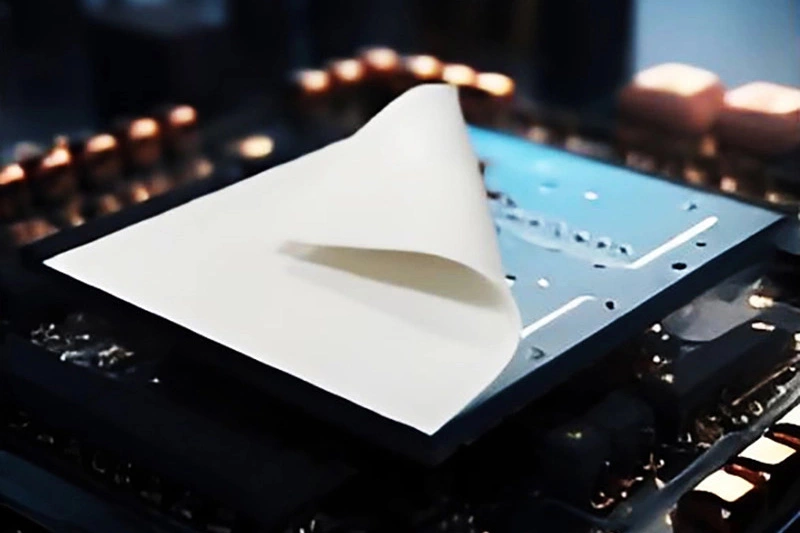
Functional roles:
- Boron nitride:High conductivity + insulation
- Mica:Exceptional dielectric properties
- Polyimide films:Flexible electrical insulators,Stable under heat
Use layering:
- Interface materials:Thermal interface materials
- Compact builds:Flexible substrates
- High-performance zones:Tight inverter layouts
These materials help a thermally conductive insulator for photovoltaic inverters fit into tight spaces without losing performance.
Silicone Elastomers for PV Inverter Safety
Soft materials, serious protection.
Functional system:
- Base material:Silicone elastomers
- Forms:Potting compounds、Gap fillers
Benefits
- Heat dissipation
- Vibration damping
- Strong electrical insulation
PV inverter protection flow:
- Fill gaps → reduce air pockets
- Spread heat → avoid hotspots
- Seal components → boost safety
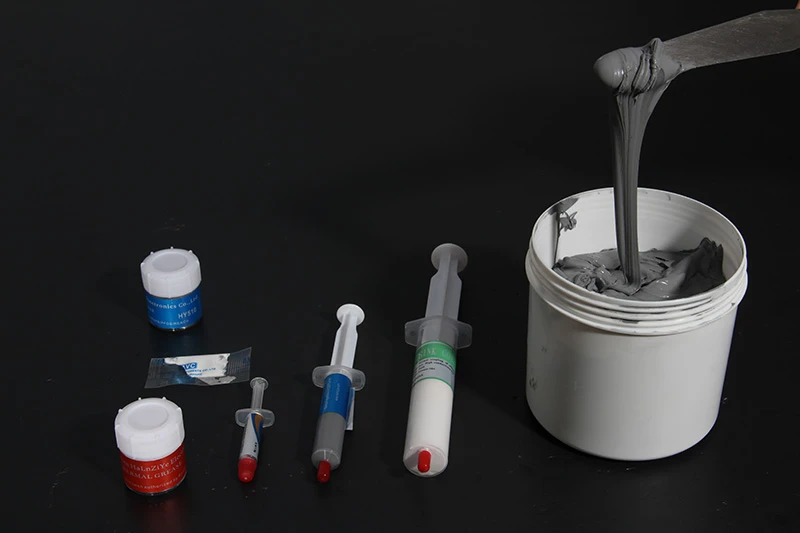
In real deployments, Sheen Technology integrates these into PV inverters to stabilize performance. Another thermally conductive insulator for photovoltaic inverters option from Sheen Technology keeps systems cooler, longer, and far more reliable.
5 Steps To Select Thermal Interface Materials
Getting heat out of power electronics isn’t just engineering—it’s survival. Pick the right stack, and your thermally conductive insulator for photovoltaic inverters keeps systems stable, safe, and efficient under real load.
Step 1: Assess Thermal Conductivity Requirements
Start with numbers, not guesses. Map power dissipation to allowable thermal resistance, then back-calculate needed thermal conductivity for stable operating temperature and system safety within your thermal management plan. For a thermally conductive insulator for photovoltaic inverters, this step decides everything downstream.
| Power (W) | Target ΔT (°C) | Max Rth (°C/W) | Required k (W/m·K) | Cooling Type |
| 50 | 30 | 0.60 | 2–3 | Passive sink |
| 150 | 35 | 0.23 | 3–5 | Finned sink |
| 300 | 40 | 0.13 | 5–8 | Heat pipe |
| 600 | 45 | 0.075 | 8–12 | Cold plate |
| 1000 | 50 | 0.050 | 10–15 | Liquid loop |
Short takeaways:
- Tight ΔT → higher k
- Higher power → thinner bond lines
- Solar duty cycles → plan for peaks
Step 2: Choose Between Thermal Pads and Thermal Grease

- thermal pads: clean, repeatable, good electrical insulation, stable bond line thickness
- thermal grease: lower impedance, strong conformability, but messy application method
In PV builds, a thermally conductive insulator for photovoltaic inverters often favors pads for serviceability, unless extreme heat flux pushes grease into play. Balance reusability against peak performance.
Step 3: Evaluate Phase Change Materials vs. Gap Fillers
1) phase change materials soften at temp, cutting interface resistance
2) gap fillers handle uneven stacks with higher viscosity and easy dispensability
3) Reliability matters: cycling affects reworkability and pump-out
For a thermally conductive insulator for photovoltaic inverters, uneven substrates usually lean toward gap fillers; flat, controlled assemblies benefit from PCM.
Step 4: Factor in Graphene Thermal Sheets and Thermal Adhesives
Consider combos:
- Graphene thermal sheets for anisotropic thermal diffusion
- thermal adhesives when you need bonding + heat flow
| Item | GSF90-03 (0.3mm) | Test Standard |
| Available sample thickness | 0.3~2.0 (mm) | ASTM D374 |
| Density (g/cm³) | 0.5±0.2 | ASTM D792 |
| Thermal Resistance (℃·cm²/W) | ≤0.10 (@40Psi) | ASTM D5470 |
| Thermal Conductivity (W/m·K) | 90 | ASTM D5470 |
| Compression Rate (%) | ≥30% (@40Psi) | / |
| Rebound Rate (%) | ≥90 | stand for 30 minutes |
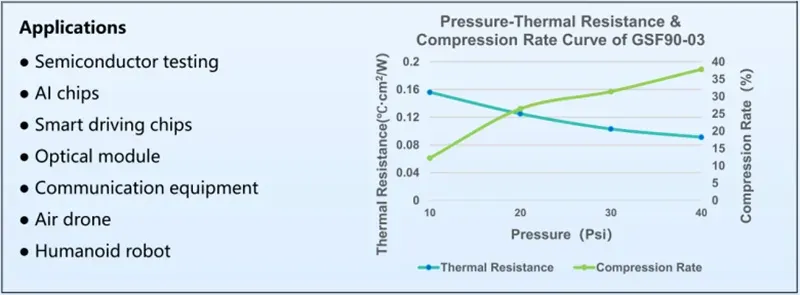
Watch thermal expansion, adhesion, and mechanical strength. Graphene thermal pad adds flexibility and compression resilience; adhesives lock parts in place. Sheen Technology often pairs these in compact inverter stacks where space is tight and electrical insulation must remain intact.
Need dielectric strength, thermal conductivity, breakdown voltage, and temperature range data for thermally conductive insulator materials used in PV inverters? Download the product datasheets to compare ceramic substrates (alumina, AlN), silicone elastomers, mica, and polyimide films for photovoltaic and power electronics applications.
Step 5: Match with Substrate Technologies like DBC or AMB
Match the interface to substrate technologies:
- direct bonded copper (DBC): strong heat path, ceramic isolation
- active metal brazing (AMB): better for higher stress, improved reliability
Account for CTE mismatch between die attach, substrates, and your thermally conductive insulator for photovoltaic inverters. Poor matching cracks over time.
“Power module lifetimes increasingly hinge on interface stability under thermal cycling,” notes a 2025 update from Yole Group, pointing to substrate–TIM compatibility as a top failure driver.
For photovoltaic inverters, aligning DBC/AMB with the right conductive insulator for PV inverters avoids fatigue and keeps output steady. Sheen Technology solutions are typically tuned to these stacks, helping maintain long-term thermal performance.
Comparing Silicone Vs. Epoxy Insulators
Picking a thermally conductive insulator for photovoltaic inverters can feel a bit like choosing tires for a race car—small material choices change heat flow, reliability, and lifespan. Here’s a straight-up look at silicone and epoxy options, with practical cues for anyone sizing a thermally conductive insulator, PV inverter insulator, or heat-managing dielectric.
Silicone Elastomers
- Core behavior centers on Flexibility and Vibration damping, keeping contacts stable during daily thermal swings.
- Electrical side stays solid with Dielectric strength and dependable Moisture resistance.
- Outdoor installs benefit from UV resistance and long Temperature stability.
1) Material response chain
- Heat path: Thermal conductivity moves energy away from hotspots in a thermally conductive insulator for photovoltaic inverters
- Mechanical path: soft body absorbs shock → reduces micro-cracks
- Environmental path: seals out humidity → steadier insulation
2) Application mapping
- PV inverter potting:dense layouts need a thermally conductive insulator for photovoltaic inverters that won’t stress components
- Cable interfaces:flexible junctions,field-replaceable modules
3) Selection notes
- If cycling is frequent, lean silicone; mismatch stress stays low
- For a photovoltaic inverter insulator near fans or vibration sources, softness pays off
- Sheen Technology offers silicone grades tuned for balanced Thermal conductivity and resilience
Epoxy Insulators
Short take: rigid, strong, and precise. Less forgiving under expansion mismatch, yet excellent for structural builds.
Pros
- High Rigidity and Mechanical strength anchor components
- Strong Adhesion aids encapsulation and tight assemblies
- Stable Electrical insulation for compact designs
Watch-outs
- Thermal cycling can introduce stress at interfaces
- Rework is tough once cured
- Lower Flexibility compared to silicone
Where epoxy shines
- Encapsulation blocks requiring Chemical resistance
- High-load frames where shape must not drift
- Designs targeting high High temperature performance with minimal movement
Quick picks for a thermally conductive insulator:
- Need compliance + heat flow → silicone-based thermally conductive insulator for photovoltaic inverters
- Need structure + adhesion → epoxy with tuned fillers
Sheen Technology supports both paths, helping match a thermally conductive insulator for photovoltaic inverters to real operating stress, not just datasheets.
【Request a Custom Quote】Not sure whether a ceramic substrate, silicone elastomer, or polyimide film is the right thermally conductive insulator for your PV inverter design? Send us your operating voltage, temperature range, thermal conductivity target, and interface requirements, and our engineers can recommend the most suitable insulation solution for your project.
Sheen Thermal
Dongguan Sheen Electronic Technology Co., Ltd · Founded in 2008
Manufacturer of thermal interface materials and silicone foam for automotive electronics, energy storage, power electronics, communications and consumer electronics.
Certified
- ISO 9001:2015
- ISO 14001:2015
- IATF 16949:2016
What we supply
- Thermal conductivity Up to 90 W/m·K
- Thickness 0.3–10.0 mm
- Custom & samples Die-cut to drawing, 3–7 days