
 English
 usheenthermal

Why a Pre-formed Phase Change Thermal Pad Beats Standard Paste
Date:2026-07-23
Why a Pre-formed Phase Change Thermal Pad Beats Standard Paste
Paste keeps slowing your line, smearing margins and tempers, while the Pre-formed phase change thermal pad slips in like a neat fix — clean, consistent, and built for repeatable results.
Production stops like guesswork; operators move faster, defects drop, and the floor runs smoother, turning thermal choice into output and cost.
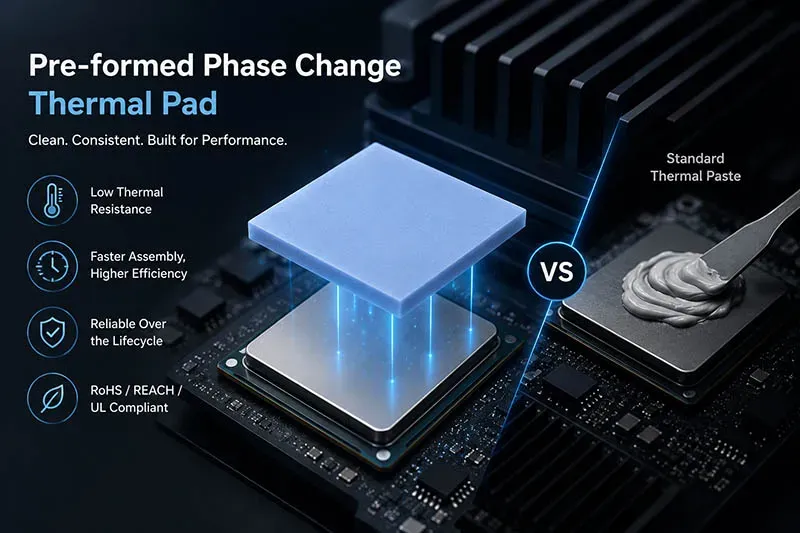
Melodic Guide: Pre-formed phase change thermal pad Essentials
- Thermal Performance: Low thermal resistance and strong heat dissipation ensure stable operation of CPUs, GPUs, and power modules.
- Application Efficiency: Die-cut shapes deliver uniform coverage, cutting assembly time by up to 30% and eliminating messy paste handling.
- Lifecycle Reliability: Phase change pads resist pump-out, offer extended shelf life, and simplify rework without residue.
- Regulatory Compliance: Designed to meet RoHS, REACH, and UL standards, these pads support eco-friendly manufacturing in data centers, automotive, and telecom.
Layered Analysis: Thermal Interfaces Explained
A Pre-formed phase change thermal pad — or pre formed phase change pad, phase change thermal interface, PCM pad — keeps chips cool without the mess. Here's a grounded look at how heat moves, what it's made of, how it fits, and how it's built.
Thermal Conductivity and Impedance Layers
Core idea
- Thermal conductivity drives heat transfer across the stack.
- Thermal impedance (aka thermal resistance) rises with poor contact and excess layer thickness.
Interface reality
- Contact — interface resistance drops as heat flux spreads evenly.
- Air gaps kill performance; a Pre-formed phase change thermal pad melts slightly to fill them.
Sheen Technology Thermal Interface Materials Quick data check
| Material type | Thermal conductivity (W/m·K) | Layer thickness (mm) | Thermal resistance (°C·in²/W) |
|---|---|---|---|
| PCM pad | 3-8 | 0.2-0.5 | 0.20 |
| Silicone pad | 1-15 | 0.50 | 0.007-0.05 |
| Thermal Grease | 1-5 | 0.05 | 0.015-0.04 |
Material Composition: Wax, Polymer Matrix, Fillers
A phase change material blends wax with a polymer matrix and conductive fillers. The composition tunes melt point and stability, so the compound softens right when chips heat up. In a Pre-formed phase change thermal pad, ceramic fillers boost conduction while the matrix holds shape, avoiding pump-out. Sheen Technology tunes material properties so the pad cycles cleanly across thousands of heat events.
Physical Characteristics: Thickness, Flexibility, Surface Finish
Thickness matters: too thick raises thermal resistance, too thin risks dry spots.
Flexibility helps conformability, letting the pad flow under light pressure.
Surface finish and low roughness improve gap filling, cutting interface resistance.
A pre formed phase change pad balances these so the phase change thermal interface stays consistent.
Manufacturing Techniques from Lamination to Die-cutting
1) Lamination builds uniform films with tight thickness control.
2) Coating & curing lock in the composition and target melt range.
3) Extrusion forms continuous sheets for scalable production.
4) Die-cutting shapes each Pre-formed phase change thermal pad for exact assembly fit.
5) Final fabrication checks ensure repeatable manufacturing process outcomes — something Sheen Technology is known to keep tight.
2 Pain Points: Paste Application Messiness Solved
Getting thermal interfaces right shouldn't feel like guesswork or a cleanup chore. With a Pre-formed phase change thermal pad, you skip the mess and get repeatable results. This approach balances heat transfer performance with sanity on the workbench, and brands like Sheen Technology keep it practical without overcomplicating the install.
Inconsistent Coverage? Die-cut Phase Change Pad for Uniform Conformability
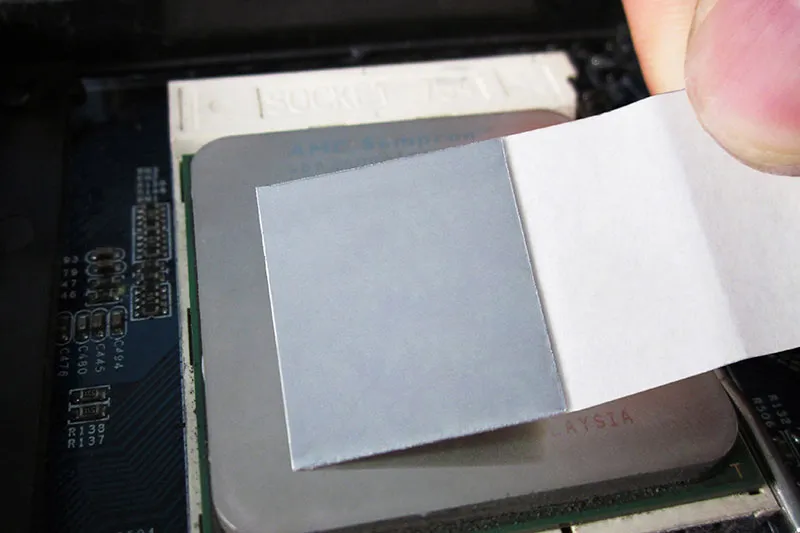
Coverage control with a Pre-formed phase change thermal pad:
Fit and placement
- Die-cut geometry locks to CPU lids and VRMs
- Edge-to-edge coverage avoids dry spots
Contact behavior
- Phase Change Pad softens at temp, filling micro-gaps
- Stable uniform conformability across uneven dies
Performance path using a preformed thermal pad:
Interface stack
- Thermal Pad sits as the primary interface material
- Pressure spreads evenly, reducing pump-out risk
Heat flow
- Consistent heat transfer from silicon to sink
- Fewer hot spots, tighter temp spread
Process consistency:
Operator steps
- Place pre-formed phase change thermal pad
- Mount heatsink with specified torque
- Thermal cycle to activate phase change
Outcome
- Less rework, fewer variables
- Predictable results, batch after batch
Sheen Technology pushes tight tolerances so each phase change thermal pad lands exactly where it should.
Clean-up Nightmares? Silicone-Free Sheets for Easy Rework
A Pre-formed phase change thermal pad also makes teardown sane. No sticky smear, no solvent marathon. Short version: cleaner off, faster back on.
What changes:
- Silicone-Free base means minimal residue
Why it matters:
- Quick swaps in telecom racks and consumer gear
- Reliable reworkability without scraping the die
Steps feel straightforward:
- Lift heatsink; the phase change thermal pad releases cleanly
- Wipe once if needed; most thermal sheets leave surfaces neat
- Drop in a fresh Pre-formed phase change thermal pad and go
Sheen Technology pairs thermal management gains with easy maintenance, so you spend time fixing systems, not cleaning them.
Standard Paste vs. Phase Change Pad Comparison
Getting heat off chips isn't just a detail — it's the whole game. From messy spreads to clean installs, the difference between a viscous compound and a solid form solution like a Pre-formed phase change thermal pad shows up fast in uptime, maintenance, and sanity.
Standard Thermal Paste
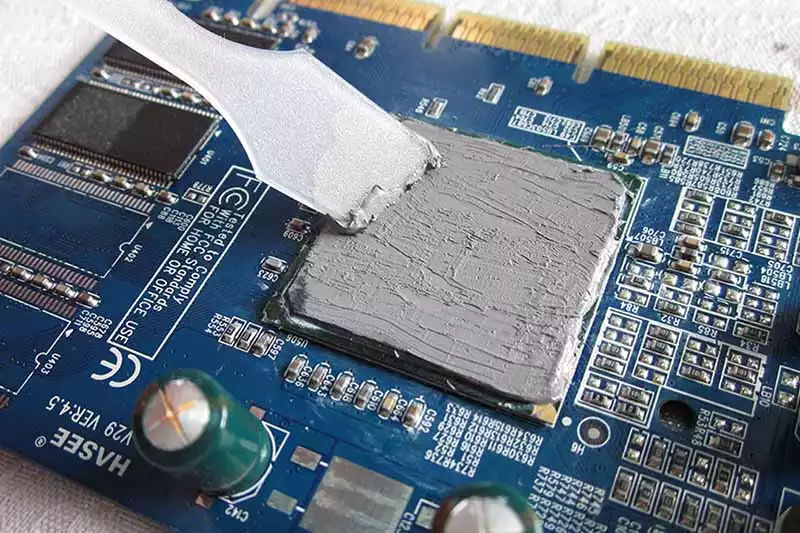
Application behavior
- Liquid-based workflow
- Uses a viscous compound with liquid application, which sounds flexible but often leads to uneven spread
- Traps air easily, causing air bubble formation and weak spots in heat transfer
Surface interaction
- Relies on pressure to fill gaps, acting as interface void filling, yet thickness varies unpredictably
Lifecycle performance
- Thermal stress — Repeated heating drives the pump-out phenomenon, slowly pushing material away
- Maintenance loop — Requires reapplication necessity, adding downtime and cost
- Material fatigue — Over time, thermal degradation reduces conductivity
Handling reality
- Messy, inconsistent, and tied to a tricky curing process
- In high-volume environments, that variability becomes a real headache
Sheen Technology has seen many setups struggle here, especially where precision matters.
Pre-formed Phase Change Pad
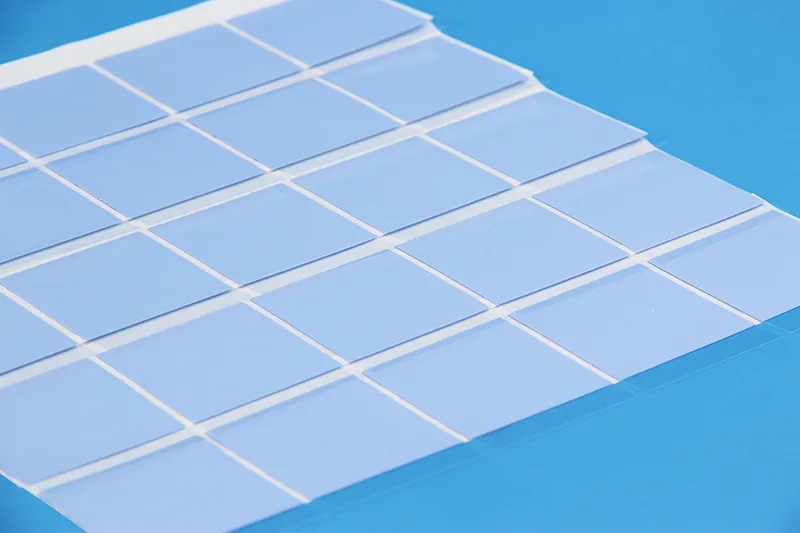
Material design
- Engineered as a solid form phase transition material
- Activates at a defined melting point, softening just enough to conform
- Maintains consistent thickness, avoiding guesswork
Installation and fit
- Setup flow — Clean placement enables easy installation with no spill or waste
- Interface quality — Forms a conformable interface, adapting without excess pressure
Reliability edge
- Eliminates no pump-out concerns entirely
- Supports long-term reliability across thermal cycles
Keyword integration in real use
- A Pre-formed phase change thermal pad simplifies assembly lines
- Many engineers switch from paste to pre-formed phase change pad options for repeatability
- The pre-formed phase change thermal pad category keeps growing in EV and data center cooling
- Choosing a Pre-formed phase change thermal pad from Sheen Technology often cuts rework
In fast-moving hardware environments, that stability isn't just nice — it's essential.
Sheen Technology provides detailed technical datasheets for pre-formed phase change thermal pads. Download the PCM Pad Engineering Datasheet for complete specifications.
Data Proves: Pads Cut Assembly Time 30%
Pre-cut solutions are changing how builds move on real factory floors. With Pre-formed phase change thermal pad options, teams skip messy paste, cut delays, and keep installs consistent. It's a small shift that quietly boosts speed, accuracy, and overall thermal stability across demanding hardware lines.
Data Center Server Build Time Reduction
Servers in data centers gain faster installs with Pre-formed phase change thermal pad formats replacing paste.
Installation flow:
Prep stage
- Align thermal interface pads with CPU/GPU lids
- No syringe prep, no spread variance
Placement stage
- Drop-in phase change material pad
- Consistent thickness ensures even pressure
Final assembly
- Heatsink mount completes in one pass
- Improved cooling performance
Output impact:
- Shorter assembly time reduction
- Higher build efficiency
- Fewer thermal errors
Sheen Technology supports this shift with pre-cut phase thermal pad formats tuned for hyperscale builds.
High-Power Electronics Module Throughput Gains
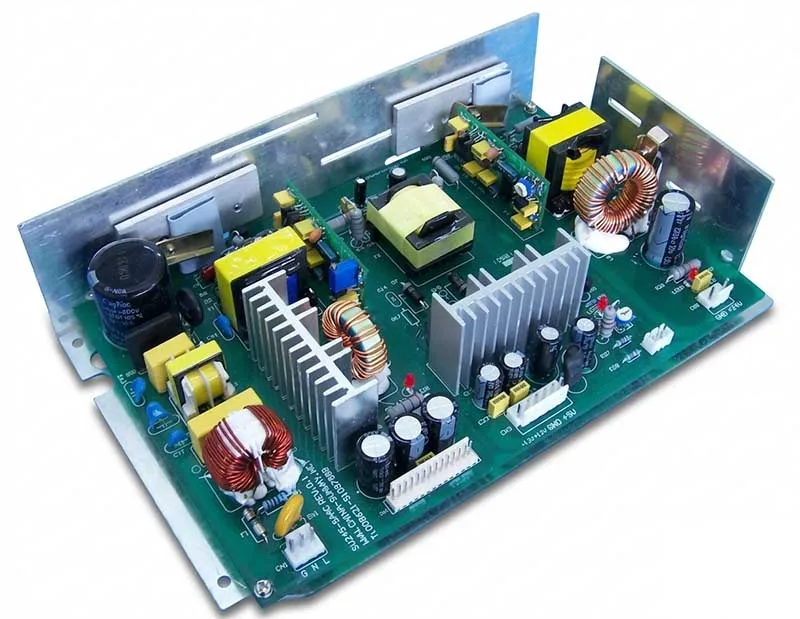
1) In high-power modules, switching to a pre-formed phase change pad removes dispensing inconsistency.
2) Electronics manufacturing lines stabilize, boosting production throughput.
3) Heat paths improve through uniform thermal management solutions.
Small wins stack up:
- Cleaner assembly process
- Better heat transfer
- Faster module fabrication
A quick data snapshot:
| Metric | Paste TIM | Phase change pad | Gain % |
|---|---|---|---|
| Cycle time (sec) | 42 | 30 | 28% |
| Defect rate | 3.8% | 1.9% | 50% |
| Rework time (min) | 12 | 6 | 50% |
| Output/hour | 85 | 110 | 29% |
| Yield | 94% | 97% | 3% |
"Pre-formed interface materials are accelerating line efficiency while reducing variability," notes a 2025 IPC manufacturing outlook.
Telecommunications Equipment Line Speed Improvements
Step 1: Prep telecommunications devices with a pre-cut phase change thermal pad aligned to hotspots.
Step 2: Apply during equipment build — no spread, no guesswork.
Step 3: Secure and validate under load; thermal interface application stays stable.
Result? Faster assembly line optimization, smoother production speed, and reliable uptime across network infrastructure.
Sheen Technology pre-formed phase change thermal pads are deployed across automotive ECUs, data center server builds, telecom base station power amplifiers, and high-volume LED lighting assemblies. Visit the applications pages for application notes, die-cut template libraries, and case studies showing integration across different power levels and form factors.
Top 4 Pad Performance Metrics
Getting thermal control right isn't just lab talk — it's what keeps devices alive and stable. A Pre-formed phase change thermal pad (split into pre-formed / phase change / thermal pad) brings cleaner installs and consistent results. Brands like Sheen Technology keep pushing smarter materials so cooling stays reliable without overcomplicating assembly.
Thermal Resistance and Heat Dissipation Efficiency
Core performance flows from:
Thermal resistance
- Lower values → faster heat transfer
- Stable interface reduces hotspots
Thermal conductivity
- Enhances cooling performance
- Supports dense chip layouts
With a pre-formed thermal pad:
- Surface contact improves
- Air gaps shrink
- Heat dissipation efficiency rises
A Pre-formed phase change thermal pad adapts under heat, softening just enough to improve interface material contact without mess.
Pump-Out Resistance over Extended Lifecycle
Real-world stress matters. A phase change pad handles expansion and contraction better than grease.
Key traits:
- Pump-out control
- Resistance to thermal cycling
- Reduced material degradation
1) Stable bonding
2) Consistent thickness
3) Long-term reliability
Sheen Technology SP205A-60 Reliability Test Report:
- Test Conditions
| Test Item | Test Conditions | Test Equipment |
| High-Temperature Aging | 100℃,1000H | Precision Oven |
| Constant Temperature & Humidity | 85℃,85%RH,1000H | Constant Temperature & Humidity Chamber |
| Thermal Shock | -20℃~80℃,1000H | Thermal Shock Chamber |
- Acceptance Criteria
| Property | Initial Value | Acceptance Criteria |
| Thermal Conductivity | 6.07 | ±30% |
| Thermal Resistance | 0.082 | ±40% |
| Appearance | Flat surface, uniform color | Flat surface, uniform color |
High-Temperature Aging Test Results:
| Aging Time | H | 0 | 200 | 400 | 600 | 800 | 1000 | Variation | Judgment |
| Thermal Conductivity | W/(m·K) | 6.07 | 5.74 | 5.45 | 5.25 | 5.08 | 5.00 | -17.6% | OK |
| Thermal Resistance @10psi | ℃·in²/W | 0.082 | 0.084 | 0.089 | 0.095 | 0.102 | 0.107 | +30.5% | OK |
| Appearance | Change Status | None | None | None | None | Slight overall yellow discoloration | Slight overall yellow discoloration | Slight overall yellow discoloration | OK |
Constant Temperature and Humidity Test Results:
| Aging Time | H | 0 | 200 | 400 | 600 | 800 | 1000 | Variation | Judgment |
| Thermal Conductivity | W/(m·K) | 6.07 | 5.81 | 5.50 | 5.31 | 5.22 | 5.09 | -16.1% | OK |
| Thermal Resistance @10psi | ℃·in²/W | 0.082 | 0.090 | 0.094 | 0.098 | 0.101 | 0.105 | +28.0% | OK |
| Appearance | Change Status | None | None | None | None | Slight overall yellow discoloration | Slight overall yellow discoloration | Slight overall yellow discoloration | OK |
Thermal Shock Test Results:
| Aging Time | Unit | 0 | 200 | 400 | 600 | 800 | 1000 | Variation | Judgment |
| Thermal Conductivity | W/(m·K) | 6.07 | 5.72 | 5.50 | 5.33 | 5.18 | 5.07 | -16.5% | OK |
| Thermal Resistance @10psi | ℃·in²/W | 0.082 | 0.086 | 0.092 | 0.099 | 0.105 | 0.110 | +34.1% | OK |
| Appearance | Change Status | None | None | None | None | Slight overall yellow discoloration | Slight overall yellow discoloration | Slight overall yellow discoloration | OK |
The SP205A-60 has successfully passed all the aforementioned reliability tests, demonstrating satisfactory performance. Sheen Technology materials keep structure tight, even after repeated heating cycles.
Shelf Life and Reworkability Benefits
Using a Pre-formed phase change thermal pad makes handling way easier:
Step 1: Store with strong storage stability
Step 2: Apply quickly, no spread tools
Step 3: Remove and reapply thanks to reworkability
Short notes:
- Solid shelf life
- Simple installation
- Cleaner maintenance
It's a solid pick for modular builds and repair-friendly systems.
Compliance with RoHS, REACH, UL Standards
Compliance layers:
- RoHS compliance — Limits hazardous substances
- REACH compliance — Tracks chemical safety
- UL standards — Confirms safety certifications
"Thermal interface materials with certified environmental compliance are seeing accelerated adoption in consumer and industrial electronics." — IDC, 2025
A Pre-formed phase change thermal pad from Sheen Technology often meets these marks, keeping products aligned with global environmental regulations while staying safe and efficient.
Pre-formed Pad Application in High-Volume Manufacturing
Fast lines hate friction, and thermal mistakes cost real money. That's why the pre-formed phase change thermal pad shows up everywhere — clean placement, stable contact, fewer reworks. From cars to racks to lighting, phase change pads, pre-formed thermal pads, and phase-change TIM pads keep heat under control without slowing things down.
Automotive Electronics OEM Assembly Integration
In automotive components lines, the manufacturing process favors repeatability over heroics.
1) Material prep
- Thermal interface material arrives as a pre-formed phase change thermal pad, die-cut to ECU footprints
- Liners peel cleanly for the assembly line
2) Placement
- Operators seat pads onto electronic control units and power modules
- Phase change thermal pad softens at target temp, filling gaps for tight heat dissipation
3) Validation
- Thermal cycling checks reliability across wide ranges
- AOI confirms alignment; scrap drops
Short note: Sheen Technology supplies pre-formed phase change thermal pad options tuned for vibration-heavy zones.
Data Center Rack Fabrication with Pre-cut Shapes
Racks scale fast, so pre-cut shapes matter. A pre-formed phase change thermal pad lands square on CPUs, GPUs, and heat sinks, boosting thermal conductivity inside dense server racks and cooling systems.
Quick wins: less trimming, cleaner installs, stable data processing
| Component | Interface type | ΔTemp (°C) |
|---|---|---|
| CPU | phase change pad | –6 |
| GPU | phase change TIM pad | –5 |
| Heatsink | pre-formed thermal pad | –4 |
Sheen Technology keeps tolerances tight so every rack behaves the same.
LED Lighting Module High-Speed Mounting
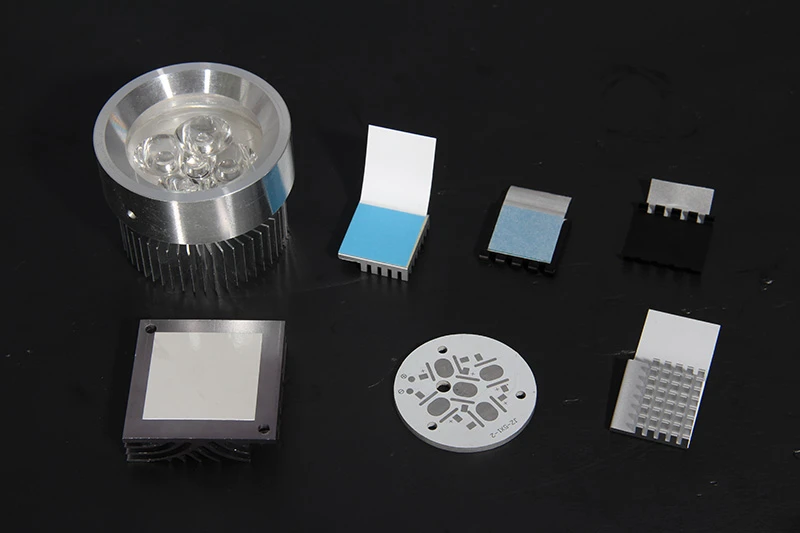
Step flow for LED chips on circuit boards:
- Feed pre-formed phase change thermal pad rolls into automated assembly
- Pick-and-place onto heat spreaders
- Reflow-like warm-up triggers phase change, cutting thermal resistance
- Inline test secures manufacturing efficiency and brightness life
Multiple short notes: fast, clean, repeatable. A phase change pad here extends lighting modules lifespan. Sheen Technology variants fit high-throughput lines without fuss.
Standard thermal paste remains a viable option for low-volume, high-mix, or prototype applications where form-factor flexibility outweighs process consistency. For high-volume manufacturing — automotive, data center, telecom, and LED lighting — pre-formed phase change thermal pads deliver superior yield, lower cycle time, and predictable field reliability by eliminating the three fundamental variables of paste assembly: dispense volume, spread geometry, and long-term pump-out.
Sheen Technology provides pre-formed phase change thermal pads in thicknesses from 0.2 mm to 0.50 mm, with custom die-cutting and adhesive backing options for high-volume production. Contact our thermal engineering team for a technical datasheet, free sample kit, or application-specific thermal simulation support.
Sheen Thermal
Dongguan Sheen Electronic Technology Co., Ltd · Founded in 2008
Manufacturer of thermal interface materials and silicone foam for automotive electronics, energy storage, power electronics, communications and consumer electronics.
Certified
- ISO 9001:2015
- ISO 14001:2015
- IATF 16949:2016
What we supply
- Thermal conductivity Up to 90 W/m·K
- Thickness 0.3–10.0 mm
- Custom & samples Die-cut to drawing, 3–7 days