
 English
 usheenthermal

Partner With a Leading Silicone Foam Manufacturer for Custom Solutions
Date:2026-09-14
When production scales, a silicone foam manufacturer must do more than make foam; tiny swings in density, thickness, curing, or rebound can turn neat drawings into leaky seals and costly line headaches.
Grand View Research’s 2025 silicone market report identifies electronics as a major end-use segment, underscoring sustained commercial demand.
Buyers, then, need repeatable specs, testing, capacity, and dependable delivery.
Reading Notes: Silicone Foam Manufacturer Essentials
- ISO 9001 & UL 94 V-0 Certification ensures traceable quality, flame retardancy, and batch consistency.
- Tailored PDMS formulations with silica filler deliver stable compression set, thermal conductivity, and precise hardness.
- In-house testing—dielectric strength, density, accelerated aging—validates performance for electronics, batteries, and avionics.
- Robust capacity, streamlined molding/extrusion, and optimized logistics cut lead times and secure repeatable delivery.
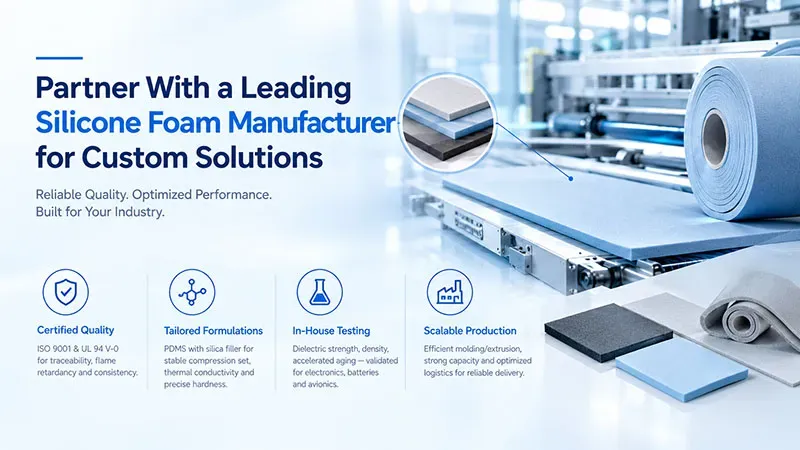
Note: This image was generated with the assistance of artificial intelligence; it is not a real photograph and is for reference only.
Why Choose a Leading Silicone Foam Manufacturer?
Choosing a silicone foam manufacturer involves more than checking dimensions and price. A capable silicone foam supplier must control raw materials, curing, testing, and delivery from batch to batch. That practical discipline supports safer parts, predictable performance, and fewer production headaches when custom silicone products move into regular use.
ISO 9001 & UL 94 V-0 Certification for Reliable Quality
A qualified silicone foam manufacturer builds consistency into routine production rather than relying on final inspection alone.
Quality controls
- ISO 9001 provides a framework for quality management, documented processes, corrective actions, and traceability.
- Routine material testing supports repeatable density, thickness, hardness, and other agreed specifications.
Safety controls
- UL 94 V-0 testing addresses flame retardancy under defined laboratory conditions.
- Supporting records strengthen regulatory compliance with relevant industrial standards.
- Together, safety certification and quality assurance make supplier reviews a lot less messy.
For buyers, certification still needs verification against the exact foam grade ordered.
Enhanced Compression Set Control and Thermal Conductivity
Good foam needs to spring back after prolonged pressure. A silicone foam manufacturer can tune polydimethylsiloxane chemistry, silica filler levels, cell structure, and curing conditions to improve elastomeric recovery and deformation resistance.
For sealing and cushioning, controlled compression set supports long-term material resilience. Stable properties also help parts retain function across repeated heating and cooling.
For electronics or industrial equipment, formulation affects thermal management as well. Depending on the grade, controlled thermal conductivity can support heat dissipation or thermal insulation, while silicone's temperature resistance helps maintain performance in demanding service.
Robust Production Capacity with Reduced Lead Times
A silicone foam manufacturer also needs enough capacity to turn approved designs into repeat orders without creating bottlenecks.
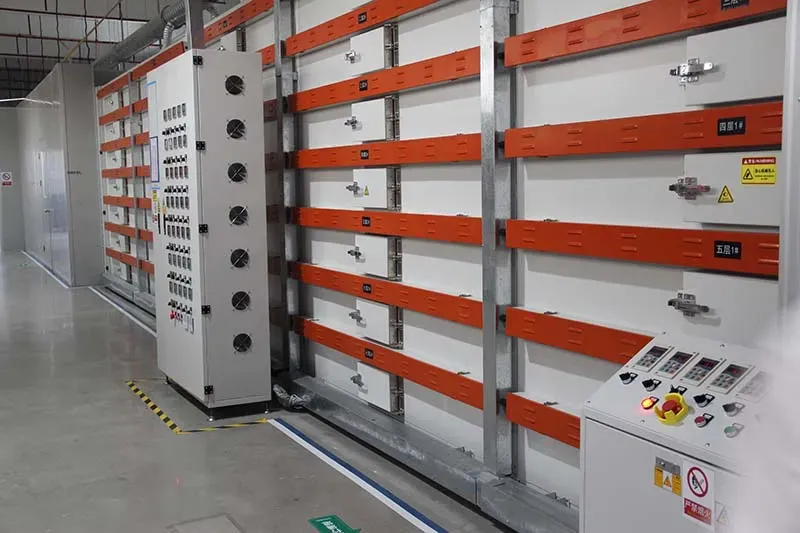
Production readiness
- Extrusion and compression molding support different shapes, densities, and high-volume production needs.
- Die cutting converts foam into finished gaskets, pads, and seals.
Factory coordination
- Factory automation can raise production output while improving dimensional repeatability.
- A well-planned operational workflow supports practical manufacturing scalability as order volumes change.
Order fulfillment
- Material forecasting and inventory planning improve supply chain efficiency.
- Better scheduling increases delivery speed and cuts avoidable waiting time.
For a custom silicone foam manufacturer, that mix helps keep lead times predictable when demand suddenly picks up.
4 Steps to Define Foam Specifications
A clear specification gives a silicone foam manufacturer the practical details needed to turn an idea into a dependable part. Sheen Technology works with customers to connect temperature demands, material chemistry, mechanical targets, and compliance needs. Getting these points nailed down early also makes custom silicone and foam selection easier, reducing avoidable sampling changes and production headaches.
Step 1: Evaluate Application Fields and Operating Temperature Range
Start with the application field and actual environmental conditions, not just a generic material grade.
- Record normal and peak operating temperature.
- Consider heat from nearby electronics.
- Check cold-start conditions and repeated thermal cycling.
- Match thermal stability and thermal resistance to the expected service life.
For battery packs, LEDs, avionics, and telecom equipment, a silicone foam manufacturer can use these details to recommend a suitable foam grade without unnecessary over-specification.
Step 2—Select Polydimethylsiloxane with Silica Filler
Material chemistry sets the foundation for performance.
- Polydimethylsiloxane forms the flexible polymer matrix.
- Silica filler acts as a reinforcing agent.
- Its level can influence strength, density, and resilience.
- Catalyst, blowing agent, and crosslinker affect foam formation.
The final silicone elastomer should have a chemical composition suited to the intended thermal and mechanical load.
Sheen Technology can tune this formulation for custom silicone foam requirements.
Step 3—Set Hardness Shore OO and Elongation at Break Targets
Define the desired hardness using Shore OO for soft foam.
- Set tensile strength for handling and durability.
- Specify elongation at break where stretching is expected.
- Higher flexibility may improve conformity.
- Suitable elasticity helps the foam recover after compression.
Add thickness tolerances and sealing-pressure needs so the mechanical properties reflect the real assembly, not just a lab sample.
Step 4—Ensure ROHS Compliance and ASTM Standard Alignment
Documentation matters just as much as fit and feel. Confirm ROHS compliance and relevant REACH regulatory requirements, then identify the ASTM standard methods required for testing.
- Request suitable material certification.
- Check environmental safety restrictions.
- Align testing and records with customer quality standards.
A qualified silicone foam manufacturer such as Sheen Technology can coordinate these records alongside material development, making approval and purchasing much less of a hassle.
Silicone Foam Manufacturer’s In-House Testing Lab
An in-house lab gives a silicone foam manufacturer fast feedback on electrical, physical, and mechanical performance. Instead of waiting on outside test cycles, a silicone maker can check custom formulas, catch process drift, and fine-tune foam production before repeat batches move ahead.
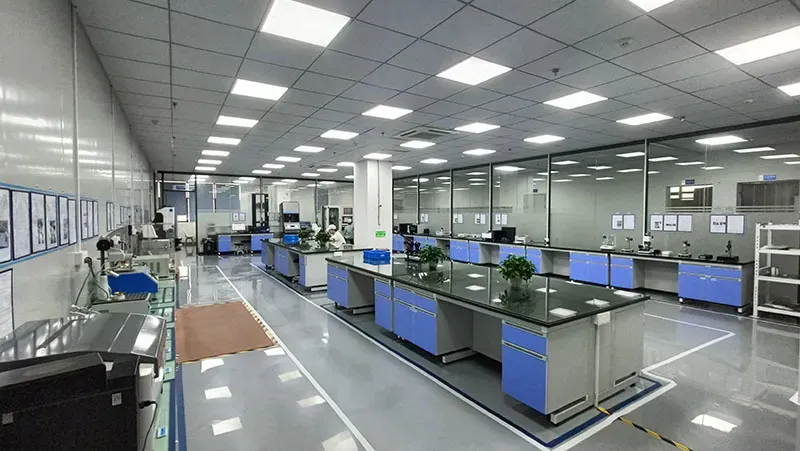
Precise Dielectric Strength and Density Measurements
For a silicone foam manufacturer, electrical and weight checks show how closely a foam matches its intended job.
Electrical performance
- Dielectric strength testing raises voltage until voltage breakdown occurs.
- Results help judge suitability for electrical insulation in electronics and battery gasketing.
Physical checks
- Material density is compared across samples.
- Density shifts can flag changes in cell structure or other physical properties, giving lab staff a heads-up before production grows.
Calibrated testing equipment makes these comparisons repeatable rather than a bit of a guessing game.
Accelerated Foam Curing and Compression Set Analysis
A silicone foam manufacturer can shorten development cycles by controlling foam curing and then exposing specimens to heat and compression. Polymer crosslinking, the chemical network formed during cure, strongly affects how the foam behaves.
- Samples receive controlled cure conditions and measured compression.
- Thermal aging speeds up the effects associated with long-term heat exposure.
- After release, technicians measure compression set and elastic recovery.
- Results reveal stress relaxation and support durability testing for seals expected to stay compressed for long periods.
That makes it easier to spot a formulation that looks fine today but may lose sealing force later.
Batch Consistency via Degassing and Tensile Strength Testing
Repeat orders need repeatable behavior, so a silicone foam manufacturer can link processing controls directly with mechanical test results.
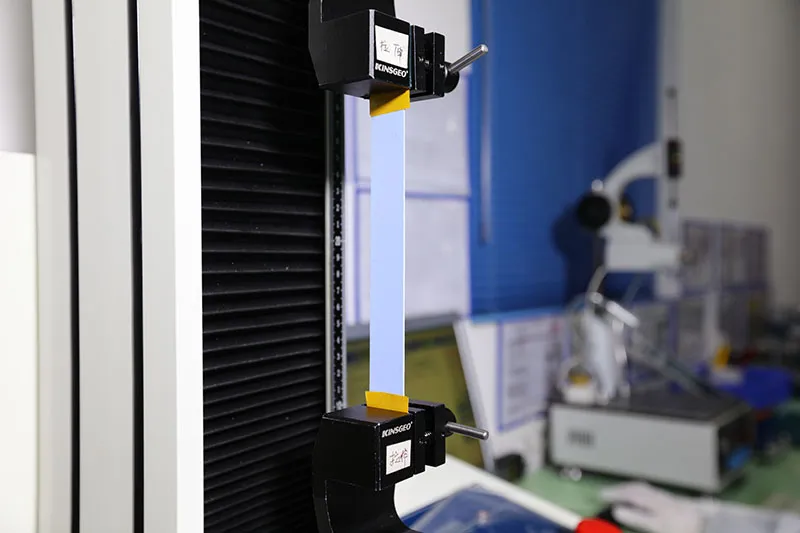
Process control
- The degassing process removes trapped gas before cure.
- Fewer unintended voids promote material uniformity.
Mechanical verification
- Tensile strength records the force a cured sample withstands before breaking.
- Elongation at break shows how far it stretches.
Release comparison
- Tracking these mechanical properties from batch to batch provides practical quality control.
- Stable trends support dependable batch consistency for recurring custom foam orders.
Custom Foam vs. Off-the-Shelf: What Wins?
Choosing foam comes down to fit, performance, cost, and timing. A capable silicone foam manufacturer can help buyers compare custom engineering with stock products without making the process a headache. The right call often becomes clear once operating conditions, tolerances, and order volume are pinned down.
| Decision factor | Custom foam | Off-the-shelf foam |
| Fit to the application | Formulation, density, and geometry built around the real job | Closest stock grade; accepts compromise |
| Tolerances | Thickness and dimensional control specified to the assembly | Standard tolerance band; may not hold a sealing-critical dimension |
| Development time | Sampling and qualification loops required | Ready-made inventory; shortest procurement cycle |
| Unit economics | Higher at low volume, improving with tooling amortization | Lowest at low volume |
| Volume behavior | Stable pricing and specs at production volume | Availability and grade drift risk across lots |
| Right choice when… | A tolerance, certification, or property misses on every stock grade | The application sits inside a standard grade's window |
Table 1 · Custom vs. off-the-shelf silicone foam. The decision is volume- and tolerance-driven, not preference-driven.
Custom Foam
Custom silicone foam earns its keep when ordinary material cannot meet tight mechanical, thermal, or sealing targets. A silicone foam manufacturer can tune material and shape around the real job rather than forcing a stock product into a tricky space.
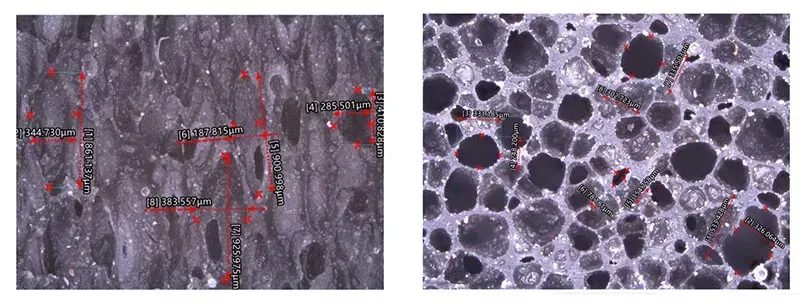
Performance can be built around the application:
- specialized formulation adjusts density, Shore OO hardness, flame resistance, or thermal behavior.
- tailored dimensions control thickness and tolerances where sealing pressure matters.
- engineered geometry supports detailed die-cut features, holes, channels, and tight mounting areas.
Development can also follow production needs:
- prototype development lets engineers test fit and compression before committing to volume.
- A custom mold can make sense for complex profiles or repeating three-dimensional shapes.
- application-specific design targets unique specifications instead of accepting a close-enough grade.
Sheen Technology supports this custom route with silicone material selection and conversion options, giving buyers one silicone foam manufacturer for development through production.
Off-the-Shelf Foam
Stock foam keeps purchasing simple. For common seals, pads, insulation, and cushioning, a silicone foam supplier may already carry material that does the job without extra development time.
Availability is the big draw.
- ready-made inventory can shorten procurement cycles.
- stock rolls suit ongoing cutting and fabrication.
- pre-cut sheets can go straight to straightforward workshop jobs.
Standardization keeps choices manageable.
- standard dimensions simplify drawings and replacement orders.
- standard density works well when compression requirements are not highly specific.
- universal application grades can cover plenty of everyday uses.
The trade-off is flexibility. When stock foam misses a critical tolerance or property, working with a silicone foam manufacturer such as Sheen Technology can provide a better technical fit.
Which Foam Density Fits Your Application?
Foam density changes cushioning, sealing force, and long-term performance, so matching the grade to the job matters. A capable silicone foam manufacturer such as Sheen Technology can tune silicone materials around weight, compression, protection, and operating conditions.

Low-Density Pads for Battery Pack Padding
Low-density silicone foam is a practical pick where soft contact and low mass matter. It gives battery cells some breathing room without piling on unnecessary weight.
Sheen Technology Low-density silicone foam performance properties:
| Properties | SA700-200 | SA700-260 | Test Method |
| Color | White, Black | Grey, Black | Visual |
| Density (kg/m3) | 200±20 | 260±26 | ASTM D3574-95 |
| Thickness (mm) | 1.0~10.0 | 1.0~10.0 | - |
| Compression Set (%) | <5 | <5 | ASTM D3574-95 Test D @ 158°F |
| Compression Force Deflection (kPa) | 1-17 | 7-48 | ASTM D3574 |
| Tensile Strength (kPa) | 126 | 180 | ASTM D3574-95 Test E |
| Tear Strength(N/mm) | 2.5 | 2.8 | ASTM D3574-95 Test E |
| Thermal Conductivity (W/m·K) | ≤0.2 | ≤0.2 | ASTM D5470 |
| Breakdown Voltage( Kv) | ≥8 | ≥8 | ASTM D149 |
| Flame Rating | V-0 | V-0 | UL 94 |
| Electrical Insulation | >1 × 10¹⁷Ω·cm | >1 × 10¹⁶Ω·cm | ASTM D412 |
For mechanical protection:
- shock absorption softens impacts during transport and operation.
- vibration damping reduces repeated movement around sensitive assemblies.
For pack design:
- lightweighting helps control overall battery mass.
- battery insulation separates components while supporting thermal management designs.
- Low compression set helps padding recover after prolonged squeezing.
A silicone foam manufacturer can adjust thickness and firmness for cell spacing, enclosure tolerances, and expected compression. Sheen Technology supplies die-cut silicone pads built around application-specific dimensions.
Medium-Density Gaskets in Consumer Electronics
A medium-density silicone gasket hits a useful middle ground: enough flexibility to follow enclosure variations, but enough firmness to maintain contact.
During closing, good resilience helps the gasket conform around uneven mating surfaces.
Sheen Technology medium-density silicone foam performance properties:
| Properties | SA700-300 | SA700-350 | SA700-400 | Test Method |
| Color | Grey, Black | Black | Grey, Black | Visual |
| Density (kg/m3) | 300±30 | 350±35 | 350±35 | ASTM D3574-95 |
| Thickness (mm) | 1.0~10.0 | 1.0~10.0 | 1.0~10.0 | - |
| Compression Set (%) | <5 | <5 | <5 | ASTM D3574-95 Test D @ 158°F |
| Compression Force Deflection (kPa) | 40-97 | 110-140 | 110-140 | ASTM D3574 |
| Tensile Strength (kPa) | 168 | 300 | 260 | ASTM D3574-95 Test E |
| Tear Strength(N/mm) | 3 | 3.9 | 3.3 | ASTM D3574-95 Test E |
| Thermal Conductivity (W/m·K) | ≤0.2 | ≤0.2 | ≤0.2 | ASTM D5470 |
| Breakdown Voltage( Kv) | ≥8 | ≥8 | ≥8 | ASTM D149 |
| Flame Rating | V-0 | V-0 | V-0 | UL 94 |
| Electrical Insulation | >1 × 10¹⁶Ω·cm | >1 × 10¹⁵Ω·cm | >1 × 10¹⁵Ω·cm | ASTM D412 |
Once compressed:
- dust sealing limits particle entry;
- a moisture barrier supports everyday device protection.
For production, custom die-cut parts can follow ports, screens, housings, and other tight shapes.
This balance makes medium-density silicone a handy choice for electronics where fit, recovery, and repeatable assembly all count.
High-Density Seals in Avionic Insulation
For aircraft applications, higher density raises sealing force and helps an aerospace seal stay stable under demanding service conditions.
Sheen Technology medium-density silicone foam performance properties:
| Properties | SA700-450 | SA700-500 | SA700-900 | Test Method |
| Color | Grey, Black | Grey | Grey | Visual |
| Density (kg/m3) | 450±45 | 500±50 | 950±95 | ASTM D3574-95 |
| Thickness (mm) | 1.0~10.0 | 1.0~10.0 | 1.0~10.0 | - |
| Compression Set (%) | <5 | - | ASTM D3574-95 Test D @ 158°F | |
| Compression Force Deflection (kPa) | 140-180 | 148-180 | >900 | ASTM D3574 |
| Tensile Strength (kPa) | 350 | - | 1.8 MPa | ASTM D3574-95 Test E |
| Tear Strength(N/mm) | 5.5 | - | 0.5 MPa | ASTM D3574-95 Test E |
| Thermal Conductivity (W/m·K) | ≤0.2 | - | ≤0.3 | ASTM D5470 |
| Breakdown Voltage( Kv) | ≥9 | ≥4 | - | ASTM D149 |
| Flame Rating | V-0 | V-0 | V-0 | UL 94 |
| Electrical Insulation | >1 × 10¹⁵Ω·cm | >1 × 10¹⁴Ω·cm | >1 × 10¹⁵Ω·cm | ASTM D412 |
Performance needs
- extreme temperature exposure calls for material that remains functional across wide temperature swings.
- Greater pressure resistance supports firm interfaces during vibration and repeated compression.
Safety and service needs
- Specified flame retardancy and regulatory compliance must match the actual aviation requirement.
- A thermal barrier can support insulation design, while strong durability suits long service cycles.
Selecting a qualified silicone foam manufacturer also means checking test data rather than density alone. Sheen Technology can match high-density silicone foam grades to drawing, compression, environmental, and certification needs.
Costly Foam Failures? Custom Solutions Fix That
Small foam defects can turn into leaks, safety concerns, or missed production dates. Sheen Technology, a silicone foam manufacturer, focuses on controlled material properties and custom processing so buyers can keep quality steady without extra headaches.
Leakage Risks: Addressing Thickness Tolerance Variations
For a silicone foam manufacturer, sealing starts with controlling thickness variation across every sheet. Even a small change can alter gasket pressure.
Better fit and compression
- Tight thickness tolerances support dimensional stability and more uniform contact around an enclosure.
- Controlled compression set helps seals recover after long periods under pressure, keeping sealing performance steady.
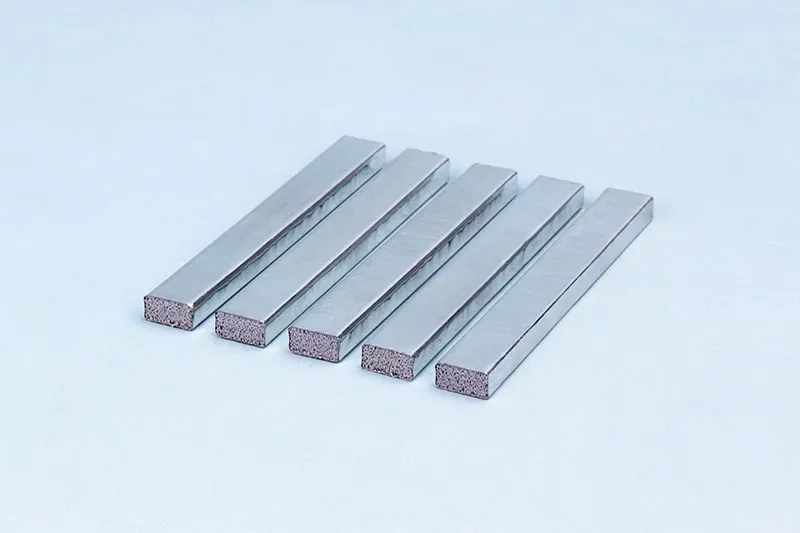
Cleaner finished parts
- Precision cutting creates repeatable edges for LED housings and electronics seals.
- Custom molding handles unusual shapes where standard foam simply won’t cut it.
Checks before shipment
- Consistent quality control helps catch dimensional problems before parts reach an assembly line.
Sheen Technology combines silicone processing with application-specific converting for a more dependable fit.
Burn Hazards from Insufficient Flame Retardancy
Fire-sensitive assemblies need more than ordinary silicone foam. A qualified silicone foam manufacturer can tailor material toward UL 94 V-0 requirements while balancing flame retardancy, thermal stability, and practical combustion resistance.
- Material selection targets the required fire safety standards.
- Formulation work considers heat exposure and smoke emission alongside mechanical needs.
- Finished foam can provide protective insulation around electronics, telecommunications equipment, and battery systems.
- Verification supports documented material compliance rather than relying on a vague “flame-resistant” claim.
That makes safety requirements easier to manage from design through purchasing.
Sheen Technology manufacturer laboratory High-temperature silicone foam Flame Resistance Test:
| Silicone foam Flame Resistance test sample | silicone foam Testing Preparation | Silicone foam flame retardancy test | Silicone foam flame retardancy test results |
 |  |  | 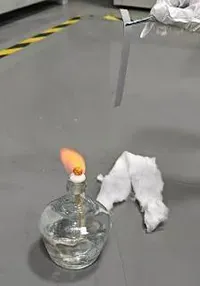 |
Test Conclusion: When the lower end of sample SA700 was exposed to the center of the burner flame for 10 seconds, no combustion occurred and no molten material dripped; therefore, the sample achieved a UL-94 V-0 flame retardancy rating.
Downtime Caused by Batch Consistency and Logistics Security Gaps
Repeat orders get messy fast when material properties or deliveries keep changing. A silicone foam supplier should control both production and movement.
Production control
- Batch consistency supports manufacturing repeatability from one order to the next.
- Material traceability connects supplied foam with production records.
Supply planning
- Inventory management helps maintain sensible stock turnover.
- Stable capacity strengthens production continuity during recurring programs.
Delivery protection
- Logistics security lowers avoidable shipping and handling risks.
- Strong supply chain reliability makes lead times easier to plan.
As a custom silicone foam manufacturer, Sheen Technology ties these controls together so purchasing teams face fewer unwelcome surprises.
Choosing a silicone foam manufacturer is a specification exercise. The manufacturers worth partnering with make that verification easy — because their records are already in order.
Sheen Technology manufactures silicone foam and thermal interface materials for automotive electronics, energy storage, power electronics, and consumer electronics — ISO 9001 / ISO 14001 / IATF 16949 certified, with in-house testing and die-cut conversion to drawing. Send your drawing or target specification; engineering will respond with grade candidates and the test data behind them.
Sheen Thermal
Dongguan Sheen Electronic Technology Co., Ltd · Founded in 2008
Manufacturer of thermal interface materials and silicone foam for automotive electronics, energy storage, power electronics, communications and consumer electronics.
Certified
- ISO 9001:2015
- ISO 14001:2015
- IATF 16949:2016
What we supply
- Thermal conductivity Up to 90 W/m·K
- Thickness 0.3–10.0 mm
- Custom & samples Die-cut to drawing, 3–7 days
LAST:Nothing