
 English
 usheenthermal

The Engineer’s Guide to Using a Thermal Pad for Optical Module
Date:2026-09-16
Heat gets trapped fast inside compact transceivers, and a tiny interface gap can quietly spoil the cooling plan. A thermal pad for optical module designs fills those stubborn gaps, helping reduce and stabilize thermal impedance—but conductivity alone doesn’t seal the deal.
For volume deployment, thickness, compression, reliability, compliance, die-cut precision, traceability, shelf life, and supply consistency matter. This guide shows what counts.
Reading Notes: Thermal Pad for Optical Module
→ Heat Management: Select high-conductivity materials (silicone, graphite, ceramic) to minimize thermal impedance and stabilize module temperatures.
→ Precision Fit: Ensure tight thickness tolerance and precise die-cut forms for consistent compression and reliable interface pressure.
→ Environmental Durability: Choose low oil-bleed, humidity-resistant pads with UL 94V-0 or halogen-free ratings to resist thermal aging and moisture.
→ Supply Reliability: Verify RoHS/REACH compliance, lot-level traceability, and proper shelf life/storage conditions for seamless volume deployment.
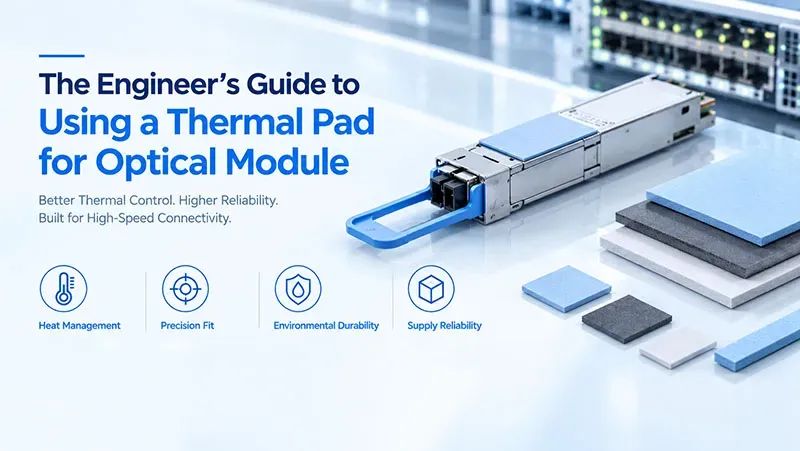
Note: This image was generated with the assistance of artificial intelligence; it is not a real photograph and is for reference only.
Why Use Thermal Pad For Optical Module?
Choosing a thermal pad for optical module designs helps control heat where space is tight. By improving contact and limiting hot spots, the right thermal interface material can support steadier performance, longer service life, and easier thermal management.
Enhancing Heat Dissipation with High Thermal Conductivity
A thermal pad for optical module hardware creates a practical path from heat-producing parts toward the enclosure or cooler. High thermal conductivity matters because faster heat transfer improves heat dissipation without adding bulky cooling parts.
Heat moves along a clearer path:
- From the optical module components into the pad.
- From the pad toward the housing or heat sink, supporting useful temperature reduction.
Material choice also counts:
- A suitable thickness keeps the thermal path short while handling normal tolerance gaps.
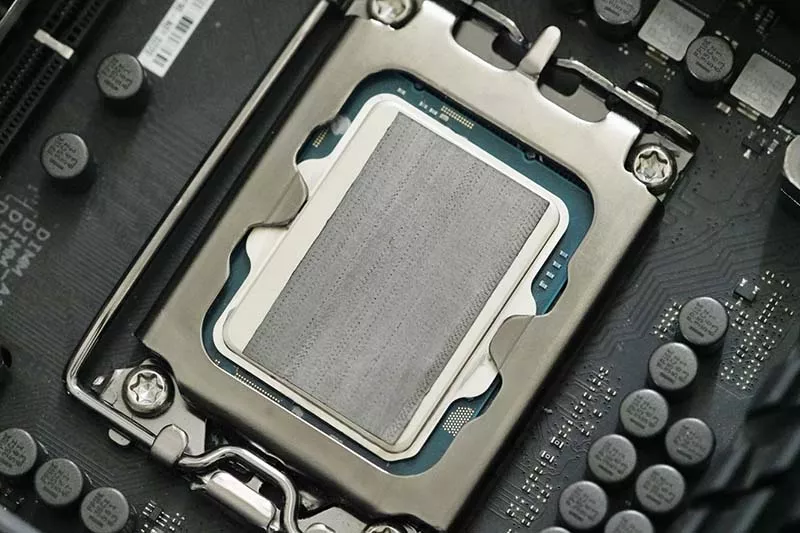
| Properties | Unit | GSF90-03 Graphene Thermal Pad | Test Method |
| Color | - | Black | Visual |
| Thermal Conductivity | W/m·K | 90 | ASTM E1461 |
| Thermal Resistance (@40psi) | ℃*cm2/W | ≤0.10 | ASTM D5470 |
| Thickness | mm | 0.3~2.0 | ASTM D374 |
| Density | g/cm³ | 0.3~0.7 | ASTM D792 |
| Rebound Rate | % | ≥90 | - |
| Tensile Strength | Mpa | ≥0.05 | ASTM D412 |
| Oil Bleeding Rate | % | ≤3 | / |
| Application Temperature | ℃ | -40~150 | / |
| Flame rating | - | V-0 | UL 94 |
Sheen Technology offers high thermal conductivity graphene thermal pad options designed for compact optical thermal applications, where every millimeter counts. In short, better contact helps keep the module cool when workloads pick up.
Reducing Thermal Impedance at the Heat Sink Interface
Flat-looking surfaces still contain tiny gaps. A thermal pad for optical module assemblies conforms to those uneven areas, replacing insulating air and reducing thermal impedance.
- The thermal pad meets both mating surfaces with controlled compression.
- Better surface contact fills small micro-voids that can otherwise trap air.
- Lower interface resistance allows heat to reach the heat sink more consistently.
Sheen Technology can support pad thickness and softness choices for different mechanical gaps. This kind of optical module thermal pad is especially handy when normal manufacturing tolerances make direct metal-to-metal contact unreliable.
Improving Operating Temperature Stability and Humidity Resistance
A thermal pad for optical module use also needs to keep doing its job as environmental conditions change. Stable material properties support temperature stability and dependable environmental reliability.
Environmental performance
- Humidity resistance helps reduce changes associated with absorbed moisture.
- A suitable moisture barrier behavior can help preserve material performance in damp conditions.
Long-term performance
- Resistance to thermal aging supports consistent contact after repeated heating and cooling.
- Stable compression can contribute to the expected operating life of an optic transceiver.
For real-world equipment, that matters. Sheen Technology thermal pads are aimed at maintaining reliable thermal contact across specified temperature and humidity conditions.
Types Of Thermal Pad Materials
Choosing a thermal pad for optical module hardware comes down to heat flow, electrical safety, fit, and assembly pressure. The right interface material keeps an optical module cool without making installation a headache. Sheen Technology offers material choices for varied optical designs, from flexible silicone to thin graphite, helping engineers match a thermal pad for optical module use to real operating needs.
| Material class | Strong axis | Electrical | Best fit | Watch-outs |
| Silicone thermal pad | Through-plane conduction with compliance | Insulating | Varying gaps, tolerance absorption, insulation duty | Thickness tolerance, oil bleed |
| Phase-change sheet | Wets the joint at transition, minimum bond line | Substrate-dependent | Pluggable hardware, repeatable insertion | Compression control, post-cycling resistance check |
| Ceramic-filled Boron Nitride thermal pad | High conductivity with isolation | Insulating | Around powered optical hardware | Verify UL 94 V-0 on the ordered grade |
| Graphene thermal pad | through-plane spreading | Conductive — always | ultra-thin duty | Never the sole gap-filling TIM |
| Graphite(-infused) pad | In-plane spreading — through-plane is the weak axis | Conductive — always | Baseplate spreading, ultra-thin duty | Never the sole gap-filling TIM |
Silicone Thermal Pads: Balancing Dielectric Strength and Flexibility
Silicone pad is a practical choice when the cooling surface and device do not line up perfectly.

Electrical protection
- Strong dielectric strength supports reliable electrical insulation around sensitive parts.
- Soft flexibility helps the pad follow uneven surfaces.
Thermal fit
- Suitable thermal conductivity carries heat from an optical module toward its heat sink.
- A thermal pad for optical module assemblies also absorbs small tolerance changes without excessive mounting force.
This balance makes silicone useful when insulation and mechanical compliance matter just as much as cooling.
Phase Change Material Sheets: Optimizing Compression Ratio for Pluggable Modules
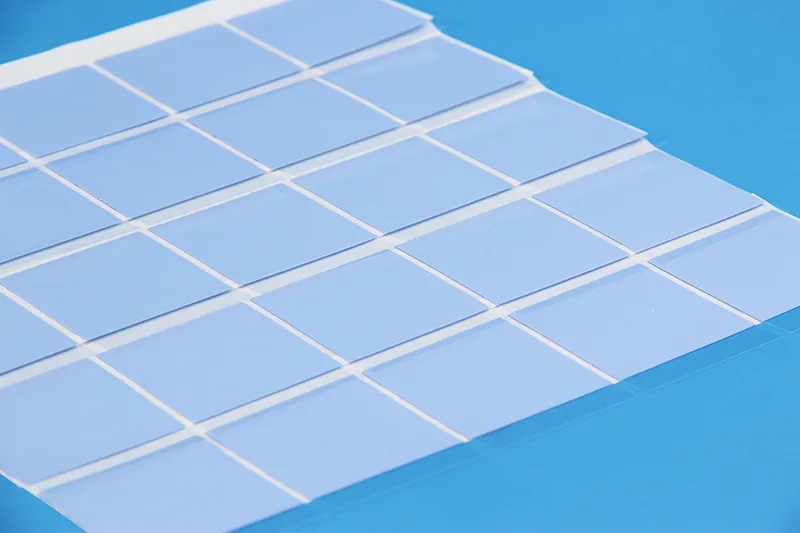
A phase change material becomes softer around its designed state change temperature, allowing more effective surface contact. Pretty handy, but assembly pressure still matters.
- Set the sheet thickness around the available gap.
- Control the compression ratio so the pluggable module maintains enough contact area.
- Check thermal resistance after repeated insertion cycles.
Good contact supports steady heat dissipation, especially in removable optical hardware where fit can vary slightly between assemblies.
Graphite-Infused Pads: Ultra-Thin Solution for Baseplate Mounting
For tight spaces, graphite-infused material can provide an ultra-thin thermal path.
For baseplate mounting
- High thermal conductivity can spread concentrated heat across a wider surface.
- Thin construction suits severe spatial constraint.
For demanding optics
- An optical transceiver producing high heat flux benefits from efficient heat spreading.
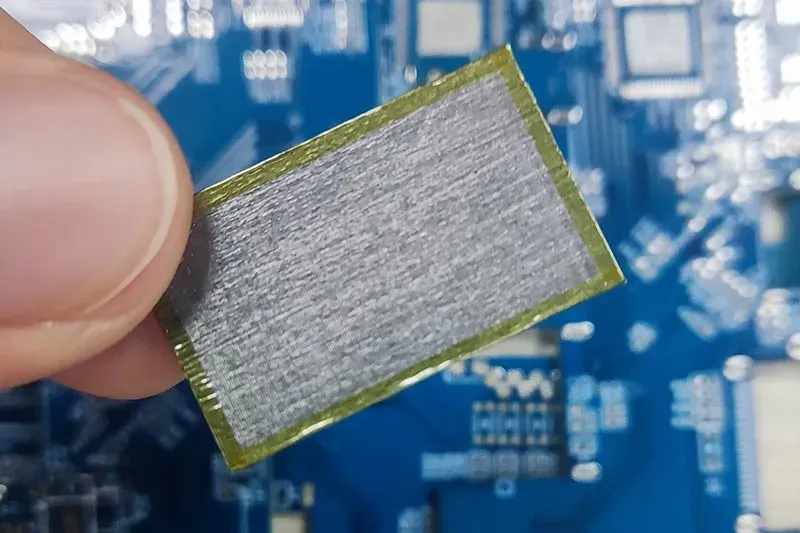
A graphite-infused layer is the in-plane spreader — its strong axis is lateral heat distribution across the baseplate, while through-plane is deliberately the weak axis. In contrast, the graphene thermal pads developed by Sheen Technology are designed for high thermal conductivity in the through-plane direction. However, neither graphite-infused layer nor graphene thermal pads are suitable for use as the sole thermal interface material (TIM) for gap filling. Since these materials are electrically conductive, designs must incorporate measures to isolate them from exposed electrical contacts or seal their edges.
Ceramic-Filled Pads: High Thermal Conductivity with UL 94V-0 Flammability Rating
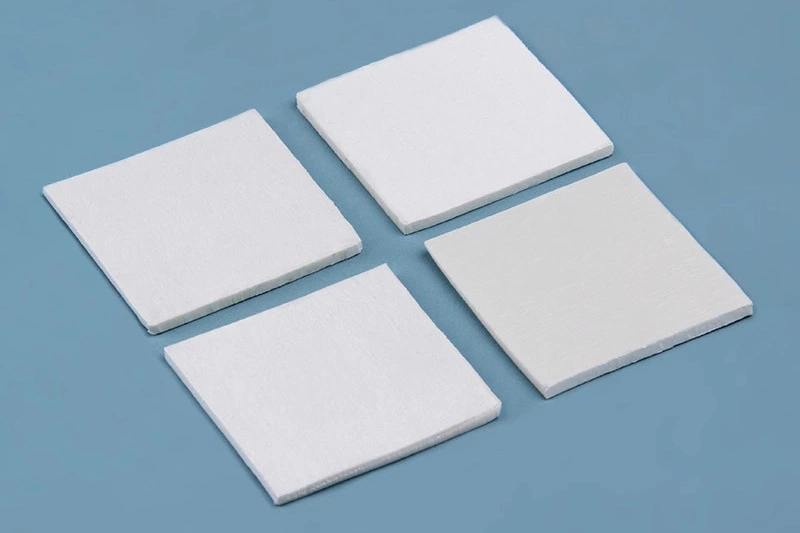
As a type of ceramic-filled polymer thermal pad, boron nitride thermal pads combine high thermal conductivity with electrical insulation, making them ideal for use as thermal interface materials around energized optical hardware.
- Specify qualified grades carrying a documented UL 94V-0 flammability rating when required.
- Confirm fire retardant and dielectric properties against actual hardware safety targets.
- Check halogen-free status from the supplier rather than assuming it from filler type.
For safety-focused designs, that combination can make material qualification much more straightforward.
4 Key Factors Selecting Thermal Pad For Optical Module
Selecting a thermal pad for optical module use comes down to more than a conductivity number on a datasheet. Optical transceivers pack heat-sensitive parts into very tight spaces, so sourcing teams need to check material history, physical fit, compression behavior, and storage quality. Get these basics right, and optical module assembly becomes much easier to control.
Material Traceability and RoHS Compliance
A thermal pad should arrive with paperwork that connects each production lot to its raw material history.
Compliance records
- Confirm RoHS compliance and limits on relevant hazardous substances.
- Check REACH and other applicable environmental regulation requirements.
Supplier controls
- Review the traceability system, supporting certifications, and supplier audit records.
- Keep lot documents tied to optical module qualification files. It saves a headache when material changes need review.
Thickness Tolerance and Die-Cut Form Accuracy
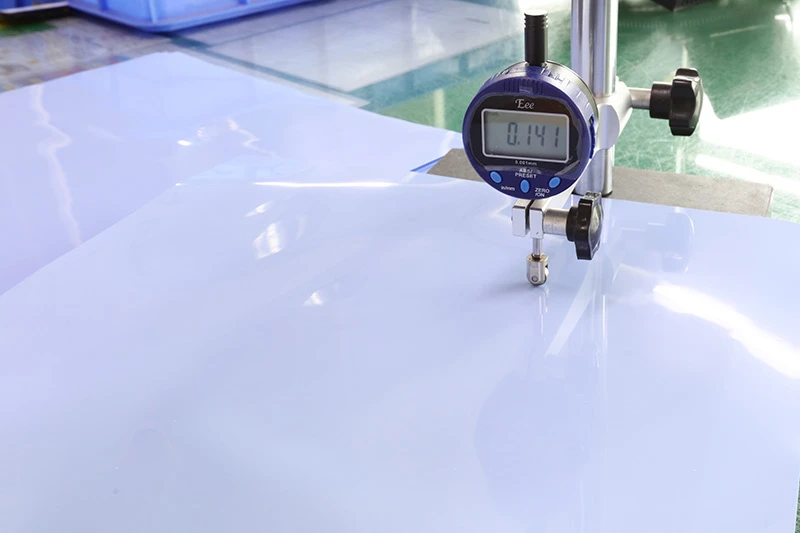
Small dimensional errors can cause surprisingly big contact problems in a compact transceiver. Start with thickness tolerance, then verify die-cut accuracy against the drawing and intended form factor.
A well-made gap pad also needs good dimensional stability. Consistent manufacturing precision helps the thermal pad for optical module designs cover the intended hot surface without shifting onto nearby components. That keeps interface pressure and heat-transfer paths more predictable.
Hardness Durometer versus Compression Ratio Trade-Offs
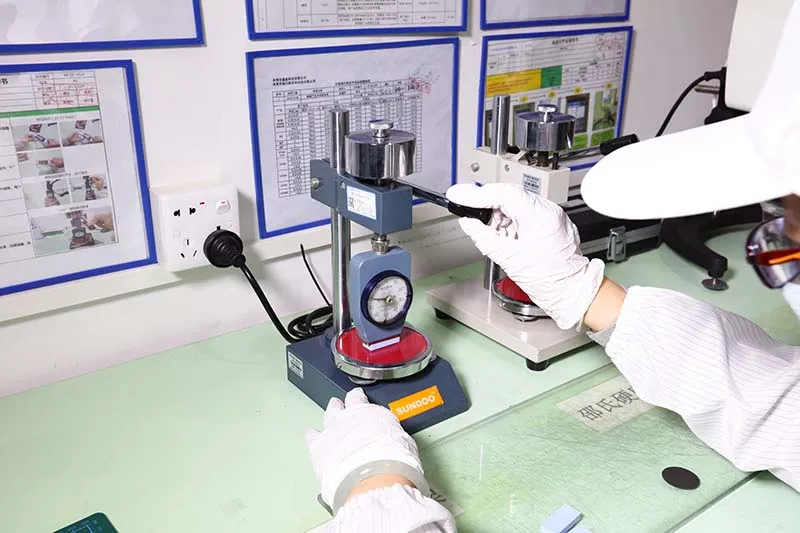
Softer is not automatically better when choosing an optical module thermal pad.
Mechanical fit
- Lower hardness durometer can improve compliance over uneven surfaces.
- Excessive deformation, however, may reduce mechanical control.
Contact behavior
- Set the compression ratio around the actual assembly gap.
- Check resulting interface pressure so fragile components are not overloaded.
Long-term performance
- Consider stress relaxation alongside thermal conductivity.
- Balance these properties rather than chasing one impressive datasheet figure.
Shelf Life, Storage Condition, and Liner Release Quality
Even a correctly specified pad can become troublesome after poor handling.
Before use
- Confirm shelf life and stated storage condition.
- Maintain supplier-defined temperature control and humidity limits.
During assembly
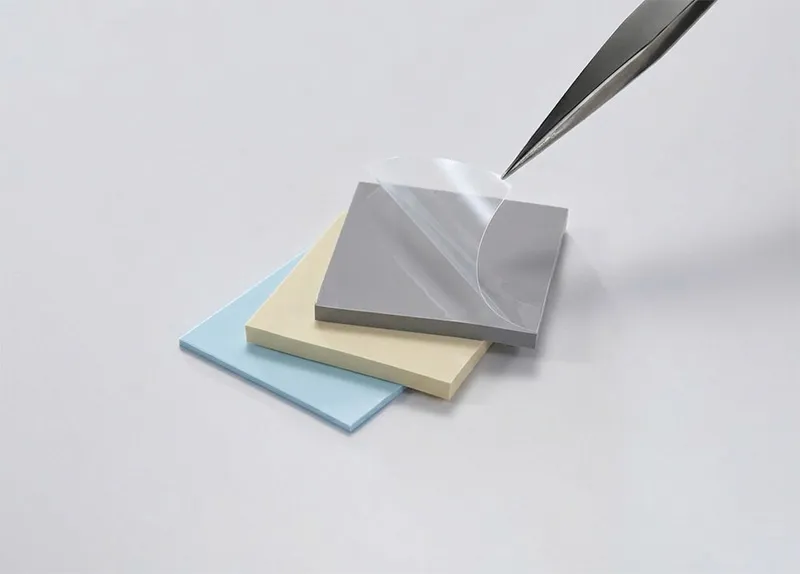
- Check liner release for clean, consistent removal.
- Watch adhesive force so peeling does not stretch the pad.
While stored
- Keep packaging sealed for proper surface protection.
These checks help preserve optical thermal pad dimensions and contact quality right up to installation.
Thermal Pad Vs Thermal Grease
Choosing a thermal pad for optical module cooling comes down to heat flow, assembly control, surface gaps, and long-term reliability. A pad keeps production tidy and predictable, while grease can create a thinner thermal path. For optical module hardware packed into tight spaces, the right thermal interface can keep component temperatures in check without making assembly a headache.
Thermal Pad
A thermal pad for optical module assembly is especially useful when the interface gap varies or operators need consistent placement. The solid material is easy to handle, and die-cut shapes help keep optical module production moving without messy cleanup.

Material and heat behavior
A silicone commonly forms the flexible base. Added thermally conductive particles raise thermal conductivity, helping heat travel from the device toward its housing or heat sink.
- Good compressibility lets the thermal pad follow uneven mating surfaces.
- A controlled thickness tolerance keeps compression more consistent across large production batches.
Assembly and protection
A thermal gap filler bridges spaces that grease may struggle to fill reliably.
- Grades with suitable dielectric strength can provide electrical insulation around sensitive electronics.
- A phase change material is another interface choice where a thinner working bond line is needed after heating.
For servicing, a thermal pad for optical module designs can also be a practical pick: lift the old pad, clean the contact area as needed, and fit a replacement with the specified thickness.
Thermal Grease
Thermal grease works differently. This soft interface material flows into tiny surface scratches and pits, which can reduce contact resistance without requiring a thick layer.
During production
A controlled dispensing method applies a measured quantity of thermal paste.
- Too much raises the bond-line thermal resistance.
- Too little can leave uncovered spots, hurting optical module cooling.
During operation
- A silicone compound can remain workable through repeated temperature cycles.
- Mechanical and thermal cycling may cause the pump-out effect, gradually moving grease away from the contact zone.
Compared with a thermal pad for optical module use, grease can deliver low interface resistance when surfaces fit closely. Still, viscosity, contamination control, dispensing accuracy, and cleanup matter quite a bit, especially when optical module parts must be opened and reworked.
Thermal Pad For Optical Module Boosts Module Lifespan By 30%
A well-matched thermal pad for optical module applications can move heat efficiently while keeping sensitive optics clean. Sheen Technology focuses on material stability and dependable thermal contact, helping designers manage heat without making assembly a headache.
Minimizing Thermal Aging through Low Oil Bleed and Outgassing Rate
Long-term heat can gradually change interface materials, so controlling thermal aging matters well beyond initial testing. A thermal pad for optical module needs clean behavior as well as useful heat transfer. This is also why non-silicone thermal pads are attracting the attention of engineers.

Material cleanliness
- Low oil bleed limits liquid residue near lenses, connectors, and boards.
- Controlled silicone volatility can further reduce optical contamination during prolonged operation.
- A controlled outgassing rate reduces released compounds when temperatures climb.
- Suitable molecular weight design and strong polymer stability help the optical pad keep its physical properties over time.
That combination is a pretty practical deal for tightly packed optical hardware.
Extending Module Durability via Improved Thermal Impedance Control
A thermal pad for optical module also needs predictable heat flow after installation. Good thermal material performance depends on more than a conductivity number.
Thermal path
- Low thermal impedance helps heat travel from the module toward its cooling surface.
- Reduced interface resistance supports efficient heat dissipation.
Mechanical fit
- Suitable compression force allows the pad to fill surface gaps.
- Greater effective contact area can make rated thermal conductivity more useful in real assemblies.
Sheen Technology can support pad selection around thickness and compression needs. Claims of 30% greater module durability, though, require module-specific accelerated-life tests and field evidence rather than material specifications alone.
Ensuring Long-Term Performance with ISO Certification and Humidity Resistance
Maintaining long-term performance means accounting for damp environments as well as heat. Here, a thermal pad for optical module must stay physically and thermally consistent.
Environmental control
- Strong humidity resistance limits property changes caused by absorbed water.
- An effective moisture barrier strategy can protect nearby electronics and interfaces.
Production control
- Relevant ISO certification and a documented quality standard support repeatable manufacturing.
- Accelerated aging can then assess environmental reliability under combined heat and humidity.
Sheen Technology treats certification as process assurance, not a shortcut to a lifespan guarantee. That distinction keeps reliability claims grounded in actual module testing.
Data Center: Thermal Pad For Optical Module Solutions
A thermal pad for optical module helps rack hardware move heat into the housing with less fuss. Good sizing, handling, and tracking can make fleet-wide cooling work far easier.
Rapid Deployment with Pre-Cut Die-Cut Forms for Rack-Mount Transceivers
For repeated installations, a pre-cut thermal pad removes a fair bit of manual work. A die-cut form matched to each rack-mount transceiver keeps contact placement predictable.
Deployment fit
- A thermal pad for an optical module can arrive cut around screws, latches, and connector zones.
- Consistent thickness supports the intended compression of the thermal interface material.
Day-to-day gains
- Less trimming improves assembly efficiency across large batches.
- Reliable contact gives heat dissipation a straight path from the optical module to its case.
Sheen Technology can supply application-matched pad forms for repeatable rack deployment and replacement work.
High-Density Shelving: Space-Saving Sheet Dimensions and Surface Area Coverage
In high-density shelving, every millimeter counts. The right sheet dimensions and surface area coverage keep an optical transceiver thermally connected without crowding nearby hardware. A thermal pad for optical module should also balance compression and thermal conductivity for steady temperature control.
| Example pad size | Area | Thickness | Conductivity |
| 10 × 10 mm | 100 mm² | 1.0 mm | 3 W/m·K |
| 15 × 20 mm | 300 mm² | 1.5 mm | 5 W/m·K |
| 20 × 25 mm | 500 mm² | 2.0 mm | 8 W/m·K |
*These are illustrative engineering values, not product specifications. A space-saving design should ultimately follow measured gaps, compression limits, and module temperatures.
Maintenance-Friendly Packaging Format and Material Traceability for Large-Scale Rollouts
Good packaging format choices make routine swaps less of a headache.
Inventory control
- Label each thermal pad package with size, thickness, material grade, and lot number.
- Keep release liners intact until installation.
Fleet servicing
- Link material traceability records to each data center location.
- During maintenance, replace like-for-like parts unless engineering approves a change.
Scale and checks
- For a large-scale rollout, record receiving dates and storage conditions.
- Consistent quality assurance helps confirm that each thermal pad for optical module and equivalent optical-module thermal interface stays within its specified shelf life.
Send the module stack-up — heat sources and power, gap heights, mounting pressure, insertion-cycle count, and the cleanliness requirements around the optics — and Sheen's engineering team will match pad candidates with D5470 and E595 data per grade.
Sheen Thermal
Dongguan Sheen Electronic Technology Co., Ltd · Founded in 2008
Manufacturer of thermal interface materials and silicone foam for automotive electronics, energy storage, power electronics, communications and consumer electronics.
Certified
- ISO 9001:2015
- ISO 14001:2015
- IATF 16949:2016
What we supply
- Thermal conductivity Up to 90 W/m·K
- Thickness 0.3–10.0 mm
- Custom & samples Die-cut to drawing, 3–7 days
LAST:Nothing